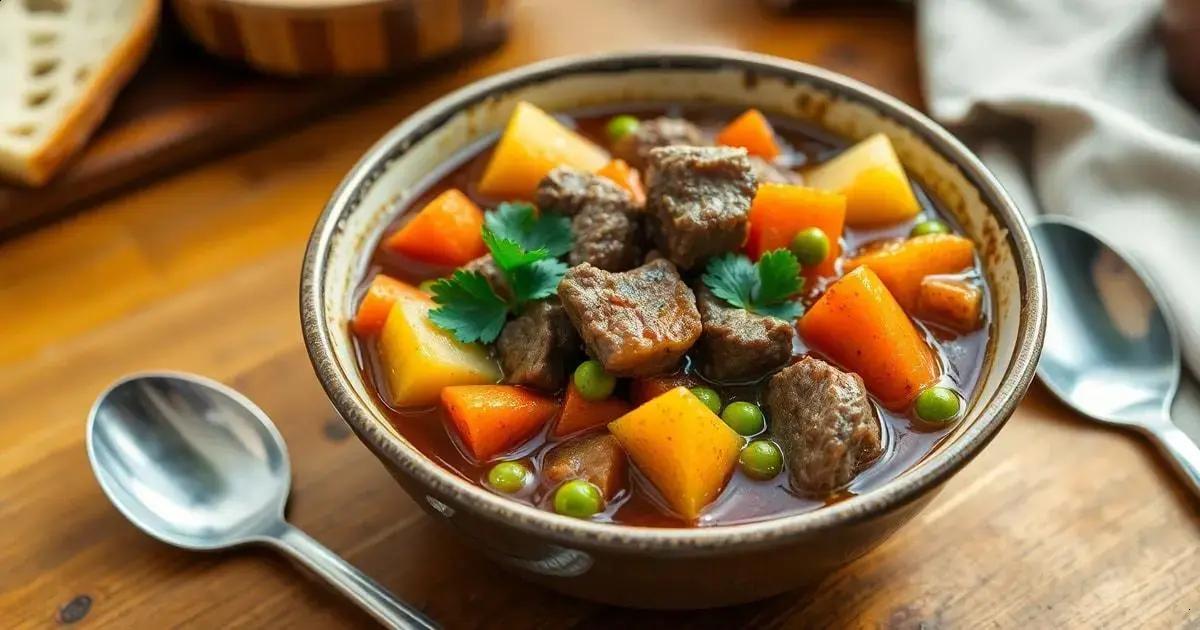
Ingredients
Method
- Heat a large, heavy pot (like a Dutch oven) over medium-high heat. Once hot, add olive oil. Brown the beef chunks in batches, letting them get a dark crust. Don’t crowd the pot — that way you get flavor, not steam. Transfer browned beef to a plate.
- Add onions to the pot (add a splash more oil if dry) and cook, stirring, until soft, about 3–4 minutes. Scrape up any brown bits from the bottom. Next, stir in garlic and cook 1 minute.
- Stir in tomato paste and cook 2 minutes, letting it darken and stick slightly. Sprinkle all-purpose flour over everything and toss to coat. Give it about 1–2 minutes to toast — this thickens your stew later.
- Pour in the red wine and use a wooden spoon to really scrape the bottom — those stuck bits are gold for flavor. Let the wine reduce by half, about 3–4 minutes, so the alcohol cooks off.
- Return the beef (plus any juices) to the pot. Add carrots, celery, potatoes, beef broth, water, bay leaves, thyme, salt, and pepper. Bring it to a simmer, then lower the heat, cover with a lid slightly askew, and let it simmer gently for 1 hour 40 minutes. If the stew gets too thick, add a splash more water.
- After 90 minutes, check the beef: it should be tender enough to break apart with a spoon. If not, let it go a bit longer. (I find a 5-minute extra wait is the difference between chewy and spoon-tender.)
- Stir in the frozen peas and cook 2 more minutes, just to warm through. Fish out the bay leaves. Taste your broth: I usually add half the parsley now and sprinkle the rest on just before serving. Adjust salt if you need to at the end — every broth’s a little different.
Notes
When the weather turns or I just want something that cooks itself while I work, this beef stew is what I make. It’s the kind of meal that gives more than you put in—hearty, forgiving, and you rarely need a special trip to the store.