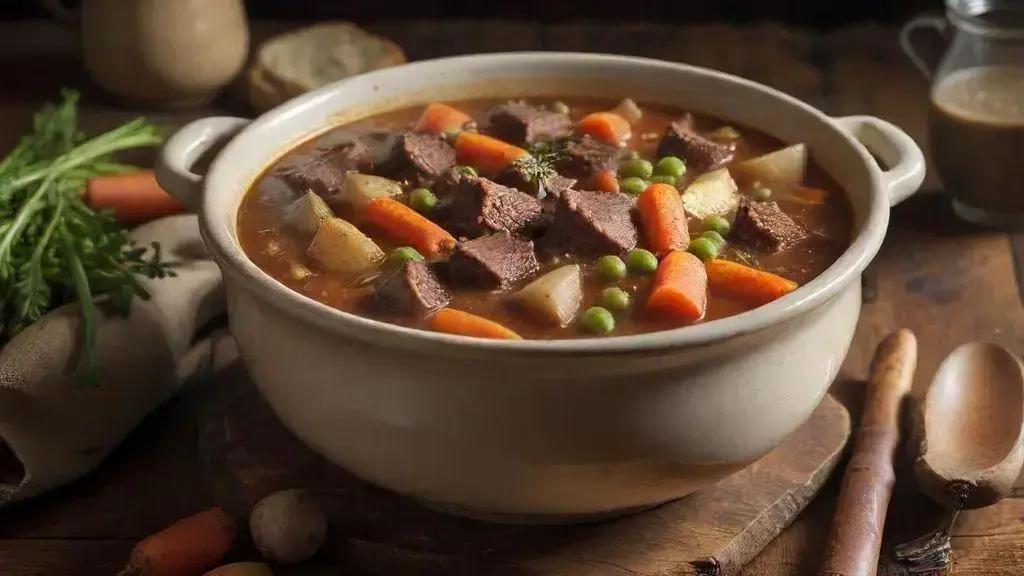
Ingredients
Method
- Season the beef cubes with salt and black pepper.
- Heat olive oil in a large pot over medium-high heat. Add the beef cubes and sear until well browned on all sides. Remove the beef and set aside.
- Add more olive oil if needed. Sauté the chopped onions until soft, then add the garlic and cook for another minute.
- Stir in the tomato paste and cook for 2 minutes. Return the beef to the pot.
- Add carrots, celery, potatoes, dried thyme, bay leaves, and pour in the beef broth. Mix well.
- Bring to a boil, then reduce the heat. Cover and simmer for about 90 minutes, or until the beef and vegetables are tender.
- Add the frozen peas and cook for 5-10 more minutes.
- Taste and adjust salt and pepper if needed. Remove bay leaves before serving.
Notes
If you’re searching for a dish with timeless comfort and broad appeal, beef stew is hard to beat. Its rich flavor, hearty texture, and simple ingredients make it a favorite everywhere—from busy weeknight tables to cherished Sunday family gatherings. It adapts easily to what’s on hand: a great way to use up root vegetables or stretch your protein budget!
Practical Tips for Perfect Beef Stew
- Choose the right cut: Chuck roast is ideal, but brisket or even bottom round works. Lean cuts can dry out, so opt for marbled beef for a tender result.
- Brown the meat well: Don’t rush this step! Searing creates rich, savory flavors. Work in batches—crowding the pan leads to steaming instead of browning.
- Add vegetables at the right time: Potatoes and carrots go in early, but wait to add green peas until the last few minutes so they stay vibrant and fresh.
- Add depth with herbs: Toss in fresh thyme, rosemary, or even a splash of red wine for extra complexity.
- Thicken the broth: Mash a few pieces of cooked potato into the stew or stir in a cornstarch slurry if you prefer a heartier sauce.
Cooking Techniques and Texture Enhancements
- Simmer low and slow: This tenderizes the beef and infuses every bite with flavor. Resist the urge to boil—it makes the meat tough.
- Deglaze the pot: After browning the meat, pour in a splash of broth and scrape up the browned bits. This step adds rich umami notes to your stew.
- Use a heavy pot: A Dutch oven or heavy-bottomed pot distributes heat evenly, helping prevent burning and ensuring a perfect simmer.
Serving Ideas and Delicious Variations
- Pair with: Crusty bread or garlic mashed potatoes make excellent companions for soaking up every drop of savory broth.
- Try different roots: Swap parsnips or sweet potatoes for part of the carrots and potatoes for a sweeter, earthy flavor.
- Make it ahead: Beef stew tastes even better the next day as flavors meld in the fridge. Simply reheat gently and enjoy!
- Spice it up: A pinch of smoked paprika or a spoonful of Dijon mustard can add a twist that surprises and delights.