Ingredients
Method
- Combine the flour, yeast, sugar, and salt in a large bowl. Stir well to blend. Don’t skip blending dry before adding wet—this prevents yeast clumps.
- Add room temperature water and olive oil to the bowl. Mix with a sturdy spoon or your hand until you get a very sticky, shaggy dough. It won’t look neat yet—that’s right.
- Cover the bowl with a towel and let it rest for 30 minutes at room temp. Don’t rush this; the flour needs time to hydrate fully.
- Do three sets of stretch and folds: Wet your hand, grab one edge of the dough, pull it up, and fold it over itself. Turn the bowl a quarter and repeat. Do this four times (once around the bowl), then cover and rest for 30 minutes. Repeat the folds and rests two more times. The dough will feel stronger each time.
- After the last rest, heavily flour your countertop and gently tip the dough onto it. Try not to deflate. Sprinkle extra flour over the top—ciabatta dough is very sticky.
- Shape into a rectangle with your hands, being gentle (don’t knead or roll). Cut into 8 pieces with a knife or bench scraper. Move them to a parchment-lined pan, leaving space between. They’ll stick less if you flour your scraper, not your hands.
- Let the pieces rise uncovered for 20–30 minutes. You want them puffy but not doubled.
- Preheat your oven to 450°F (230°C). I always set a baking stone or flipped tray inside to get extra bottom heat for that crisp crust—worth it.
- Bake for 17–20 minutes until deep golden and the bottoms sound hollow when you tap. Brush the tops with a little extra olive oil right as they come out. Let cool for at least 15 minutes before slicing, so the crumb sets and doesn’t gum up your knife!
Notes
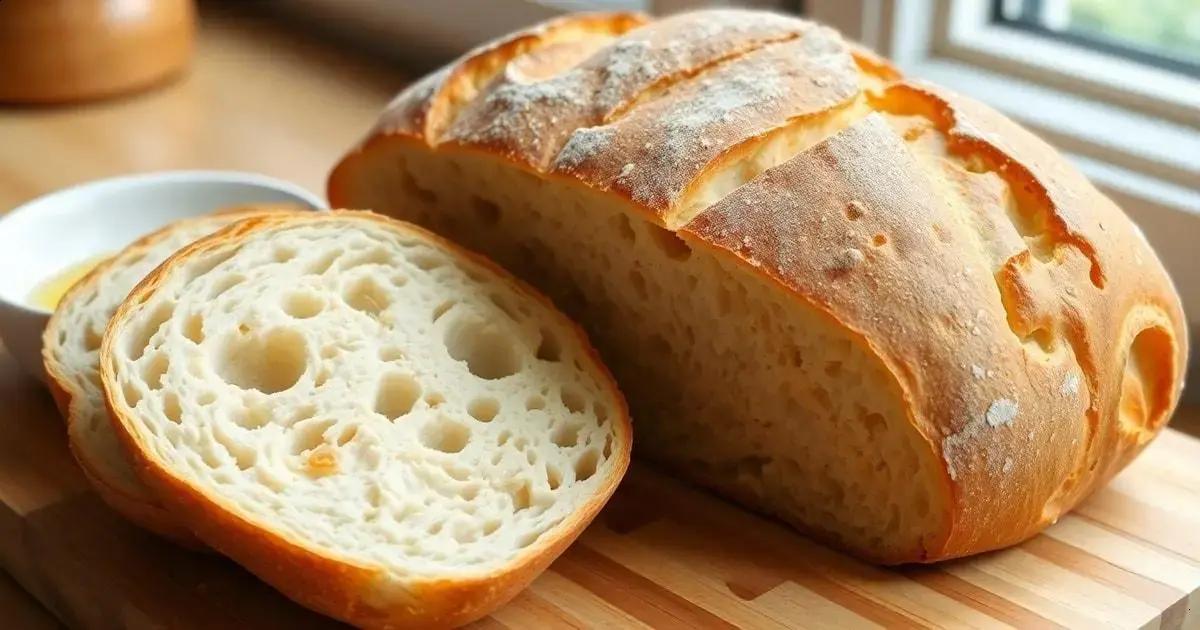
I always come back to ciabatta when I want homemade bread without babysitting a dough all afternoon. The texture wins me over every time—those big, chewy holes soak up olive oil like nothing else on the table.