Go Back
ciabatta — Mediterranean Diet Hub

ciabatta

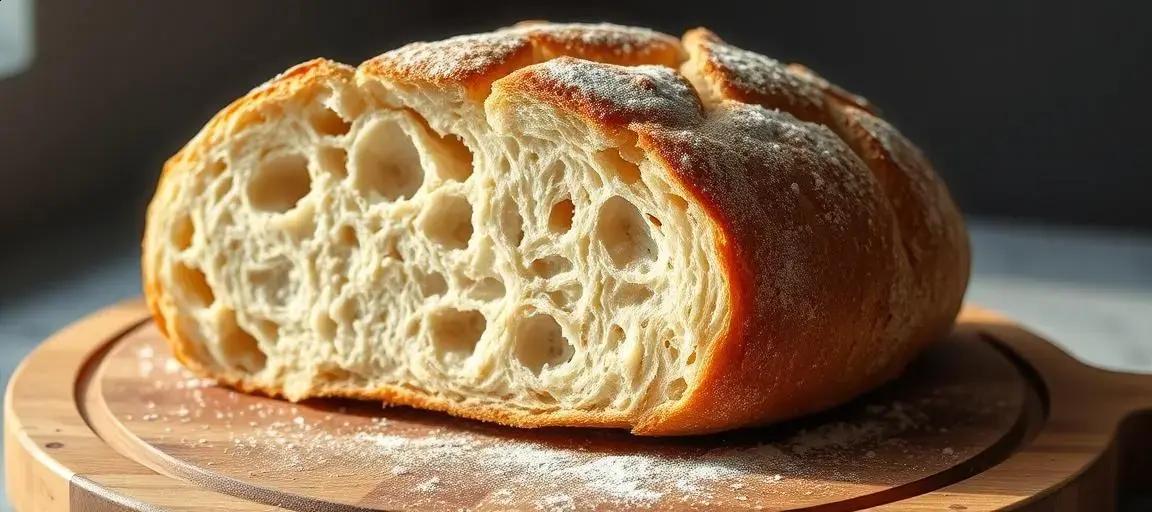
Ciabatta bread recipe with a chewy crust and airy crumb, ready in 3 hours. Uses just 5 ingredients and no stand mixer. Simple artisan results at home.
Total Time 3 hours 1 minute
Servings: 8 slices
Course: Bread
Cuisine: Italian
Calories: 210

Ingredients
  

Dough
  • 3.5 cups all-purpose flour
  • 1.5 cups water at room temperature
  • 0.25 teaspoon instant yeast
  • 1.5 teaspoons salt
  • 1 tablespoon olive oil

Method
 

  1. Mix the dough: In a large bowl, combine 3.5 cups all-purpose flour, 0.25 teaspoon instant yeast, and 1.5 teaspoons salt. Stir well. Add 1.5 cups room temperature water and 1 tablespoon olive oil. Use a sturdy spoon or your hand to mix until no dry patches remain. The dough will look rough and sticky—that’s right for ciabatta.
  2. First rise: Cover the bowl tightly with plastic wrap or a clean towel. Let it sit at room temperature for 90–120 minutes, until doubled and very jiggly. I always grease my bowl first with a drizzle of olive oil, so the dough releases more easily later.
  3. Shape: Generously flour a clean work surface and your hands. Tip out the dough gently; don’t punch it down. Sprinkle a little flour on top. Using a bench scraper or your hands, fold the dough into a rough rectangle—think 8 by 5 inches. Try not to deflate it. Let it rest for 15 minutes uncovered.
  4. Final proof: Dust parchment paper with flour and move the dough (using the scraper or your hands) onto it. Loosely cover and let it puff up for 45–60 minutes. The dough should look airy and hold a slight shape.
  5. Bake: While the dough proofs, preheat your oven to 450°F (232°C) with a baking stone or heavy baking sheet inside. When ready, slide the parchment with dough onto the hot surface. Bake 23–26 minutes, until the loaf is deep golden and sounds hollow when you tap it. Cool at least 30 minutes before slicing.

Notes

I go back to ciabatta when I want a bread that feels special but doesn’t ask for a starter or fancy tools. Once you get a feel for the sticky dough, it’s the kind of thing you can mix and shape while making dinner.

Real-life tips for homemade ciabatta

Sticky dough is normal. You’ll want to add flour, but hold back—it’s supposed to be shaggy and loose. I flour my hands and a bench scraper, not the dough, so I don’t end up with a tough loaf.
Oven spring is about heat. Preheating the baking sheet (or, if you have it, a pizza stone) makes more difference than any fancy shaping trick. Slide the proofed dough in with the parchment paper underneath; it’s safer than trying to drop the bare loaf onto a screaming-hot surface.
I only use a light coating of olive oil on the bowl and my hands when handling the dough. Too much oil leaves streaks on the crust.

Swaps and variations that work

I sometimes swap half the all-purpose flour for white whole wheat. The flavor is slightly nuttier and there’s still plenty of holey crumb—don’t do more than half or you’ll lose the open texture.
You can use bread flour, but the rise is less dramatic and the crust a bit chewier. I don’t recommend substituting with 100% whole wheat or gluten-free flours—those won’t give you the classic airy crumb.

Storage and make-ahead

Once cool, I wrap the leftover ciabatta in a clean kitchen towel. It stays good for one day on the counter. To revive, I spritz with water and bake at 350°F for 8 minutes—makes the crust crisp again. For longer storage, slice and freeze it in a zip bag.