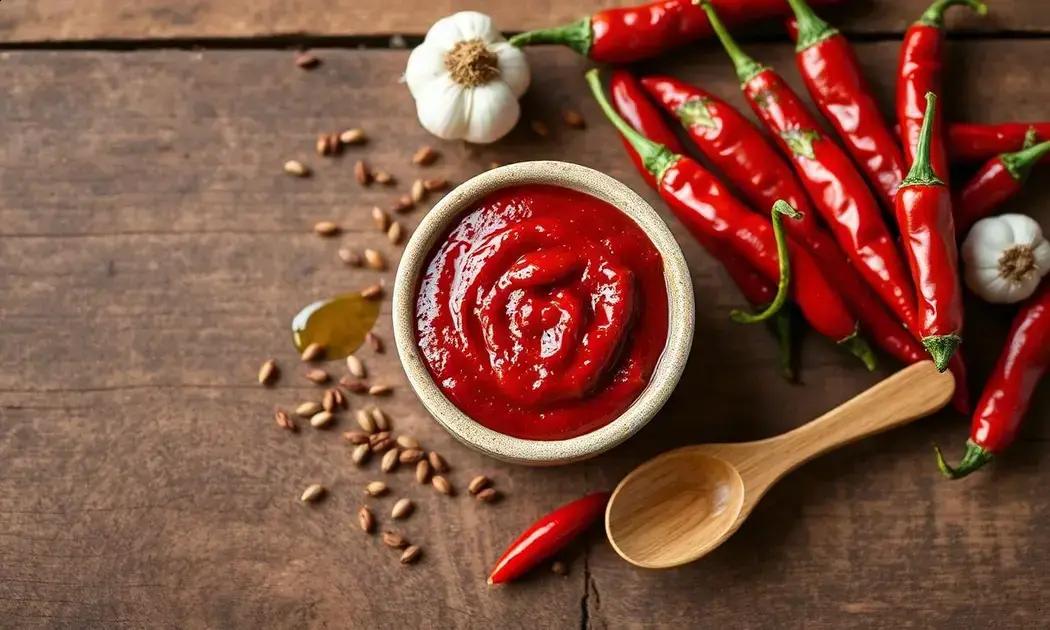
Ingredients
Method
- Toast the spices: In a small skillet over medium heat, toast the cumin seeds, coriander seeds, and caraway seeds for about 2-3 minutes until fragrant. Let cool.
- Prepare the peppers: Remove the stems and seeds from the red chili peppers (for a milder harissa, deseed thoroughly). Roughly chop them.
- Blend the ingredients: In a food processor, add toasted spices, chopped chili peppers, garlic cloves, tomato paste, smoked paprika, salt, and lemon juice.
- Process until smooth: Blend the mixture, slowly streaming in the olive oil, until you have a smooth, thick paste. Scrape down the sides as needed.
- Adjust the consistency: If you want a thinner harissa, add a little more olive oil and blend again.
- Store: Transfer the harissa to a clean jar and cover the surface with a thin layer of olive oil. Refrigerate and use within 2-3 weeks.
Notes
Harissa is an iconic North African condiment celebrated for its deep, smoky heat and versatility in cuisines around the world. Whether you’re marinating meats, stirring it into soups, or spreading it on sandwiches, harissa adds an unforgettable kick to countless dishes.
Practical Tips for the Perfect Harissa
- Adjusting Spice: If you’re heat-sensitive, simply deseed the chili peppers or use milder varieties. For those who love an extra punch, keep some seeds or choose hotter chilies.
- Ingredient Swaps: If you can't find caraway seeds, substitute with a pinch of fennel or simply use more cumin for a different, but still authentic, flavor profile.
Technique Insights
- Toasting your spices is key: This step draws out their essential oils, resulting in a richer, more aromatic harissa. Don’t rush it—toast over medium heat, stirring constantly until you smell their fragrance.
- Oil matters: Extra virgin olive oil not only helps blend the paste but is also important for preserving the harissa. Make sure to always cover the top of your jar with a thin layer of oil before refrigerating.
Serving, Storing, and Creative Uses
- Serving ideas: Swirl harissa into creamy yogurt for a quick dip, slather it on flatbreads, or mix it into salad dressings for bold flavor. It’s also phenomenal brushed over roasted vegetables or grilled fish.
- Vary the blend: Try incorporating roasted red peppers for a milder, silkier harissa, or add smoked paprika for deeper flavor. Sometimes a pinch of sumac or a splash of vinegar offers a unique tangy twist.
- Storage tip: Homemade harissa will keep up to three weeks in the refrigerator, as long as it is always covered with olive oil. Freeze in small portions if you want it to last longer without sacrificing flavor.