Go Back
hummus — Mediterranean Diet Hub

hummus

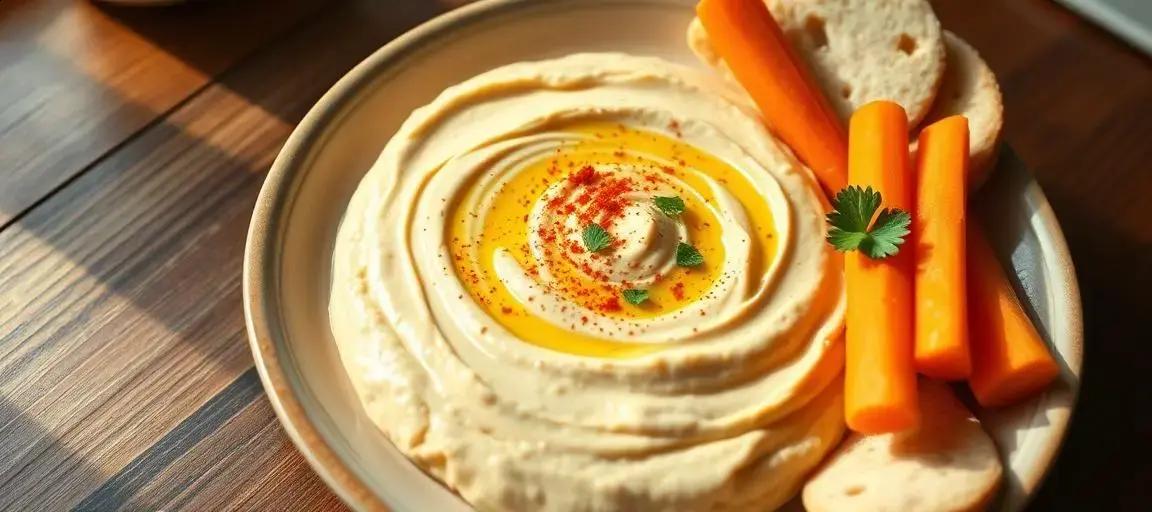
Hummus made with tahini, lemon, and olive oil—ready in 10 minutes, super creamy and perfect for spreading or dipping veggies.
Total Time 11 minutes
Servings: 6 servings
Course: Snack
Cuisine: Mediterranean
Calories: 190

Ingredients
  

hummus
  • 2 cups cooked chickpeas drained and rinsed if canned
  • 0.25 cup tahini well-stirred
  • 1 unit lemon juiced (about 3 tbsp)
  • 1 clove garlic small, peeled
  • 0.25 cup olive oil
  • 0.5 teaspoon salt
  • 0.25 teaspoon ground cumin
  • 3 tablespoons water ice-cold
  • 0.5 teaspoon paprika for topping (optional)
  • 2 tablespoons fresh parsley chopped, for garnish (optional)

Method
 

  1. Reserve 2–3 chickpeas and a drizzle of olive oil for garnish if you want that classic look. (Optional, but it makes a difference on the table.)
  2. Add chickpeas, tahini, lemon juice, garlic, olive oil, salt, and cumin to a food processor. Run the machine for 1 minute.
  3. Stop, scrape down the sides, and add half the ice-cold water. Process again, then check the texture. Add more water by the spoon if you want it looser.
  4. Taste. Adjust salt or extra lemon juice now—sometimes I squeeze in the second half of a lemon if it’s a small one or I want it extra zippy.
  5. Scoop the hummus into a serving bowl. Make a shallow swirl on top with the back of a spoon—this catches the olive oil for serving.
  6. Drizzle with more olive oil, sprinkle with paprika and parsley, and drop on those reserved chickpeas if you set them aside. Serve with veggie sticks or pita. Leftovers keep in a sealed container in the fridge for up to 4 days. It might thicken; give it a good stir and a tiny splash of water to revive.

Notes

I keep a batch of homemade hummus in my fridge almost every week because it’s fast, keeps me full when afternoons get wild, and honestly tastes better than anything store-bought.

Tips that make a difference

Peeling chickpeas gives extra-silky hummus, but I’ll be honest: I usually don’t bother unless I'm after that ultra-creamy, restaurant style. If you hate skins, just rub the chickpeas gently with a clean kitchen towel and most will slip right off.
Use ice-cold water when blending. I know it sounds odd, but I learned this from a Lebanese friend — it lightens up the tahini and smooths the texture. I always start with 2–3 tablespoons and add more as needed; too much and it’ll get runny.
If your hummus tastes flat, try extra lemon juice or a pinch more salt. Sometimes, just letting it sit for an hour in the fridge helps the flavors mellow and meld.

Substitutions and variations

If you're out of tahini, swap in smooth, unsweetened peanut butter. It’s not classic, but it works in a pinch. Don’t use regular butter or oil instead; you’ll miss the nutty background flavor.
Don't have cumin? Leave it out, or try a little smoked paprika for a different twist.

Storing and meal prep

Homemade hummus keeps four days in the fridge—glass jars with tight lids work best. If it thickens, stir in a teaspoon of water before serving and it’s good as new.
I use it for veggie wraps, salad bowls, or straight-up with carrot sticks after school pickup. It’s one of those things that never goes to waste at my house.