Go Back
Pasta primavera

pasta primavera

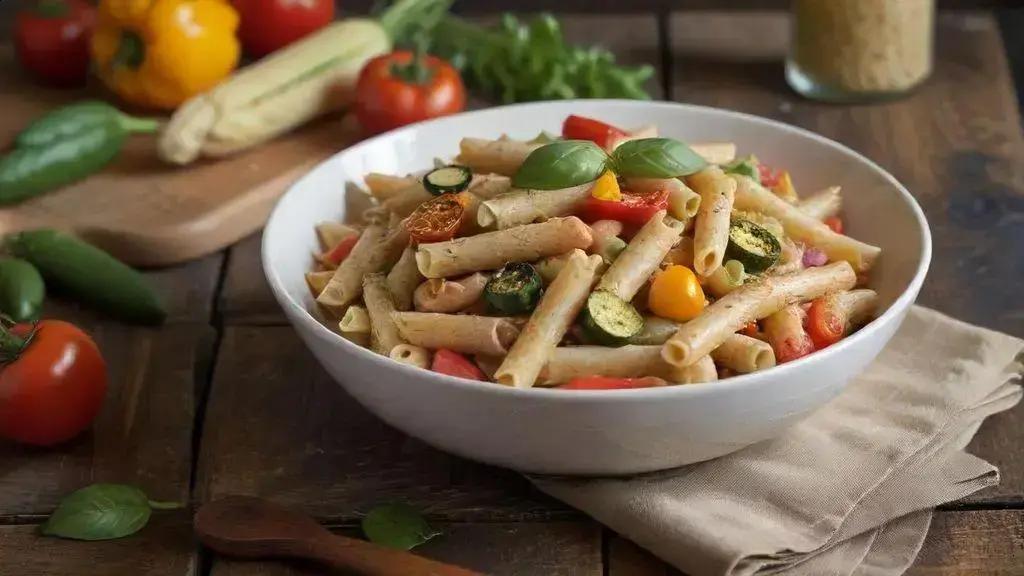
Pasta primavera — try this light and colorful pasta dish loaded with fresh vegetables and vibrant flavors. Perfect for quick, healthy meals!
Total Time 31 minutes
Servings: 4 servings
Course: Lunch or Dinner
Cuisine: Italian
Calories: 340

Ingredients
  

  • 250 g whole wheat pasta penne or fusilli
  • 1 tbsp olive oil
  • 1 unit small zucchini sliced
  • 1 unit carrot julienned
  • 1 unit red bell pepper sliced
  • 1 unit yellow bell pepper sliced
  • 1 cup cherry tomatoes halved
  • 0.5 unit red onion thinly sliced
  • 2 cloves garlic minced
  • 0.5 cup peas fresh or frozen
  • 1 tsp dried oregano
  • 1 tbsp lemon juice freshly squeezed
  • 1 tbsp fresh basil chopped
  • 0.5 tsp salt to taste
  • 0.25 tsp black pepper to taste
  • 2 tbsp parmesan cheese optional, grated

Method
 

  1. Bring a large pot of salted water to a boil. Add the pasta and cook until al dente, as instructed on the package. Reserve ½ cup of the pasta water, then drain the pasta and set aside.
  2. In a large skillet, heat the olive oil over medium heat. Add the garlic and red onion, sautéing for about 2 minutes until fragrant.
  3. Add the zucchini, carrot, and both peppers to the skillet. Cook for 3–4 minutes, stirring occasionally, until they start to soften.
  4. Stir in the cherry tomatoes and peas, cooking for another 2–3 minutes until the tomatoes begin to soften and release their juices.
  5. Return the cooked pasta to the skillet. Add salt, black pepper, oregano, and lemon juice. Toss everything gently to combine.
  6. If the pasta appears dry, add a splash of the reserved pasta water to reach the desired consistency.
  7. Turn off the heat and sprinkle fresh basil over the pasta. Mix gently.
  8. Serve immediately, garnished with grated Parmesan cheese if desired. Enjoy your Pasta Primavera!

Notes

Pasta primavera is a true celebration of freshness and color! Famous for its versatility, this dish brings together whatever vegetables are in season, making it a flavorful and healthy option all year-round. Whether you’re looking for a quick weeknight meal or want an eye-catching main course for guests, pasta primavera is always a crowd-pleaser.

Practical Tips and Smart Ingredient Swaps

Craving extra creaminess? Stir in a spoonful of ricotta or a splash of cream at the end for a richer texture. If you want to make it vegan, skip the Parmesan cheese and use nutritional yeast or your preferred vegan cheese. Whole wheat pasta not your style? Swap it for traditional, gluten-free, or even legume-based pastas for a protein boost.
Prevent overcooking your vegetables by adding them in order of how quickly they cook. Start with carrots and peppers, then add zucchini and, finally, peas and tomatoes. This way, everything stays crisp-tender and vibrant.

Preparation Insights

Reserve some of the pasta water before draining — it has starch that helps bind everything together, giving you a glossy, restaurant-style sauce. Sautéing the garlic and onions before adding other vegetables develops a richer, more complex flavor base. Use high heat for a quick sauté and toss frequently to keep veggies from steaming.

Serving Suggestions & Variations

This dish pairs beautifully with a simple arugula salad, crusty bread, or grilled chicken. For extra crunch, top with toasted pine nuts or almonds right before serving. Introduce protein by adding grilled shrimp, roasted chickpeas, or slices of grilled tofu.
Try different vegetables like asparagus, broccoli, or snap peas according to what’s fresh in your market. A touch of fresh mint or parsley offers a lovely twist, and sun-dried tomatoes add a burst of umami.
Ultimately, Pasta primavera invites creativity and ease—mix and match what you love, and each meal becomes a celebration of the season on your plate!