Ingredients
Method
- Cook the pasta: In a large pot, bring salted water to a boil. Add the whole wheat pasta and cook until al dente, following package instructions. Drain and set aside, reserving a little of the pasta water.
- Prepare the vegetables: While the pasta cooks, heat olive oil in a large skillet over medium heat. Add the garlic and sauté for about 1 minute, until fragrant. Add the zucchini, yellow and red bell peppers, and carrot. Stir-fry for 4-5 minutes until the vegetables are just tender but still crisp.
- Add the cherry tomatoes to the skillet and cook for another 2 minutes, until they begin to soften.
- Combine: Add the cooked pasta to the skillet with the vegetables. Drizzle with lemon juice and toss to combine. If the mixture looks dry, add a splash of the reserved pasta water.
- Season with salt and black pepper to taste. Stir in chopped basil and remove from heat.
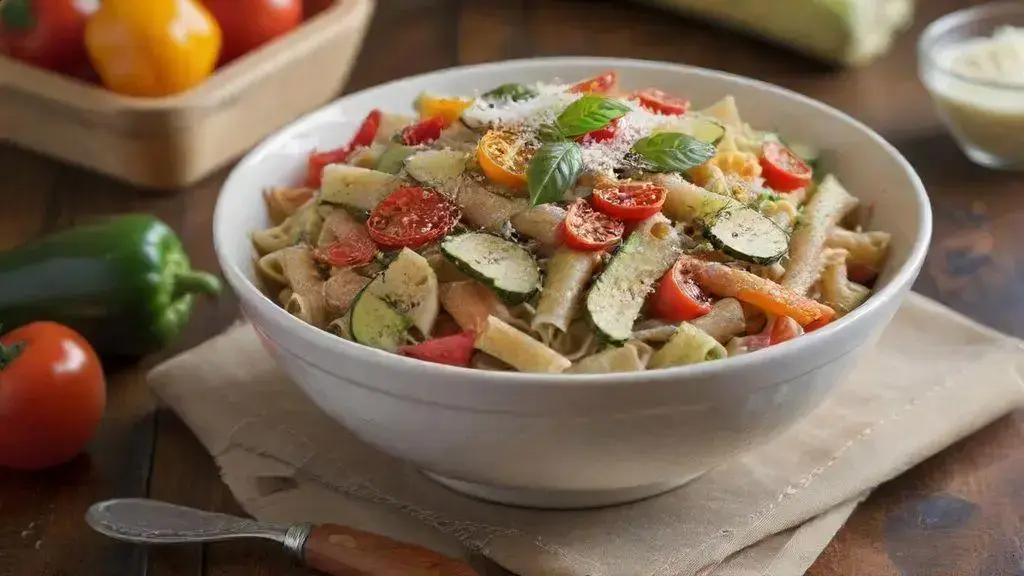
- Serve immediately, finishing with grated parmesan cheese on top if desired. Enjoy your healthy and colorful pasta primavera!
Notes
Pasta primavera is beloved for its versatility and vibrant presentation, making it perfect for those seeking a balanced, flavorful meal that doesn't feel heavy. With its origins in Italian-American kitchens, it celebrates the freshness of seasonal vegetables and can easily be adapted to whatever you have on hand.
Practical Tips for Perfect Pasta Primavera
- Don’t overcook the veggies: For the best texture and color, sauté your vegetables just until they’re crisp-tender. This ensures they retain their vitamins, vibrant colors, and a delightful bite.
- Customize to your taste: If you’re missing one of the recommended vegetables, feel free to swap in asparagus, broccoli, or snap peas. Pasta primavera is highly flexible!
- Balance the flavors: A squeeze of lemon juice at the end boosts freshness and brightens the whole dish. Don’t skip it!
- Healthy swaps: Use whole wheat or even gluten-free pasta to suit dietary preferences without sacrificing taste or texture.
Preparation Techniques That Make a Difference
- Reserve some pasta water: Before draining your pasta, save a small cup of the starchy cooking water. This helps create a silky sauce that clings to the noodles.
- Add cheese for creaminess: While parmesan is traditional, a sprinkle of feta or goat cheese can add a unique, tangy touch.
Serving Suggestions and Easy Variations
- Serve as a main course for light lunches and dinners, or as a bright side dish alongside grilled chicken, fish, or tofu.
- For extra protein, toss in some cooked chickpeas, white beans, or grilled shrimp just before serving.
- Make it ahead: Pasta primavera tastes great at room temperature, making it ideal for picnics and meal prep. Just add a drizzle of olive oil before serving to keep it fresh.