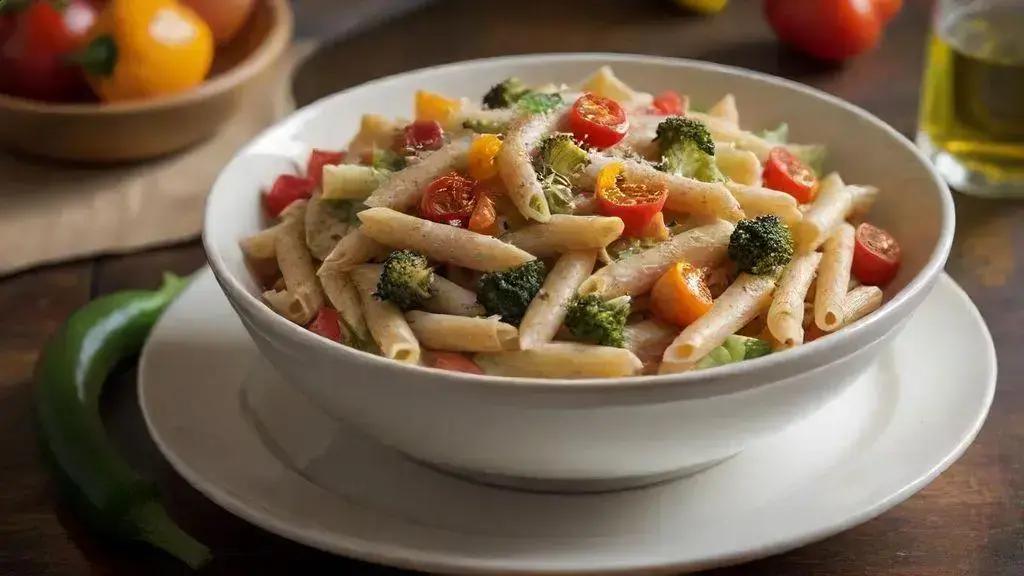
Ingredients
Method
- Cook the pasta: Bring a large pot of salted water to a boil. Add the pasta and cook until al dente, following the package instructions. Reserve 1/2 cup of pasta water, then drain the pasta and set aside.
- Prepare the vegetables: While the pasta cooks, heat the olive oil in a large skillet over medium heat. Add the garlic and onion, and sauté for about 2 minutes until fragrant and slightly translucent.
- Add the zucchini, carrot, red and yellow bell peppers, and broccoli to the skillet. Sauté for 5-7 minutes until the vegetables are tender but still crisp.
- Stir in the cherry tomatoes, salt, and black pepper. Cook for another 2 minutes, just until the tomatoes start to soften.
- Combine pasta and vegetables: Add the drained pasta to the skillet with the vegetables. Toss everything together, adding a splash of reserved pasta water as needed to create a light sauce. Adjust seasoning if necessary.
- Remove from heat and add chopped fresh basil. Serve immediately, topped with grated parmesan cheese if desired.
Notes
Pasta primavera is renowned for its versatility and vibrant appeal. It’s one of those classic Italian-inspired dishes that celebrates the freshness of seasonal vegetables, making it a favorite for both family dinners and special occasions. If you love meals that are quick, healthy, and colorful, this recipe will quickly become a staple in your kitchen.
Tips and useful tricks
- Don’t overcook the vegetables: The key to an authentic primavera is keeping the veggies crisp-tender. Sauté only until they’re just cooked—it keeps the colors bright and adds a pleasing texture.
- Reserve pasta water: Adding a splash of the starchy cooking water to your finished pasta will help bind everything together with a light, glossy sauce.
- Customize the veggies: Feel free to use whatever is freshest or left in your fridge—snap peas, asparagus, spinach, or even lightly roasted cauliflower work wonderfully here.
- Make it protein-packed: Add cooked chicken, shrimp, tofu, or even chickpeas for a more filling version that fits your dietary preferences.
Preparation advice
- Cut vegetables into uniform pieces to ensure even cooking and a pleasant eating experience. Slicing bell peppers and carrots into thin strips helps them cook faster and blend seamlessly with the pasta.
- If you want deeper flavor, roast your vegetables on a baking sheet for 10-12 minutes at high heat before tossing them into the pasta.
- Sauteing the garlic gently first infuses the olive oil and sets the foundation for a fragrant sauce you can build flavors on.
Serving suggestions and variations
- Serve pasta primavera as a vibrant main course, paired with a simple green salad and a slice of crusty bread.
- For a creamy touch, add a splash of cream or a scoop of ricotta at the end, mixing until melted through.
- Add a sprinkle of toasted nuts—such as almonds or pine nuts—for extra crunch and flavor.
- To make it vegan, just skip the parmesan or use a plant-based alternative.