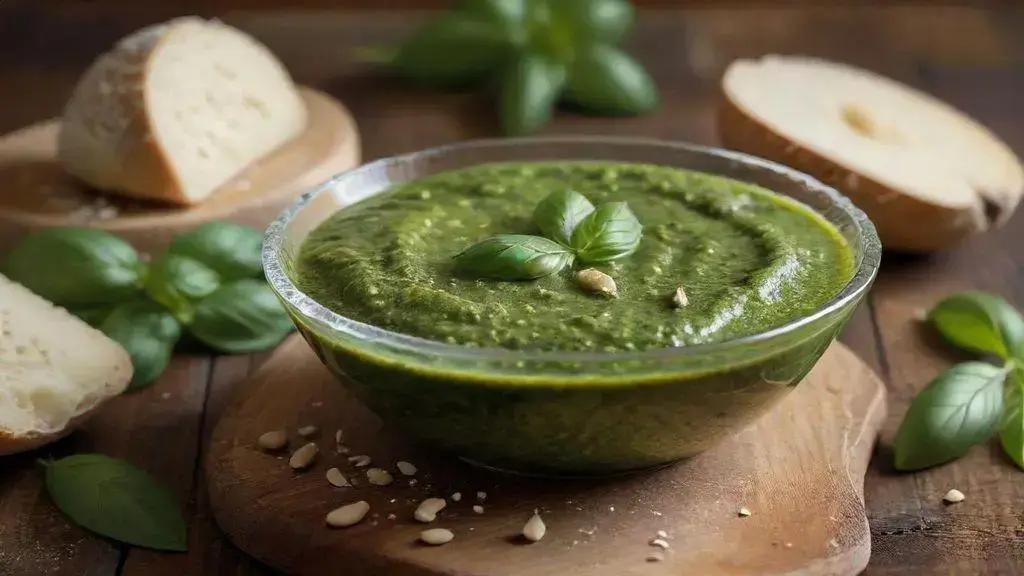
Ingredients
Method
- Start by washing and drying the fresh basil leaves thoroughly.
- Add the basil leaves, pine nuts, and garlic to a food processor or blender.
- Pulse several times until the ingredients are coarsely chopped.
- With the food processor running, gradually pour in the olive oil in a steady stream, blending until smooth.
- Add the grated Parmesan, salt, and black pepper. Pulse just until combined; do not overprocess.
- Taste and adjust seasoning, adding more salt or pepper if needed.
- Transfer the pesto sauce to a clean jar and cover with a thin layer of olive oil to preserve freshness. Keep refrigerated until ready to use.
Notes
The classic pesto sauce is a true staple of Italian cuisine, renowned for its vibrant color and fresh flavors. Its versatility means you can use it far beyond the traditional pasta—think salads, sandwiches, grilled meats, or even as a dip for vegetables. With just a few quality ingredients, you can whip up a batch of homemade pesto that tastes infinitely better than store-bought versions.
Practical Tips to Elevate Your Pesto
- Choosing the basil: Always opt for fresh, bright green basil leaves and use them promptly to maximize the fragrance and flavor of your sauce.
- No pine nuts? If they are unavailable or too costly, you can substitute with cashews or walnuts. Each nut lends a unique profile—walnuts add depth, while cashews offer creaminess.
- Cheese matters: Authenticity matters for flavor. Use freshly grated Parmesan or Pecorino Romano for the best results; avoid pre-grated varieties, as they contain anti-caking agents that can affect texture.
- Texture control: For chunkier pesto, pulse ingredients rather than blending continuously. If you prefer it smoother, run the processor a bit longer.
Preparation Advice
- Process the basil and nuts first for easier blending, then gradually add the olive oil to help emulsify the sauce. Drizzling slowly ensures a creamier consistency.
- If your pesto turns out bitter, it may be due to over-blending (which bruises the basil). To avoid this, blend in short pulses rather than continuously.
- Covering the top of the finished sauce with a thin layer of olive oil will help preserve its vibrant green color and prevent oxidation in the refrigerator.
Serving and Variations
- Traditional pesto is a perfect match for pasta such as trofie, linguine, or gnocchi. But why not try it atop grilled chicken, alongside roasted vegetables, swirled into mashed potatoes, or spooned onto pizza?
- For a dairy-free or vegan version, simply skip the cheese and add a tablespoon of nutritional yeast for umami depth.
- Mix with a spoonful of ricotta or Greek yogurt for a creamier, milder sauce perfect for spreading on sandwiches.