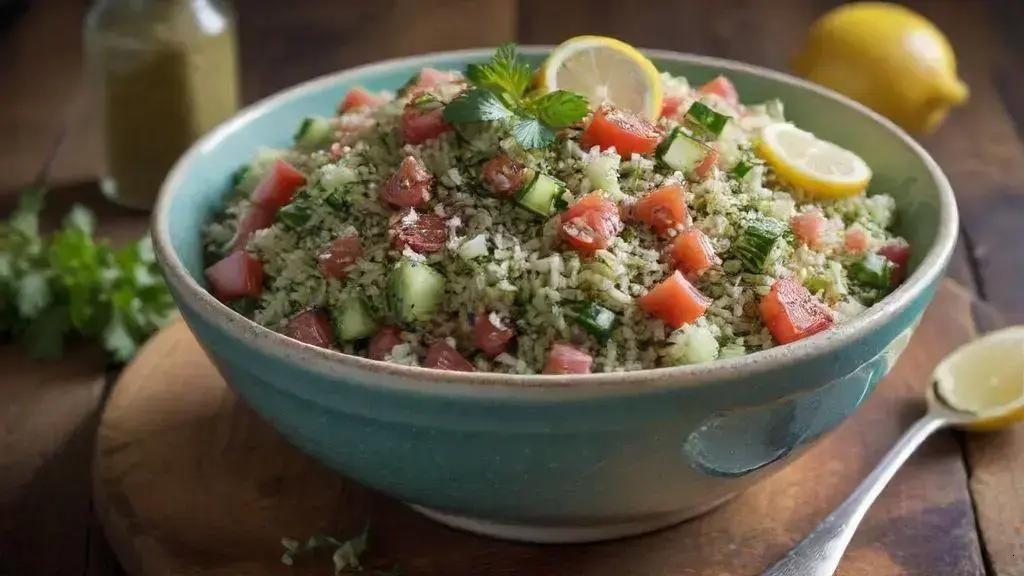
Ingredients
Method
- Start by soaking the bulgur wheat in a bowl with enough cold water to cover it. Let it soak for about 15 minutes, or until soft. Drain thoroughly, squeezing out excess water with your hands or a clean cloth.
- In a large mixing bowl, combine the chopped parsley, mint, tomatoes, and cucumber. Mix gently.
- Add the soaked and drained bulgur to the vegetables and herbs.
- Drizzle the olive oil and lemon juice over the mixture. Season with salt and black pepper to taste.
- Toss everything well to combine all ingredients evenly.
- Let your tabbouleh sit for at least 5 minutes before serving to allow the flavors to meld. Serve chilled or at room temperature.
Notes
Tabbouleh is celebrated for its refreshing combination of fresh herbs, juicy tomatoes, and light bulgur, making it one of the most versatile and beloved salads in Middle Eastern cuisine. It's a perfect addition to picnics, barbecues, or a vibrant side at any family meal, easily adapting to different palates and occasions.
Practical tips for perfect tabbouleh
- Get your herbs super fine: For authentic texture, make sure to chop the parsley and mint as finely as possible, using a sharp knife. This ensures each forkful is balanced and prevents a coarse texture.
- Soak, don’t cook, the bulgur: Soaking fine bulgur in cold water preserves its chew and keeps the salad fresh. After soaking, squeeze out the excess water very well—this prevents a soggy salad.
- Use ripe, firm tomatoes: They add flavor and prevent excess liquid. If your tomatoes are particularly juicy, seed them before dicing.
- Citrus tip: Taste as you go with the lemon juice. Start with less and add more if needed—tabbouleh is at its best when lively but balanced.