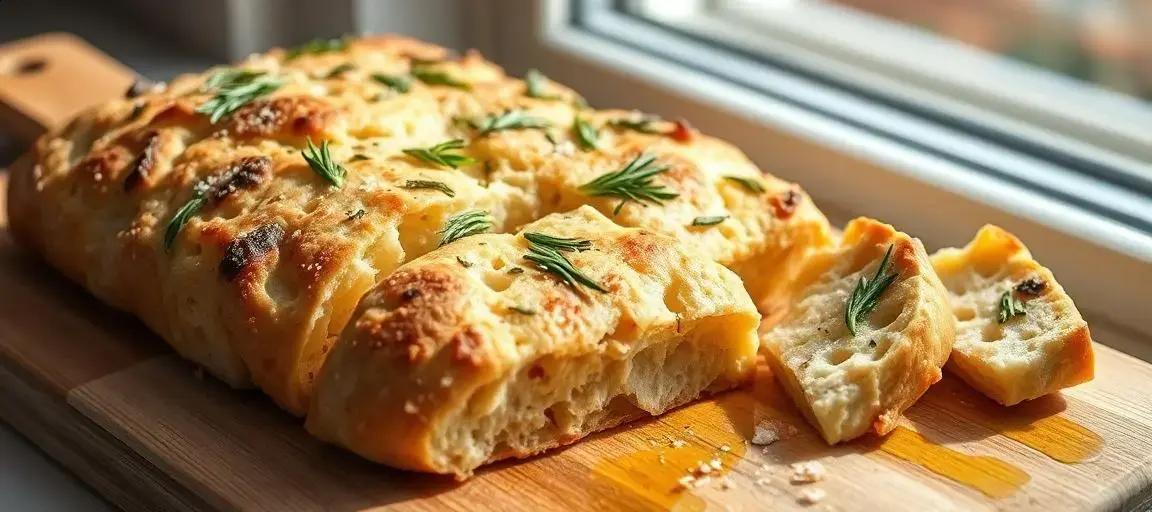
Ingredients
Method
Making the dough
- In a large bowl, combine flour, instant yeast, salt, and sugar with a spoon. I like using my hands for this part to feel there are no lumps hiding at the bottom.
- Pour in the warm water and olive oil, then mix until all the flour is absorbed. Switch to your hands once the spoon gets sticky—this dough is a little wet, that's normal.
- Knead in the bowl or on a lightly oiled surface for 5 minutes, just until the dough smooths out. No need for perfection—a little stickiness is part of focaccia's charm.
- Shape it into a ball and drizzle with a teaspoon of olive oil. Cover the bowl with a kitchen towel and let it rise somewhere warm until doubled, about 60–70 minutes. I use my (off) oven with the light turned on for this.
Shaping and topping
- Drizzle a baking pan (about 23x33 cm) with a generous tablespoon of olive oil. Turn the dough out and gently press it with your fingers to spread it into the pan. Take your time—if it's elastic, let it rest 5 minutes and try again.
- Let the dough rest, uncovered, for 20 minutes. This helps relax the gluten so you can make those iconic focaccia dimples.
Final rise and baking
- After resting, use your fingertips to dimple the dough deeply, nearly all the way through but not tearing. Drizzle the remaining olive oil on top and scatter with fresh rosemary and flaky salt.
- Let the pan sit while the oven heats to 220°C (428°F)—about 20 minutes.
- Bake on the middle rack for 22–28 minutes until the top is golden and the edges crisp. If your kitchen smells like an Italian bakery, you're on track.
- Cool in the pan for 10 minutes before slicing. I always check the bottom—if it looks pale, pop it back in (straight on the rack) for a few more minutes for extra crunch.
Notes
I started baking focaccia when my to-do list wanted bread but my timeline didn't want a whole weekend project. This recipe fits into one evening, and there's something soothing about poking dimples in soft dough after work.