Ingredients
Method
- Mix the yeast and sugar with lukewarm water in a large bowl. Let it rest for 5–10 minutes until you see some bubbles — this means your yeast is active.
- Add the flour, salt, and olive oil to the bowl. Stir with a spoon until a shaggy dough forms. Use your hands to bring everything together by pressing and folding. Don’t worry if it’s a bit sticky.
- Knead on a lightly floured surface for about 8 minutes until the dough gets smoother and springs back a little if you poke it. I set a timer; it always feels longer than it is.
- Drizzle a little olive oil in a clean bowl, add the dough, and turn it once so it gets a thin coat all over. Cover with a damp towel or plastic wrap and let it rise at room temp until it doubles in size, about 1 hour. (If my kitchen is cold, I leave the bowl inside my microwave — turned off — just as a cozy spot.)
- Punch down the dough and tip it onto a floured surface. Cut it into 8 equal pieces. Roll each into a ball and cover with a towel so they don’t dry out while you’re working.
- Working one piece at a time, use a rolling pin to flatten a dough ball into a disk about 1/4 inch thick. If the dough springs back, let it rest a minute and try again.
- Meanwhile, heat a cast iron skillet or heavy pan over medium-high heat. It’s ready when a drop of water sizzles right away.
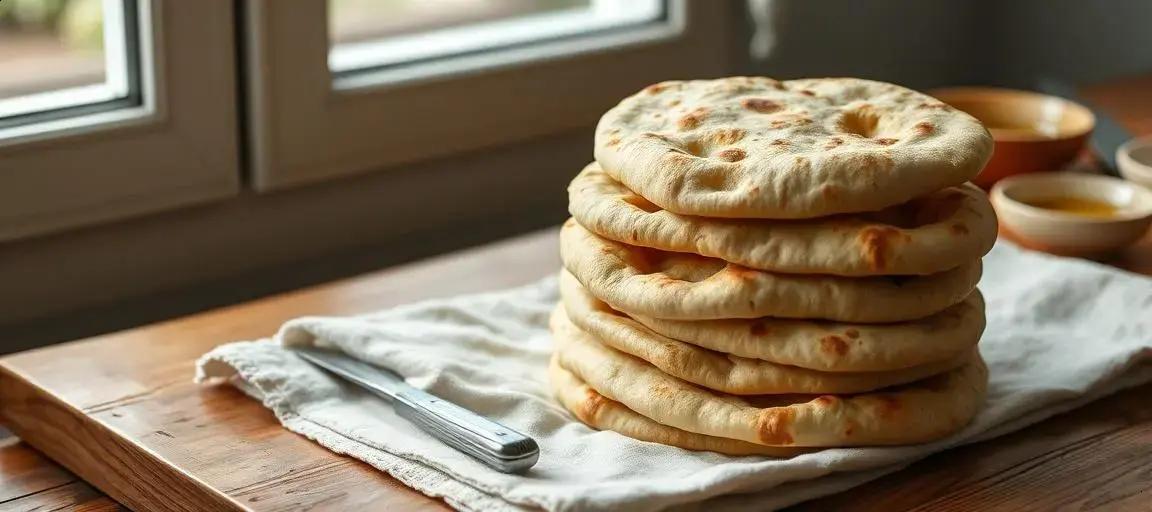
- Lay a rolled pita onto the hot pan. Wait for bubbles to form (about 1–2 minutes), then flip and cook the other side for another minute. The pita should puff; if not, try pressing gently around the edges.
- Stack cooked pitas in a clean kitchen towel to keep them soft. Eat warm, or cool and store in a zip bag for up to 2 days. For the best experience, reheat briefly before serving.
Notes
I grew up eating pita bread straight out of the pan, steam still puffing out of the pocket. Even after years of making them, I still get that small thrill when they balloon up just right.