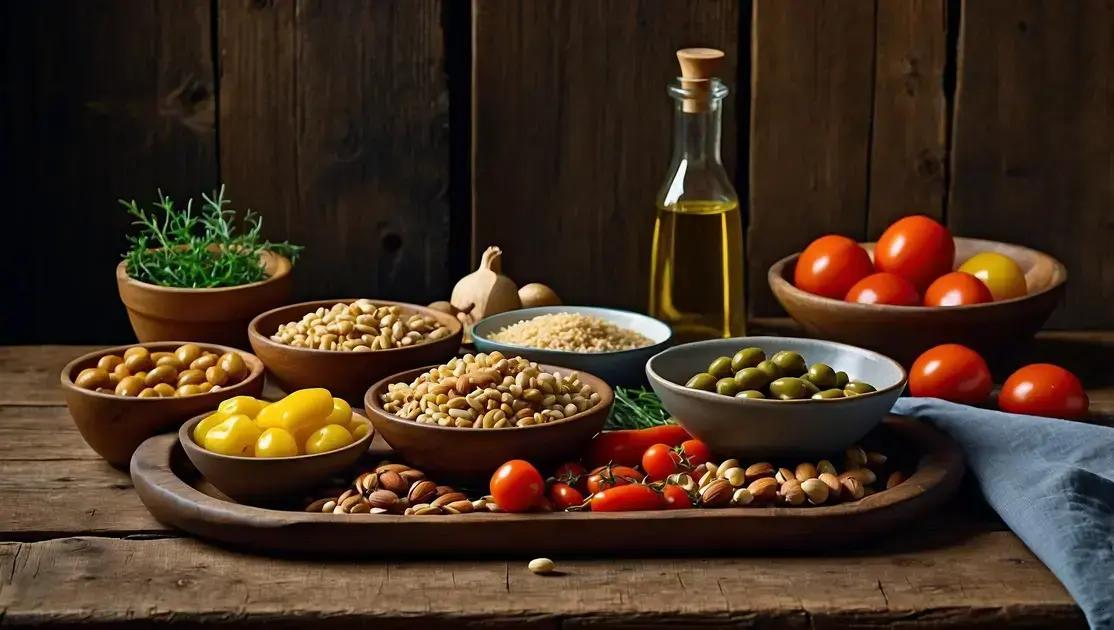
Diet balance in the Mediterranean diet involves eating a variety of plant-based foods, healthy fats like olive oil, moderate portions of fish and dairy, and limiting red meat and processed foods for optimal nutrition and health.
Diet Balance often sounds like a buzzword, but in the Mediterranean diet, it’s about enjoying food without extremes. Have you ever wondered how keeping things moderate and varied can truly impact your health? Let’s explore how this approach shapes a sustainable way to eat.
understanding diet balance: what it really means
Understanding diet balance means recognizing the importance of consuming the right amounts of different food groups to maintain good health. It isn’t about strict restrictions but about finding harmony between what you eat and what your body needs. A balanced diet provides essential nutrients like carbohydrates, proteins, fats, vitamins, and minerals.
These nutrients work together to fuel your body, support your immune system, and keep your organs functioning properly. For example, carbohydrates give you energy, proteins build and repair tissues, and fats help absorb vitamins. Balance also means avoiding too much of any one type of food, which can lead to deficiencies or excesses that harm your health.
Achieving diet balance involves mindful eating—paying attention to portion sizes, eating a variety of foods, and listening to your body’s hunger and fullness signals. This approach helps prevent overeating and encourages a sustainable, enjoyable way to nourish yourself every day.
key principles of the Mediterranean diet for balance
The Mediterranean diet is built on key principles that promote balance and health. It emphasizes eating mostly plant-based foods like fruits, vegetables, whole grains, legumes, and nuts. These provide important vitamins, minerals, and fiber. Olive oil is the main source of fat and contains healthy monounsaturated fats that support heart health.
Fish and seafood are eaten regularly for their omega-3 fatty acids, which reduce inflammation. Poultry, eggs, and dairy are included in moderation, while red meat and sweets are limited. This approach encourages variety and portion control, helping maintain a balanced intake of nutrients.
Hydration is also central, typically through water and moderate consumption of red wine during meals. The diet’s focus on fresh, minimally processed foods reduces added sugars and unhealthy fats, supporting overall well-being.
By following these principles, the Mediterranean diet fosters a balanced diet that sustains energy and reduces the risk of chronic diseases. It is not strict but flexible, making it easier for many to follow long term.
how moderation influences your daily food choices
Moderation plays a crucial role in shaping healthy daily food choices. It means not eating too much or too little of any food group, helping you avoid health problems tied to overconsumption or nutrient deficiencies. By controlling portion sizes and frequency, moderation supports balanced nutrition and weight management.
For example, enjoying sweets occasionally instead of daily prevents excess sugar intake, while including a variety of foods ensures diverse nutrients. Moderation also guides how often you eat certain fats or processed foods, emphasizing whole and natural options instead.
Mindful eating helps apply moderation by encouraging you to notice hunger and fullness cues. It prevents overeating by fostering awareness around why and how much you eat rather than eating out of habit or stress.
In practical terms, using smaller plates, sharing meals, and planning snacks wisely are simple strategies to keep portions in check. Over time, these habits create a sustainable lifestyle that balances enjoyment and health without rigid restrictions.
importance of variety in nutrients and food groups
The importance of variety in your diet means eating different types of foods from all the major food groups. This diversity ensures your body gets a wide range of nutrients needed to function well. Each food group offers unique vitamins, minerals, and other benefits, so relying on just a few foods can leave nutritional gaps.
A varied diet includes fruits, vegetables, whole grains, lean proteins, dairy or alternatives, and healthy fats. Different colors in fruits and vegetables represent different antioxidants and nutrients. For example, orange carrots provide beta-carotene, while leafy greens offer iron and calcium.
Mixing up your meals prevents boredom and increases the chances of eating a balanced mix of nutrients. It also helps your gut health by promoting a diverse microbiome. Including a variety of fish, legumes, nuts, and seeds adds healthy fats and proteins vital for energy and cell repair.
By embracing variety, you support your immune system, improve digestion, and reduce the risk of chronic diseases. It’s a simple way to make sure your body receives the best fuel for overall health.
practical tips to achieve diet balance every day
To maintain diet balance every day, start by planning your meals ahead. Incorporate a mix of fruits, vegetables, whole grains, proteins, and healthy fats into each meal. This ensures you get a wide range of nutrients without overdoing any one food group.
Use smaller plates to help control portion sizes. This simple trick can prevent overeating and make your meals feel satisfying. Also, listen to your hunger cues and avoid eating out of boredom or stress.
Stay hydrated by drinking plenty of water throughout the day. Sometimes thirst is confused with hunger, leading to unnecessary snacking. Limit sugary drinks and opt for herbal teas or water instead.
Keep healthy snacks like nuts, fruits, or yogurt handy to avoid reaching for processed or high-calorie options. Preparing meals at home allows better control over ingredients and portions.
Finally, enjoy your food mindfully by eating slowly and savoring each bite. This practice helps you recognize fullness signals and supports better digestion.
common mistakes and how to avoid them in Mediterranean eating
Many people trying the Mediterranean diet make common mistakes that can reduce its benefits. One frequent error is relying too much on bread, pasta, or cheese, which adds extra calories and saturated fat without the right balance of nutrients.
Another mistake is neglecting portion sizes. Even healthy foods can lead to weight gain if eaten in excess. It’s important to enjoy everything in moderation to keep the diet balanced and effective.
Skipping fruits and vegetables or eating the same limited variety can also limit the intake of essential vitamins and antioxidants. Including a broad range of colorful produce supports overall health.
Some forget to choose whole grains over refined grains. Whole grains provide fiber and nutrients that support digestion and heart health.
Avoiding processed foods and sugary treats is critical. While the Mediterranean diet allows occasional indulgences, frequent consumption can undermine its benefits.
Lastly, many overlook regular physical activity, which complements the diet by improving metabolism and cardiovascular health.
Wrapping up diet balance in the Mediterranean diet
Embracing balance, moderation, and variety is key to enjoying the Mediterranean diet fully. By paying attention to portion sizes and including diverse foods, you nourish your body with essential nutrients without feeling deprived.
Avoiding common mistakes and focusing on fresh, whole foods can make this lifestyle both enjoyable and sustainable. Small, mindful changes in daily eating habits can lead to lasting health benefits.
Remember, the Mediterranean diet is not about strict rules but about finding a healthy, flexible, and joyful way to eat that supports long-term wellness.
FAQ – Common questions about diet balance in the Mediterranean diet
What does diet balance mean in the Mediterranean diet?
Diet balance means eating a variety of foods in the right proportions to provide all necessary nutrients without overdoing any food group.
Why is moderation important in daily food choices?
Moderation helps control portion sizes and frequency of food intake, preventing overeating and supporting long-term health.
How does variety benefit my diet?
Variety ensures you get a wide range of vitamins and minerals from different food groups, supporting overall health and preventing nutrient deficiencies.
What are common mistakes in following the Mediterranean diet?
Common mistakes include eating too much bread or cheese, ignoring portion sizes, skipping fruits and vegetables, and consuming too many processed foods.
How can I achieve diet balance every day?
Plan meals ahead, use smaller plates, stay hydrated, keep healthy snacks available, and practice mindful eating to maintain diet balance.
Is physical activity important alongside the Mediterranean diet?
Yes, regular physical activity complements the diet by boosting metabolism and improving cardiovascular health, enhancing overall wellness.