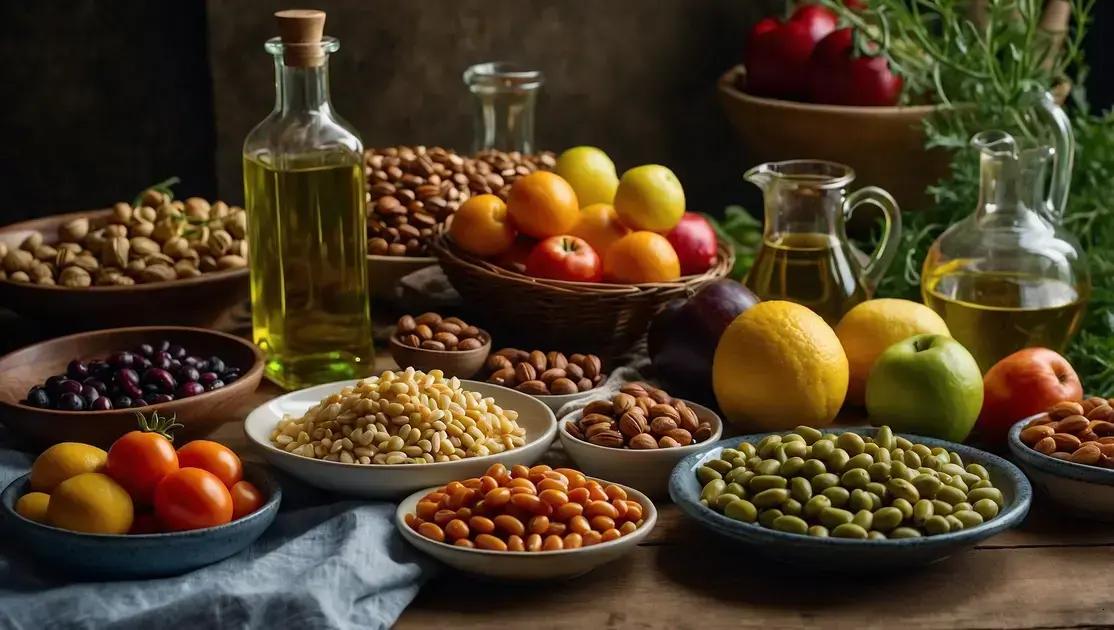
Food diversity in the Mediterranean diet ensures a broad range of essential nutrients by combining fruits, vegetables, whole grains, legumes, olive oil, fish, and nuts, supporting balanced nutrition and reducing the risk of deficiencies.
Food diversity in the Mediterranean diet isn’t just a buzzword — it’s a powerful way to nourish your body. Have you ever wondered how mixing different foods can impact your health? Let’s dive into what makes this diet so nutritionally balanced and how variety plays a starring role.
what is food diversity and why it matters
Food diversity means eating a wide variety of foods from different groups, such as fruits, vegetables, grains, proteins, and fats. This variety ensures your body receives all the essential nutrients it needs to function well. A diverse diet supports better health by providing vitamins, minerals, fiber, and antioxidants that work together to protect against diseases.
Why Food Diversity Matters
When you eat different types of foods, you promote a healthy gut by feeding beneficial bacteria, which improves digestion and immunity. It also helps prevent nutrient deficiencies and keeps mealtime interesting, reducing the chance of overeating or craving unhealthy options.
Diverse food choices can reduce the risk of chronic illnesses like heart disease and diabetes by supplying your body with a balanced mix of nutrients. Incorporating foods with different colors and textures not only nourishes your body but also makes your meals more enjoyable.
core components of the mediterranean diet
The Mediterranean diet is based on a variety of nutrient-rich foods known for their health benefits. Its core components include fresh fruits and vegetables, whole grains, nuts, legumes, olive oil, fish, and moderate amounts of dairy and poultry. This combination provides a balanced intake of essential vitamins, minerals, and healthy fats.
Fruits and Vegetables
These provide fiber, antioxidants, and important nutrients like vitamin C and potassium. Eating a colorful variety enhances nutritional coverage overall.
Whole Grains and Legumes
Whole grains such as barley, oats, and brown rice offer sustained energy and fiber. Legumes like beans and lentils add plant-based protein, fiber, and minerals.
Healthy Fats
Olive oil is a fundamental fat source, rich in monounsaturated fats and antioxidants that support heart health. Nuts and seeds also contribute healthy fats and nutrients.
Protein Sources
Fish and seafood are preferred due to their omega-3 fatty acids, which help reduce inflammation. Poultry and dairy are consumed in moderation, focusing on quality over quantity.
how food diversity enhances nutritional coverage
Food diversity enhances nutritional coverage by ensuring a broader range of vitamins, minerals, and nutrients essential for good health. Eating different foods allows the body to access unique compounds found in various sources, reducing the risk of nutrient gaps. For example, vitamin C from fruits combined with calcium from dairy offers stronger immune and bone support.
Wide Range of Nutrients
Each food group contributes specific nutrients, so diversifying intake helps balance carbohydrates, proteins, fats, fiber, and micronutrients. This balance is crucial for energy, growth, and repair throughout the body.
Improved Gut Health
A varied diet provides diverse fibers and phytochemicals that promote a healthy gut microbiome. This supports digestion and absorption, boosting overall nutrient uptake.
Protection Against Deficiencies
Relying on a few foods can lead to deficiencies. Incorporating many food types helps prevent shortages of important nutrients like iron, zinc, and vitamins.
Synergistic Effects
Some nutrients work better together, such as vitamin D aiding calcium absorption. A diverse diet naturally provides these combinations.
Overall, food diversity is a practical way to nourish the body with everything it needs to function and thrive.
common foods and their nutritional benefits
The Mediterranean diet includes many common foods that offer diverse nutritional benefits essential for maintaining health. Here are some key examples:
Olive Oil
Rich in monounsaturated fats and antioxidants, olive oil supports heart health and reduces inflammation. It is a staple fat source in this diet.
Fresh Fruits and Vegetables
These provide vitamins like C and A, fiber for digestion, and antioxidants that protect cells. Examples include tomatoes, oranges, spinach, and berries.
Whole Grains
Foods such as barley, quinoa, and whole wheat are rich in fiber and complex carbohydrates, offering steady energy and supporting digestive health.
Legumes
Beans, lentils, and chickpeas are packed with plant-based protein, fiber, and essential minerals like iron and magnesium.
Fish and Seafood
Salmon, sardines, and mackerel provide omega-3 fatty acids important for brain function and cardiovascular health.
Nuts and Seeds
Almonds, walnuts, and flaxseeds offer healthy fats, protein, and fiber, helping to control cholesterol and maintain energy levels.
Dairy
Moderate amounts of cheese and yogurt supply calcium and probiotics that support bone and gut health.
tips to incorporate diverse foods into your meals
Incorporating diverse foods into your meals can improve nutrition and enjoyment. Start by adding a new fruit or vegetable each week, trying colorful options to boost vitamins and antioxidants. Experiment with different grains like quinoa or barley instead of only rice or wheat.
Plan Balanced Meals
Include a mix of protein, healthy fats, and carbohydrates at each meal. Use legumes, nuts, and seeds for plant-based proteins alongside fish or poultry to vary nutrient sources.
Cook with Fresh Herbs and Spices
Adding basil, oregano, or cumin enhances flavor without extra calories. These also bring antioxidants and micronutrients to your dishes.
Try New Recipes
Explore Mediterranean or other international cuisines that naturally emphasize food diversity. This can introduce you to new ingredients and cooking methods.
Snack Smart
Choose nuts, seeds, fruits, or yogurt instead of processed snacks. These options provide valuable nutrients and contribute to food variety.
Shop Seasonal and Local
Seasonal produce tends to be fresher and more nutrient-rich. Visiting farmers markets can inspire new food choices and diversify your diet.
potential challenges and mindful eating strategies
When aiming for food diversity, some potential challenges may arise. Limited access to fresh foods, time constraints, and personal preferences can make it hard to maintain variety. Understanding these challenges helps in developing mindful eating strategies that support long-term healthy habits.
Common Challenges
One challenge is the availability of diverse foods, especially in areas where fresh produce or specialty items are scarce. Budget limitations can also impact the ability to buy a wide range of foods.
Busy lifestyles may lead to relying on convenient but less diverse meals. Additionally, unfamiliarity with new ingredients can discourage people from trying different foods.
Mindful Eating Strategies
Planning meals ahead helps ensure you include various food groups and reduces last-minute unhealthy choices. Cooking in batches can save time and allow for more variety throughout the week.
Start small by introducing one new food item or recipe at a time. This gradual approach reduces overwhelm and increases enjoyment.
Listening to your body’s hunger and fullness cues can prevent overeating and promote appreciation of different flavors and textures.
Shopping seasonally and locally can also support access to fresh, diverse ingredients while aligning with sustainable practices.
Embracing food diversity for a healthier lifestyle
Food diversity is key to getting all the nutrients your body needs to stay strong and healthy. By including a variety of foods from the Mediterranean diet, you can enjoy balanced nutrition every day.
Though challenges like time and access may arise, mindful eating strategies can help you overcome them. Simple steps like planning meals and trying new ingredients gradually make a big difference.
Remember, small changes in your food choices can add up to big improvements in your well-being. So, explore diverse foods and make your meals healthier and more enjoyable.
FAQ – Food Diversity and the Mediterranean Diet
What is food diversity and why is it important?
Food diversity means eating a variety of foods from different groups, which helps ensure you get all the essential nutrients your body needs.
What are the main components of the Mediterranean diet?
The Mediterranean diet mainly includes fruits, vegetables, whole grains, legumes, olive oil, fish, nuts, and moderate amounts of dairy and poultry.
How does food diversity improve nutritional coverage?
Food diversity provides a wide range of nutrients by combining different food types, which helps prevent deficiencies and supports overall health.
What are some common Mediterranean foods and their benefits?
Olive oil supports heart health, fruits and vegetables provide antioxidants, fish supplies omega-3s, and legumes offer plant-based protein and fiber.
Can I easily incorporate diverse foods into my meals?
Yes, you can start by adding new fruits or vegetables, trying different grains, planning balanced meals, and exploring recipes from Mediterranean cuisine.
What challenges might I face when trying to eat diverse foods?
Challenges include limited access to fresh foods, time constraints, and unfamiliarity with new ingredients. Mindful planning and gradual changes can help overcome these hurdles.