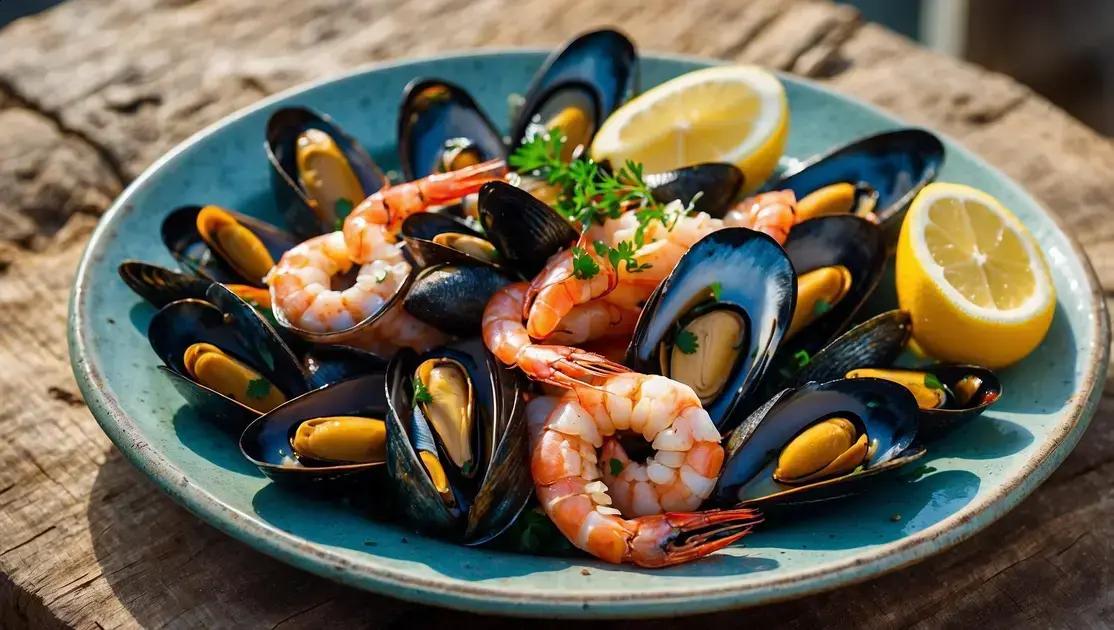
Seafood is a key part of the Mediterranean diet, consumed two to three times weekly, offering heart-healthy omega-3s, essential nutrients, and diverse types like fish and shellfish for optimal nutrition and sustainability.
Seafood isn’t just a tasty option—it’s a cornerstone of the Mediterranean diet that can surprise you with its variety and health perks. Ever wondered how often it’s eaten or which types stand out? Let’s dive in and uncover what makes seafood so special in this beloved diet.
how often seafood is consumed in the Mediterranean diet
In the Mediterranean diet, seafood is consumed regularly, typically two to three times per week. This frequency supports a balanced intake of essential nutrients while complementing other food groups like vegetables, whole grains, and healthy fats. People in Mediterranean regions often enjoy fish and shellfish as main dishes or part of larger meals.
The consumption pattern varies depending on the region and season, but seafood remains a staple due to its availability and cultural importance. For example, coastal areas naturally have higher seafood intake compared to inland regions.
Eating seafood multiple times a week helps maintain heart health and provides lean protein without excess saturated fat. This routine aligns well with the Mediterranean diet’s focus on fresh, minimally processed foods.
Practical tips for incorporating seafood regularly
To enjoy seafood frequently, try including it in simple recipes like grilled fish, seafood salads, or pasta dishes with shrimp. Experimenting with different types of seafood can keep meals exciting and nutrient-rich.
Balancing seafood consumption with plant-based ingredients maximizes benefits while adhering to Mediterranean dietary principles.
common types of seafood in Mediterranean cuisine
The Mediterranean cuisine features a wide variety of seafood, reflecting the region’s rich coastal resources. Common types include fish such as sardines, anchovies, and sea bass, as well as shellfish like mussels, clams, and shrimp. These seafood varieties are enjoyed fresh, often grilled or baked with herbs and olive oil.
Besides fish and shellfish, octopus and squid are also popular and frequently used in traditional dishes. Their tender texture and unique flavor add diversity to the Mediterranean table.
Seafood preparation and serving styles
Preparation is typically simple, highlighting the natural flavors. Seafood can be served as part of stews, salads, or pasta, providing versatility. For example, grilled sardines are a common street food, while mussels might be cooked with tomatoes and garlic for a savory dish.
Using fresh, seasonal seafood ensures the best taste and nutrition, which is a core principle in Mediterranean cooking.
nutritional benefits of eating seafood
Seafood offers numerous nutritional benefits that make it a key component of a healthy diet. It is a rich source of high-quality protein, essential for muscle growth and repair. Additionally, seafood provides important vitamins such as vitamin D and B-complex vitamins, which support energy metabolism and bone health.
Heart-healthy omega-3 fatty acids
One of the most significant benefits of seafood is its omega-3 fatty acids content. These healthy fats help reduce inflammation, lower blood pressure, and improve overall cardiovascular health. Regular consumption of fish like salmon, mackerel, and sardines is linked to a reduced risk of heart disease.
Seafood is typically low in saturated fat and calories, which supports weight management and promotes healthy cholesterol levels.
Other essential nutrients
Seafood also contains important minerals such as iodine, selenium, and zinc. Iodine supports thyroid function, selenium acts as an antioxidant, and zinc is vital for immune health. These nutrients contribute to overall well-being, making seafood a nutrient-dense food choice.
tips for choosing fresh and sustainable seafood
Choosing fresh and sustainable seafood is essential for both health and environmental reasons. Look for seafood with bright, clear eyes and shiny, firm flesh. Avoid any fish that smells overly fishy or sour, as freshness is key to both taste and safety.
Check for sustainability labels
Seek out certifications like the Marine Stewardship Council (MSC) or those from local sustainable fisheries. These labels indicate that the seafood is harvested responsibly, helping protect the oceans and future fish stocks.
Buy from trusted sources such as reputable fish markets or stores committed to sustainability. Asking about the origin and catch methods can also provide insight into the seafood’s environmental impact.
Seasonal and local options
Choosing seafood that is in season and locally sourced often means fresher products with a smaller carbon footprint. This supports local economies and reduces environmental impact from transportation.
By following these tips, you can enjoy seafood that is not only delicious but also better for the planet.
how seafood contributes to heart health
Seafood is well-known for its positive effects on heart health. Eating fish rich in omega-3 fatty acids, like salmon, mackerel, and sardines, can help reduce the risk of heart disease. These healthy fats lower triglyceride levels and reduce inflammation, improving overall cardiovascular function.
Lowering blood pressure and cholesterol
Regular consumption of seafood may also help lower blood pressure and increase good HDL cholesterol. This balance supports healthier blood flow and reduces strain on the heart.
Improved artery function
Omega-3s found in seafood contribute to improved artery elasticity and help prevent the buildup of plaque, which can block arteries and cause heart attacks.
Choosing seafood instead of red meat is a heart-friendly decision within the Mediterranean diet, promoting long-term cardiovascular health.
easy seafood recipes to try at home
Trying easy seafood recipes at home is a great way to enjoy the Mediterranean diet’s benefits. Simple dishes like grilled fish with lemon and herbs require minimal ingredients and cooking time, making them perfect for busy days.
Simple grilled seafood
Marinate fish fillets or shrimp in olive oil, garlic, and fresh herbs, then grill for a few minutes on each side. Serve with a side of steamed vegetables or a fresh salad.
Quick seafood pasta
Cook pasta and toss it with sautéed garlic, cherry tomatoes, and your choice of seafood such as mussels or shrimp. Add a splash of white wine and fresh parsley for a flavorful meal.
Seafood salads
Combine cooked shrimp or crab meat with chopped vegetables, lemon juice, and olive oil for an easy, refreshing salad. This no-cook option is perfect for warm weather and light lunches.
These recipes highlight how versatile and accessible seafood can be, encouraging more regular consumption at home.
Wrapping up seafood in the Mediterranean diet
Seafood is a tasty and nutritious part of the Mediterranean diet that brings many health benefits, especially for the heart. Eating it regularly, choosing fresh and sustainable options, and trying simple recipes at home can make enjoying seafood easy and rewarding.
By adding a variety of seafood to your meals, you not only support your health but also enjoy the rich flavors of Mediterranean cuisine. Exploring these options can help you lead a balanced and flavorful lifestyle.
FAQ – Common Questions About Seafood in the Mediterranean Diet
How often should I eat seafood to benefit from the Mediterranean diet?
Eating seafood two to three times per week is recommended to gain the nutritional and health benefits of the Mediterranean diet.
What are the most common types of seafood in Mediterranean cuisine?
Common Mediterranean seafood includes sardines, anchovies, sea bass, mussels, clams, shrimp, octopus, and squid.
What nutritional benefits does seafood provide?
Seafood is rich in high-quality protein, omega-3 fatty acids, vitamins D and B-complex, and minerals like iodine, selenium, and zinc, which support heart health and immune function.
How can I choose fresh and sustainable seafood?
Look for seafood with bright eyes and firm flesh, check for sustainability certifications like MSC, buy locally and seasonally, and choose trusted vendors.
How does seafood contribute to heart health?
Seafood’s omega-3 fatty acids help reduce inflammation, lower blood pressure, improve cholesterol levels, and support healthy artery function, lowering heart disease risk.
What are some easy seafood recipes to try at home?
Try simple dishes like grilled fish with herbs, seafood pasta with garlic and tomatoes, or refreshing seafood salads with lemon and olive oil for quick, healthy meals.