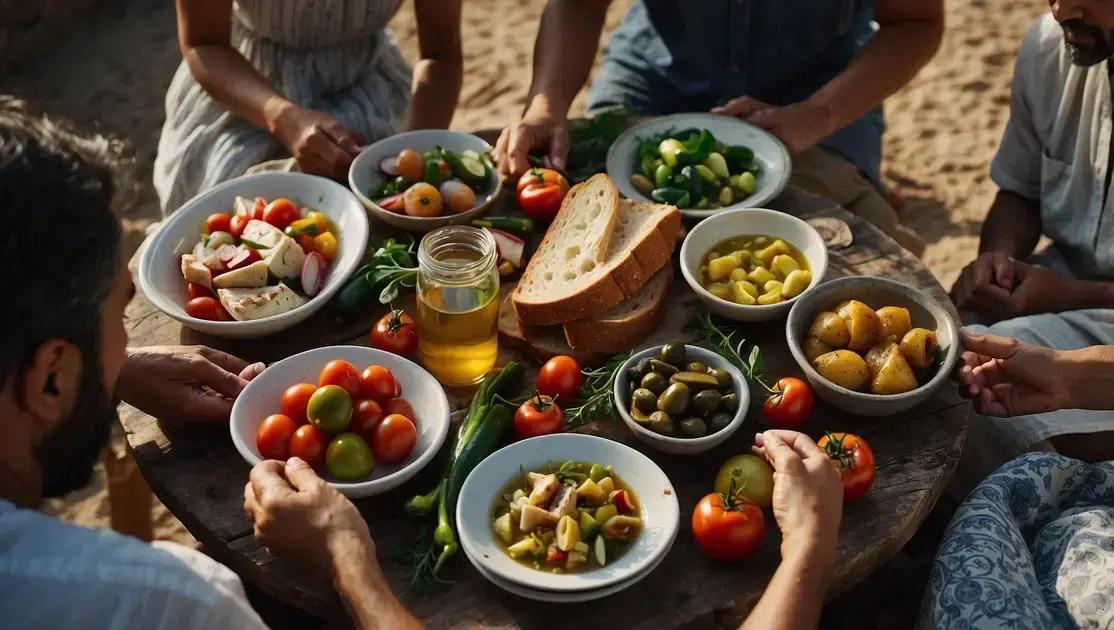
Traditional Meals in Mediterranean cultures focus on fresh, seasonal ingredients like olive oil, vegetables, and seafood, combined with specific meal timings that promote digestion and social connection.
Traditional Meals in Mediterranean cultures go beyond food; they’re a window into history, lifestyle, and community bonds. Ever noticed how meal timing and composition vary so much, yet feel so natural? Let’s dive into what makes these traditions unique and still relevant.
key components of mediterranean traditional meals
Mediterranean traditional meals are characterized by a harmonious balance of fresh and natural ingredients. Olive oil serves as the primary fat source, enriching dishes with flavor and healthy fats. Vegetables like tomatoes, eggplants, and leafy greens play a central role, providing essential nutrients and vibrant colors.
Grains, especially whole wheat bread and pasta, offer a satisfying base, while legumes such as chickpeas and lentils add protein and fiber. Seafood is highly favored along coastal regions, introducing omega-3 fatty acids to the diet. Cheese and yogurt appear in moderation, contributing calcium and probiotics.
Herbs and Spices
Fresh herbs like basil, oregano, and rosemary add aromatic depth without overpowering the natural flavors. Spices such as cumin and cinnamon may also be included, reflecting the cultural diversity of the Mediterranean basin.
Seasonal fruits often appear both in meals and desserts, emphasizing the use of local produce. This combination not only sustains nutritional balance but also respects environmental and cultural traditions that have been cultivated over generations.
how meal timing influences digestion and social life
Meal timing in Mediterranean cultures is more than a routine; it greatly affects both digestion and social interaction. Eating at consistent times allows the digestive system to work efficiently, improving nutrient absorption and reducing discomfort. Typically, meals are spaced to provide energy throughout the day, with a lighter breakfast and a more substantial lunch.
Impact on Digestion
Regular meal timing helps regulate metabolism and supports gut health. For example, the traditional late lunch, rich in vegetables and whole foods, gives the stomach time to digest slowly and thoroughly, promoting better digestion. Avoiding late heavy meals also prevents insomnia and indigestion.
Social Aspects
In Mediterranean cultures, meal times are social occasions. Long lunches and relaxed dinners provide opportunities for family and friends to connect. This social bonding can reduce stress, which positively influences digestive health. Meals are seen as moments to slow down and enjoy company, enhancing overall well-being.
Adapting to these meal timings can encourage healthier eating habits and stronger social ties. It reflects a cultural value that food is not just sustenance but an important part of daily life and relationships.
seasonal ingredients and their role in traditional dishes
Seasonal ingredients play a crucial role in Mediterranean traditional dishes, ensuring freshness, flavor, and nutritional value. Using produce at its peak season means meals are more vibrant and rich in vitamins and minerals. Farmers and home cooks alike rely on seasonal availability to plan menus and preserve techniques.
Benefits of Seasonal Cooking
Seasonal ingredients offer superior taste and support sustainable farming practices. For example, spring brings artichokes and asparagus, while summer features tomatoes, zucchini, and fresh herbs like basil and mint. Autumn is known for eggplants, pumpkins, and figs, with winter favoring citrus and root vegetables.
Preservation and Tradition
Many Mediterranean cultures have traditional methods for extending the use of seasonal foods, such as drying herbs, curing olives, or making preserves. These practices allow the rich flavors of the harvest to be enjoyed year-round and connect present-day meals with cultural heritage.
By respecting the natural growing cycles, traditional dishes not only taste better but also align with environmental wisdom. This harmony between nature and cuisine is a vital part of Mediterranean food culture and daily life.
regional variations across mediterranean countries
The Mediterranean region includes many countries, each with its own unique food traditions and ingredients. These regional variations reflect climate, geography, and history while sharing core elements like olive oil, fresh produce, and grains.
Southern Europe
In countries like Italy, Spain, and Greece, meals often emphasize pasta, seafood, and a variety of fresh vegetables. Italian cuisine is well known for its use of tomatoes and basil, while Spanish dishes highlight paprika and cured meats such as chorizo. Greece features olives, feta cheese, and herbs like oregano.
North Africa and the Eastern Mediterranean
Countries such as Morocco, Lebanon, and Turkey add spices and legumes more prominently. Tagines, couscous, and dishes with cinnamon and cumin are common. Mezze platters offer a range of small dishes featuring hummus, tabbouleh, and stuffed grape leaves.
Common Themes and Differences
While each area has distinct recipes, fresh, local ingredients and shared cooking techniques create a sense of unity. Bread, olives, and wine often accompany meals, though preparation styles can vary widely from grilled vegetables in Greece to slow-cooked stews in Morocco.
the cultural significance of shared meals
Shared meals hold deep cultural significance in Mediterranean societies, serving as more than just eating occasions. They are moments to strengthen family bonds, foster community, and celebrate traditions. Sitting down together encourages conversation, storytelling, and connection that transcend daily routines.
Building Relationships
Meal sharing is an important way to nurture relationships. In many Mediterranean homes, meals last longer and involve multiple courses, allowing people to relax and enjoy each other’s company. This tradition supports emotional well-being and a strong sense of belonging.
Rituals and Celebrations
Shared meals often coincide with religious or seasonal celebrations, marking important life events and cultural heritage. From weddings to harvest festivals, food symbolizes unity and gratitude. Recipes passed down through generations carry stories and memories that keep culture alive.
By embracing these communal moments, Mediterranean cultures emphasize harmony between food, people, and values. This approach encourages a mindful and joyful eating experience, highlighting the social aspect of traditional meals.
modern adaptations of traditional mediterranean eating habits
Modern adaptations of traditional Mediterranean eating habits blend old practices with contemporary lifestyles. Busy schedules and global influences have led to quicker preparation methods while maintaining core ingredients like olive oil, fresh vegetables, and whole grains.
Incorporation of Convenience
Meal prepping and using kitchen gadgets help people enjoy Mediterranean flavors without extensive cooking times. Ready-made sauces, frozen vegetables, and healthy convenience foods make it easier to sustain the diet in modern life.
Global Influence and Innovation
Chefs worldwide experiment by combining Mediterranean staples with international cuisines, introducing new textures and tastes while respecting traditional health principles. Plant-based options and gluten-free alternatives have also emerged to meet current dietary needs.
Despite these changes, the focus on fresh, natural ingredients and balanced meals continues to define Mediterranean eating. Innovation ensures that its benefits remain accessible and appealing in a fast-paced world.
Embracing Mediterranean Traditions in Modern Life
Traditional Mediterranean meals offer rich flavors and cultural depth that connect people to their heritage. Understanding the components, timing, and social aspects of these meals reveals why they are both healthy and meaningful.
Modern adaptations keep these traditions alive by blending convenience with classic ingredients, ensuring that the benefits remain relevant today. By appreciating and incorporating these eating habits, anyone can enjoy nourishing food that brings people together.
Ultimately, Mediterranean food culture reminds us that meals are not just about eating but also about community, seasonality, and balance—a timeless approach worth preserving and celebrating.
FAQ – Traditional Meals in Mediterranean Cultures
What are the main ingredients in traditional Mediterranean meals?
Traditional Mediterranean meals commonly include olive oil, fresh vegetables, whole grains, legumes, seafood, and moderate amounts of cheese and yogurt.
How does meal timing affect Mediterranean eating habits?
Meal timing in Mediterranean cultures supports digestion and social interaction by encouraging regular meal times and relaxed, communal eating occasions.
Why are seasonal ingredients important in Mediterranean cooking?
Seasonal ingredients ensure freshness, better flavor, and higher nutritional value, while supporting sustainable agriculture and preserving cultural traditions.
How do Mediterranean meals vary across different regions?
Regional variations reflect local climate and history, with Southern Europe focusing on pasta and seafood, while North Africa and the Eastern Mediterranean emphasize spices, legumes, and dishes like tagines and mezze.
What is the cultural significance of shared meals in Mediterranean societies?
Shared meals strengthen family bonds, encourage socializing, and celebrate traditions, making food a key part of community life and cultural identity.
How have traditional Mediterranean eating habits adapted to modern lifestyles?
Modern adaptations include faster preparation methods, use of convenience foods, and global culinary influences, while maintaining a focus on fresh ingredients and balanced nutrition.