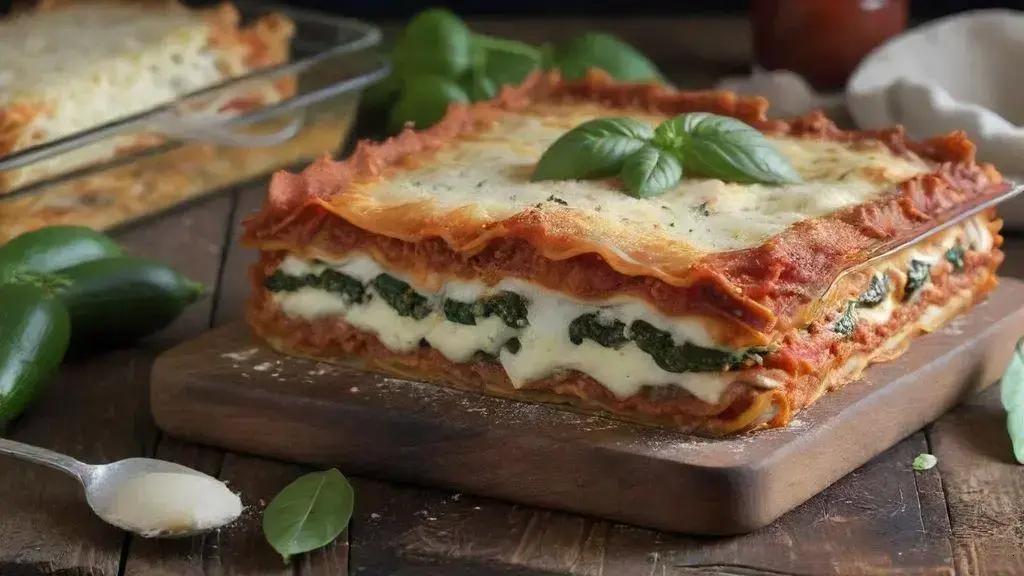
vegetarian lasagna
Vegetarian lasagna, delicious and light! Discover how easy it is to prepare this healthy, irresistible option for your next meal.
Ingredients
Method
Preparing the vegetables
- Preheat the oven to 200°C (390°F). Slice the eggplant and zucchini lengthwise into thin strips.
- Arrange the slices on a baking tray, brush lightly with olive oil, and sprinkle with a bit of salt. Roast for 15 minutes until just tender. Set aside.
Preparing the ricotta and spinach filling
- In a bowl, mix together the ricotta cheese, chopped spinach, salt, pepper, and half of the parmesan cheese until well combined.
Preparing the tomato sauce
- Heat olive oil in a pan. Sauté the diced onion and minced garlic until soft and fragrant.
- Add the tomato sauce and dried oregano. Simmer for 5-10 minutes for flavors to blend. Taste and adjust salt and pepper as needed.
Assembly and baking
- Spread a thin layer of tomato sauce on the bottom of a baking dish.
- Layer lasagna sheets over the sauce, followed by roasted vegetables, ricotta and spinach filling, a bit more tomato sauce, and a sprinkle of mozzarella cheese.
- Repeat the layers, finishing with a layer of lasagna sheets, remaining tomato sauce, and top generously with mozzarella and parmesan cheese.
- Cover with foil and bake at 200°C (390°F) for 30 minutes. Remove foil and bake for another 10-15 minutes until golden and bubbly.
- Let it rest for 10 minutes before slicing and serving. Garnish with fresh basil if desired.
Notes
Vegetarian lasagna is a true classic that stands out for its versatility and crowd-pleasing appeal. It's perfect for family gatherings, weeknight dinners, and meal prepping, as it reheats beautifully and the flavors deepen over time. Whether you’re a long-time vegetarian or simply looking to add more vegetables to your meals, this dish adapts easily to different tastes and seasons.
Practical Tips & Tricks
- Roast, don’t boil, your veggies: Roasting eggplant and zucchini before assembling the lasagna ensures they don’t release excess moisture while baking. This keeps your layers distinct and prevents soggy results.
- Noodle choices: You can use traditional, whole wheat, or even gluten-free lasagna sheets. No-boil noodles can be a time-saver—just ensure there’s enough sauce to cover them so they cook evenly.
- Add flavor with herbs: Fresh basil or thyme can be added between layers or mixed with the ricotta for extra fragrance. Don’t forget a generous grind of black pepper for warmth.
Preparation Advice
- Layer thoughtfully: Always start and end with sauce to ensure the noodles absorb enough liquid and cook evenly.
- Let it rest: After baking, allow the lasagna to rest for at least 10 minutes before slicing. This helps set the layers and makes serving much neater.
- Cheese tips: For a gooey, golden top, use a mix of mozzarella and parmesan, but feel free to substitute with provolone or grated gruyère for a flavor twist.
Serving & Adaptations
- Add protein: Include cooked lentils or sautéed mushrooms in the ricotta layer for added protein and texture without losing the vegetarian essence.
- Make it vegan: Replace ricotta and mozzarella with cashew-based cheese or your favorite plant-based alternatives.
- Side dish ideas: Pair with a simple arugula salad with lemon vinaigrette, garlic bread, or a light vegetable soup for a satisfying meal.