
📄 Some content on this site was written with AI assistance and reviewed by Mileni Sabatini before publishing.
The moment you pull this dish from the oven, the golden crust crackles delightfully, hinting at the warmth and rich flavors inside. I love letting it sit for just a few minutes before serving; this allows the flavors to meld and the texture to settle, making each bite more satisfying. If you’re aiming for extra depth, try adding a splash of lemon juice to the mix—it brightens everything up beautifully. This small touch really elevates the whole experience.
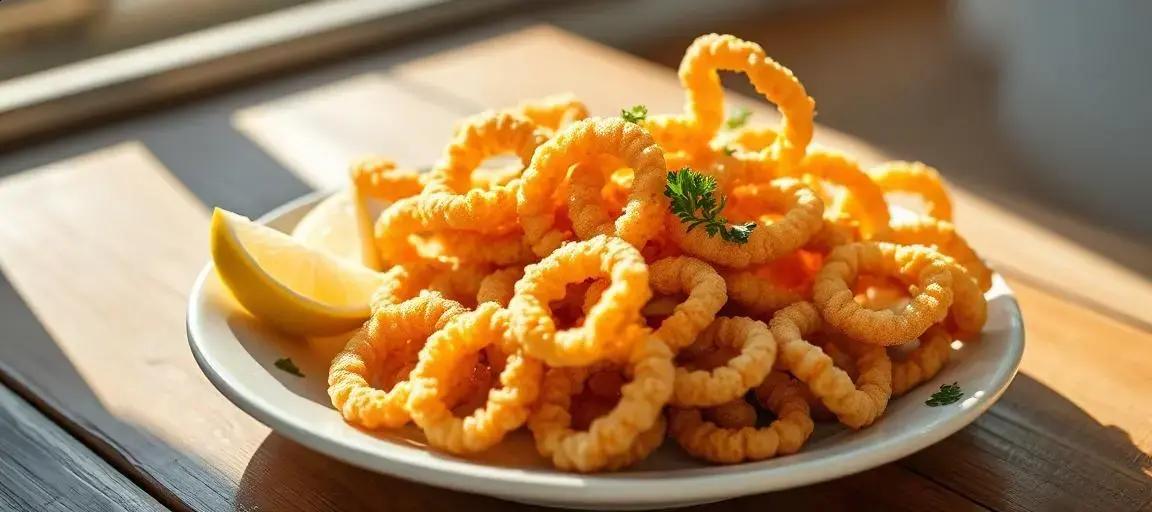
fried calamari
Ingredients
Method
- Pat the calamari completely dry with paper towels. Damp squid = soggy coating. Drying makes the crust cling and stay crisp.
- In a shallow bowl, combine flour, cornstarch, salt, and black pepper.
- Toss the calamari in the flour mixture. Make sure every ring and tentacle is coated, but shake off any excess flour—too much will clump in the oil.
- Heat about 1 inch of vegetable oil in a heavy pan over medium-high. It’s ready when a pinch of flour sizzles instantly (around 180°C / 350°F).
- Fry calamari in small batches for 1–2 minutes, stirring often with a slotted spoon. They should puff and go pale gold, not dark brown. Overcrowd the pan and they’ll steam, not fry.
- Transfer cooked calamari to a plate lined with paper towels. Salt lightly while hot—the salt sticks better this way.
- Repeat with the rest, giving the oil a second to bounce back between batches if needed.
- Serve immediately with lemon wedges and chopped parsley. Calamari doesn’t wait—the texture goes from crisp to chewy fast, so make everyone come to the table first.
Notes
How to stay crisp (and avoid chewiness)
Calamari wants high heat and fast frying. Anything more than two minutes and the texture starts to slide toward rubbery. I always test-fry a single ring first—if it browns too fast, I drop the temp; if it doesn’t sizzle, I wait longer. Don’t crowd the pan: I work in batches so the oil temperature never crashes and each piece crisps evenly. Here’s my stubborn trick: After I toss the calamari in flour, I let it sit for 5 minutes on a rack or plate before frying. This hydrates the flour just enough to lock onto the rings, so you get fewer “naked” spots when they hit the oil.Ingredients and swaps that work
A mix of cornstarch and flour is the reason you get shattery, light crust—not just a thick, bready one. Only flour works in a pinch, but the crust will be heavier and less crisp. Gluten-free flour blends work, but skip almond flour. It burns too fast and turns the coating mushy. Fresh or frozen calamari both work—just thaw and dry really well if using frozen. Pre-cleaned, sliced tubes save time, but I always keep the tentacles for extra crunch and authenticity.Make-ahead tips
You can clean and slice calamari a day ahead and store them wrapped in paper towels in the fridge. The breading mix can be prepared a week in advance. But once fried, calamari won't stay crisp—this one is all about eating right away. Leftovers go chewy, but I use them chopped in a seafood pasta or stir-fry the next day if I have any (rarely).Whenever I’m missing my family’s seaside getaways, I make fried calamari. It’s almost meditative—flour, sizzle, lemon, just a handful of ingredients and five minutes of full attention.
How to stay crisp (and avoid chewiness)
Calamari wants high heat and fast frying. Anything more than two minutes and the texture starts to slide toward rubbery. I always test-fry a single ring first—if it browns too fast, I drop the temp; if it doesn’t sizzle, I wait longer. Don’t crowd the pan: I work in batches so the oil temperature never crashes and each piece crisps evenly.
Here’s my stubborn trick: After I toss the calamari in flour, I let it sit for 5 minutes on a rack or plate before frying. This hydrates the flour just enough to lock onto the rings, so you get fewer “naked” spots when they hit the oil.
Ingredients and swaps that work
A mix of cornstarch and flour is the reason you get shattery, light crust—not just a thick, bready one. Only flour works in a pinch, but the crust will be heavier and less crisp. Gluten-free flour blends work, but skip almond flour. It burns too fast and turns the coating mushy.
Fresh or frozen calamari both work—just thaw and dry really well if using frozen. Pre-cleaned, sliced tubes save time, but I always keep the tentacles for extra crunch and authenticity.
Make-ahead tips
You can clean and slice calamari a day ahead and store them wrapped in paper towels in the fridge. The breading mix can be prepared a week in advance. But once fried, calamari won’t stay crisp—this one is all about eating right away. Leftovers go chewy, but I use them chopped in a seafood pasta or stir-fry the next day if I have any (rarely).