
📄 Some content on this site was written with AI assistance and reviewed by Mileni Sabatini before publishing.
Stuffed grape leaves — dolmades in Greek, warak dawali in Arabic — are one of those dishes that look complicated but aren’t. The process is repetitive, not difficult. Once you’ve rolled the first five, the rest go quickly.
I use jarred grape leaves because fresh ones are hard to find outside of spring. The jarred version works well as long as you rinse them under cold water and let them soak for 20 minutes to reduce the salt. Don’t skip the soak — straight from the jar they’re too salty and a bit stiff.
The filling is rice, fresh herbs, lemon juice, and olive oil. No meat. The rice absorbs all the flavors while the rolls steam in the pot. I add a layer of lemon slices at the bottom of the pot — they prevent sticking and add more citrus flavor to the broth that the rolls cook in. Serve them cold or at room temperature with a wedge of lemon and a bowl of plain yogurt on the side.
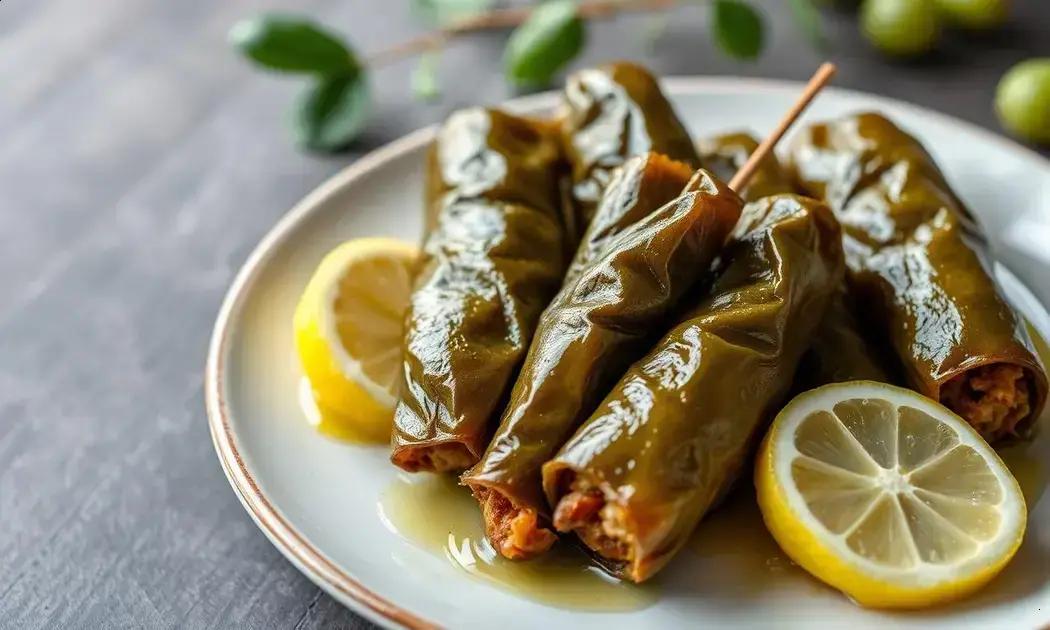
stuffed grape leaves
Ingredients
Method
- Blanch fresh grape leaves by boiling them for 2 minutes, then drain and cool. If using jarred leaves, rinse well to remove excess brine and pat dry.
- In a bowl, mix the rice, chopped onions, herbs (dill, parsley, mint), pine nuts, raisins (if using), 2 tablespoons olive oil, salt and black pepper. Stir until well combined.
- Place a grape leaf shiny-side down on a clean surface. Add about one tablespoon of filling near the stem end.
- Fold the sides over the filling, then roll tightly from the stem end to the tip, forming a small cylinder. Repeat with the remaining leaves and filling.
- Line the bottom of a large saucepan with leftover or torn grape leaves to prevent sticking.
- Arrange the stuffed grape leaves seam-side down in layers inside the pan.
- Drizzle 2 tablespoons olive oil and pour lemon juice and water or broth over the stuffed leaves. Place a heat-safe plate on top to weigh them down.
- Cover with a lid and simmer on low heat for about 40-45 minutes, or until the rice is tender and most of the liquid is absorbed.
- Let the stuffed grape leaves cool slightly. Serve warm or at room temperature, drizzled with extra olive oil and lemon wedges, if desired.
Notes
Handy Tips for Excellent Stuffed Grape Leaves
- Soak rice ahead: Soaking your rice for 20 minutes before mixing the filling helps it cook evenly and keeps the grains fluffy inside the wraps.
- Work with pliable leaves: If your grape leaves are tough, blanch them quickly in hot water to soften and make rolling easier.
- Don’t overstuff: Leave room for the rice to expand during cooking. Overfilled wraps may burst open.
Alternative Ingredients and Variations
- Vegan twist: While the recipe here is already plant-based, you can add cooked lentils or finely chopped mushrooms for a protein boost.
- Different herbs: Try adding cilantro, basil, or green onions for unique aromas and flavors.
- With meat: For a traditional variation, add ground lamb or beef to the filling. Sauté the meat first with onions before mixing with rice.