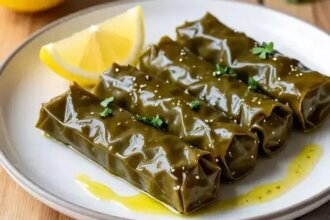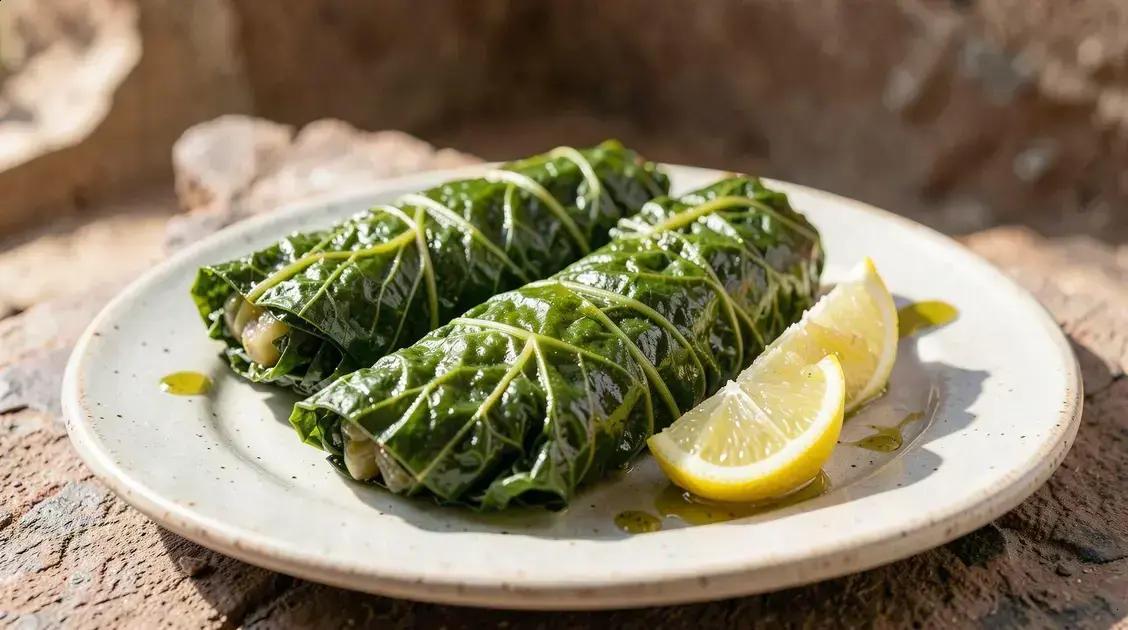
stuffed grape leaves
Stuffed grape leaves, a Mediterranean classic. Discover a lighter, healthy version—perfect for quick meals, rich in flavor and tradition!
Ingredients
Method
Preparation
- Rinse the grape leaves thoroughly to remove excess brine if using jarred leaves. Pat them dry and set aside.
- In a large bowl, combine cooked brown rice, chopped onions, tomato, parsley, mint, lemon zest, 1 tablespoon olive oil, salt, and black pepper. Mix until well blended.
- Place a grape leaf shiny side down. Add 1 tablespoon of the filling near the stem end. Fold in the sides and roll tightly, like a burrito. Repeat with remaining grape leaves and filling.
- Line the bottom of a large pot with a few extra grape leaves to prevent sticking.
- Arrange the stuffed grape leaves, seam-side down, snugly in layers in the pot.
- Drizzle the remaining olive oil and squeeze the lemon juice over the prepared rolls.
- Pour the vegetable broth over the rolls, ensuring they are just covered. Place a small plate on top to prevent them from unrolling while cooking.
- Bring to a simmer over medium-low heat. Cover and cook for about 40-45 minutes, until the leaves are tender and the filling is cooked through.
- Let cool slightly before serving. Serve warm or at room temperature with lemon wedges.
Notes
Stuffed grape leaves, known as dolmas in many Mediterranean cuisines, are celebrated for their versatility and timeless appeal. They shine as a nutritious appetizer, a savory snack, or even a light main course—ideal for picnics, mezze spreads, and holiday gatherings. Their popularity lies in their fresh, zingy flavors paired with the satisfying texture of tender grape leaves wrapped around aromatic rice and herbs.
Helpful Tips and Ingredient Swaps
- Choose the best grape leaves: Fresh or jarred grape leaves both work well, but always rinse jarred leaves thoroughly to remove brine. If they're too salty, soak briefly in warm water before filling.
- Filling variations: Try adding toasted pine nuts, currants, or a pinch of cinnamon for a touch of sweetness and depth. For a heartier option, ground lamb or beef can be mixed into the filling.
- Rice substitutions: Brown rice adds a wholesome touch, but white rice cooks more quickly and offers a more traditional texture. Quinoa also works for a gluten-free twist.
Techniques for Success
- Rolling technique: Place the shiny side of the leaf down and make tight, compact rolls—this helps them hold together during cooking and serving.
- Layering and simmering: Lining the pot with a few extra grape leaves prevents sticking and scorching. Placing a heatproof plate on top of the layered rolls keeps them from unraveling as they cook.
- Taste and adjust: Since the intensity of lemon and the salinity of grape leaves can vary, taste the filling before rolling, and adjust the seasoning to your liking.