
📄 Some content on this site was written with AI assistance and reviewed by Mileni Sabatini before publishing.
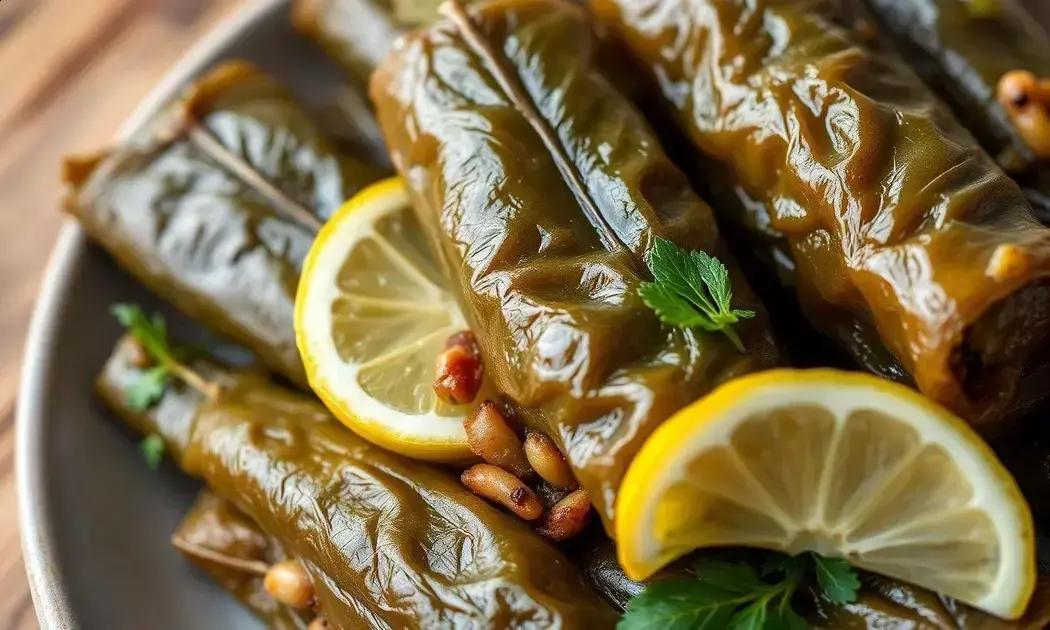
stuffed grape leaves
Stuffed grape leaves surprise with flavor and freshness. Prepare this healthy recipe in minutes for a practical, protein-packed meal.
Ingredients
Method
- Prepare the grape leaves: If using fresh grape leaves, blanch in boiling water for 2 minutes, then drain and set aside. If using jarred grape leaves, rinse well under cold water to remove excess brine.
- Mix the filling: In a large bowl, combine uncooked rice, ground meat, onion, tomato, parsley, mint, salt, pepper, 1 tablespoon olive oil, and 1 tablespoon lemon juice. Mix until fully combined.
- Stuff the leaves: Place a grape leaf shiny side down with the stem end toward you. Add about 1 tablespoon of filling near the bottom center of each leaf. Fold the sides over the filling and roll up tightly like a cigar. Repeat for all leaves.
- Arrange in pot: Line the bottom of a large pot with a few unused or torn grape leaves to prevent sticking. Arrange the stuffed leaves seam-side down, packing them snugly in layers.
- Cook: Drizzle remaining 1 tablespoon olive oil and 1 tablespoon lemon juice over the stuffed grape leaves. Place a heatproof plate on top to keep them in place. Add enough water to barely cover. Bring to a simmer over medium-low heat, cover, and cook for 45–50 minutes, until the rice is cooked and the leaves are tender.
- Serve: Remove from pot and cool slightly. Serve warm or at room temperature with extra lemon wedges, if desired.
Notes
Stuffed grape leaves are beloved throughout the Mediterranean and Middle East, prized for their refreshing taste and remarkable adaptability. Whether served as an appetizer at festive gatherings or as a light meal on a busy day, these little parcels offer a balance of savory filling and zesty notes that delight every palate. Their versatility also means you can easily tailor the filling to your preferences or dietary needs.
Tips for Perfect Stuffed Grape Leaves
- If grape leaves feel tough or thick, blanch them briefly in boiling water—even if they’re jarred. This makes them more pliable and prevents tearing during rolling.
- Don’t overfill the leaves. The rice will expand as it cooks, so use only about a tablespoon of filling for each leaf, then roll tightly to keep everything secure.
- Ground beef, lamb, or turkey all work beautifully here. For a vegan twist, replace meat with more rice, lentils, or finely chopped mushrooms.
- Control the tanginess by adding more or less lemon juice, both in the filling and drizzled on top before simmering.
Key Preparation Techniques
- Line the pot with a few extra grape leaves to create a natural buffer—this helps prevent your stuffed leaves from sticking and breaking.
- Placing a plate or small lid on top of the rolled leaves keeps them snug while they cook, ensuring they hold their shape and don’t unravel.
- Let the stuffed grape leaves rest for a few minutes after cooking. This helps the flavors meld and makes them easier to handle.
Serving Suggestions and Variations
- Serve at room temperature or chilled for a refreshing appetizer. Drizzle with extra virgin olive oil and extra lemon before serving.
- Pair with Greek yogurt, tzatziki, or a simple cucumber salad to complement their bright flavors.
- For extra aroma, add a touch of cinnamon or allspice to the filling. Chopped pine nuts or currants can give a sweet-savory twist if you’re after a more traditional style.