Home / Breads / Ciabatta classic dish

Ciabatta classic dish

Ciabatta
Ciabatta

ciabatta

Ciabatta bread recipe with a golden crust and soft crumb. Discover easy, homemade ciabatta for flavorful sandwiches and snacks!
Total Time 3 hours 1 minute
Servings: 10 slices
Course: Bread
Cuisine: Italian
Calories: 1500

Ingredients
  

  • 500 g bread flour preferably high-protein
  • 350 ml water room temperature
  • 10 g salt
  • 5 g active dry yeast or instant yeast
  • 1 tbsp olive oil plus extra for greasing

Method
 

  1. Mix the flour, yeast, and salt in a large bowl. Make a well in the center.
  2. Pour in the water and olive oil. Stir with a sturdy spoon until you have a sticky, wet dough.
  3. Cover the bowl with plastic wrap or a damp cloth. Let it rest at room temperature for 15 minutes.
  4. With a wet hand, stretch and fold the dough in the bowl several times. Repeat this every 20 minutes, for 1 hour.
  5. Let the dough rise for about 1.5 to 2 hours, or until doubled in volume.
  6. Dust a work surface with flour. Turn out the dough gently and use floured hands to shape it roughly into a rectangle. Avoid deflating it.
  7. Cut the dough in half lengthwise and lay each piece on a parchment-lined baking sheet. Sprinkle with flour and cover with a cloth. Let it rest for 45 minutes.
  8. Preheat your oven to 230°C (446°F) and place an empty baking tray on the bottom rack.
  9. Slide the ciabatta loaves into the hot oven. Carefully pour a cup of hot water into the empty tray to create steam, and bake for 22-25 minutes until golden brown and crusty.
  10. Remove and cool on a wire rack. Wait until completely cooled before slicing.

Notes

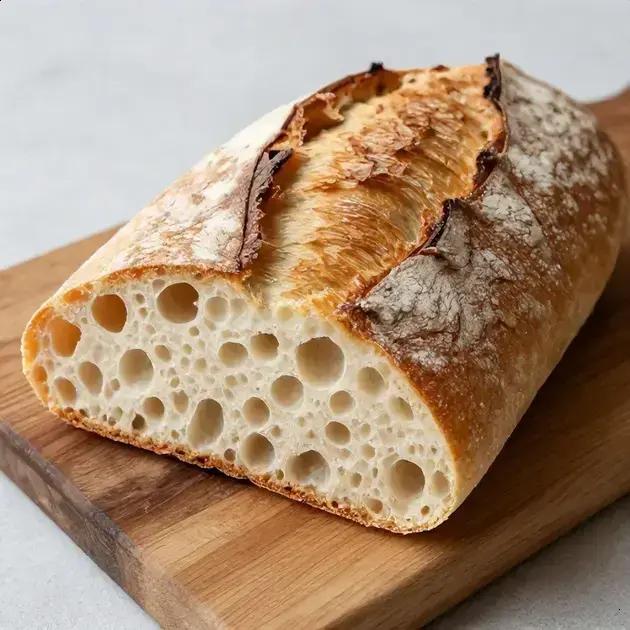
Ciabatta is celebrated for its light, open crumb and crisp crust, making it perfect for sandwiches or to simply dip in olive oil. Its rustic appearance belies how easy it is to bake at home, even for beginners. The dough is wetter than most bread recipes, contributing to those signature holes and an airy texture.


Practical Tips for Perfect Ciabatta

Start with high-protein bread flour—it helps develop more gluten and yields that signature, chewy crumb. Don’t be tempted to add extra flour when the dough feels sticky; use well-floured hands and tools to handle it with care. Gently fold and stretch the dough rather than aggressively kneading, and allow it plenty of time to rise for optimal flavor and structure.
If you don’t have bread flour, you can substitute with all-purpose flour, though the texture may be slightly less chewy. Instant yeast can replace active dry yeast—just skip the activation step. For even more depth of flavor, consider an overnight cold fermentation: let the dough rise in the fridge for up to 18 hours.

Baking and Serving Suggestions

Bake with steam in your oven by placing a tray at the bottom and adding hot water right as the bread goes in—this produces a beautifully crackly crust. Once the ciabatta cools, slice it to make panini, bruschetta, or garlic bread. It pairs wonderfully with cured meats, cheeses, or even as a base for open-faced sandwiches. Leftovers are delicious when toasted and topped with fresh tomatoes, olive oil, and a sprinkle of sea salt.
For a variation, add a handful of olives, sun-dried tomatoes, or rosemary to the dough during the first mix to infuse extra flavor. Try serving ciabatta as an accompaniment to hearty soups or vibrant salads—the rustic crust holds up perfectly even when dipped into sauces or broths.
Tagged:

Leave a Reply

Your email address will not be published. Required fields are marked *

Recipe Rating