ciabatta
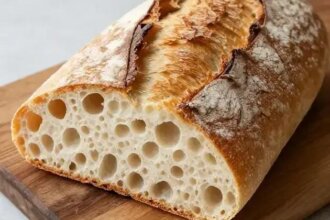
Ciabatta, the classic Italian bread, brings a soft crumb and golden crust. Perfect for any occasion. Learn how to make it!
Ingredients
Method
- In a large bowl, mix the bread flour, active dry yeast, and salt.
- Add the warm water and olive oil. Stir with a wooden spoon until a wet, sticky dough forms.
- Cover the bowl with plastic wrap and let the dough rest for 1 hour at room temperature until doubled in size.
- Gently flour your work surface and pour the dough onto it. Fold the dough in thirds (like folding a letter) and let it rest for 30 minutes.
- Preheat the oven to 220°C (428°F). Line a baking sheet with parchment paper and sprinkle with flour.
- Shape the dough into a rough rectangle and transfer gently to the prepared baking sheet. Dust with a little flour and let rise uncovered for another 45 minutes.
- Bake for 35–40 minutes or until the ciabatta is golden brown and sounds hollow when tapped on the bottom.
- Cool on a rack before slicing and serving. Enjoy your homemade ciabatta!
Notes
Ciabatta is not just another bread—it's a versatile staple beloved for its airy, chewy crumb and crisp, rustic crust. Its unique texture makes it perfect for sandwiches, toasts, or simply enjoyed with olive oil and sea salt. Whether you're preparing an Italian feast or looking for the ultimate bread for your breakfast table, ciabatta rises to any occasion.
Pro Tips for Perfect Ciabatta
The dough will be wet and sticky—don’t add extra flour. That stickiness is essential for creating the airy structure inside. Work with lightly floured hands and a bench scraper to help you handle the dough easily. Give it time: Allow the dough to ferment properly; you’ll notice more bubbles and a better flavor. If you want to develop even deeper flavor, you can refrigerate the dough overnight for a slow rise. Use bread flour whenever possible, as it helps achieve the characteristic open crumb. If you don’t have bread flour, regular all-purpose flour will work, but the holes may be smaller and the bread denser.Preparation Techniques
- Don’t knead traditionally: Ciabatta dough benefits from folds rather than kneading—this strengthens gluten and encourages large holes.
- Preheat your oven and use steam: Place a small pan of water in the oven or spray water inside once you place the dough in; this helps achieve that irresistible crispy crust.
- Let the bread cool fully before slicing, even if it’s tempting. Cutting it too early can compress the crumb and make it gummy.