
📄 Some content on this site was written with AI assistance and reviewed by Mileni Sabatini before publishing.
There’s something incredibly satisfying about the way roasted vegetables transform in the oven — their edges become delightfully crispy while the insides soften and sweeten. I always toss them with a little bit of olive oil and a sprinkle of salt before roasting, making sure to keep them spaced out on the tray so they get that perfect caramelization. This little trick helps them roast evenly and develop a rich flavor that pairs beautifully with just about anything. It’s a simple way to elevate your meals and enjoy a taste of the Mediterranean.
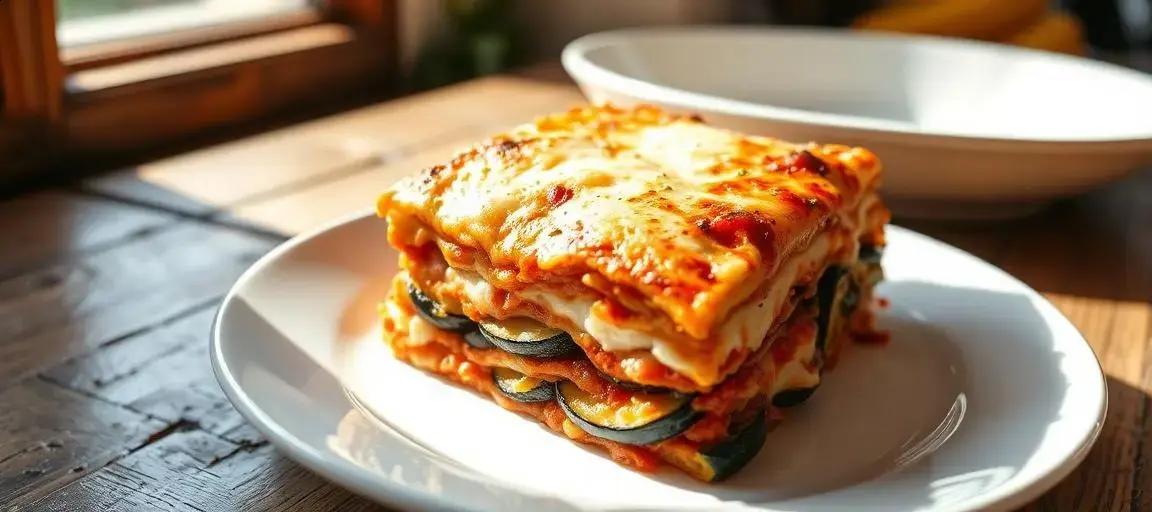
vegetarian lasagna
Ingredients
Method
- Preheat your oven to 220°C (425°F). Spread the zucchini, eggplant, and bell pepper on a baking sheet. Toss with olive oil, salt, and pepper. Roast for 20-25 minutes, stirring once halfway. You want the edges browned and veggies soft.
- While the veggies roast, combine the ricotta, grated parmesan, egg, nutmeg, salt, and black pepper in a bowl. Stir well with a fork until creamy.
- In a saucepan, cook the diced onion and garlic in a splash of olive oil on medium heat until soft, about 4–5 minutes. Add the tomato passata and oregano. Let it simmer gently for 8–10 minutes, stirring now and then. Taste for salt.
- Lower oven to 190°C (375°F). Spread a thin layer of sauce on the bottom of a 22x32 cm (9x13 in) baking dish. Layer with lasagna noodles, half the roasted vegetables, half the ricotta mixture, and about a quarter of the remaining sauce.
- Repeat with another layer: noodles, remaining veggies, ricotta, more sauce. Top with final noodles and the rest of the sauce. Scatter the mozzarella over everything.
- Cover the dish loosely with foil (not touching the cheese) and bake for 30 minutes. Remove the foil and bake another 10–12 minutes until bubbly and golden. Let rest for at least 10 minutes before slicing—this is what keeps it from falling apart when you serve.
Notes
Tips from my kitchen
If you want your lasagna to slice cleanly, let it rest at least 10–15 minutes before cutting. Hot cheese and sauce need that time to set up; if you rush, you get puddles. Trust me, I learned this after a few too many “lasagna soup” slices. When roasting the vegetables, don’t crowd the pan—two sheets if needed. Crowded veggies end up steaming and go mushy instead of getting that browned edge. If you want to shortcut, you can sauté the vegetables, but the roasting gives far more flavor and prevents sogginess. If your ricotta is watery, let it drain in a sieve for 10 minutes before mixing. This keeps the filling from being runny.Swaps and variations that work
Add thinly sliced mushrooms or spinach to the roasted veggies if you have them. Sweet potato works too—just dice small and roast it a bit longer. If you need a gluten-free version, use gluten-free lasagna noodles, but don’t swap in zucchini sheets instead of noodles for this recipe: the layers won’t hold together and it goes sloppy fast. Lactose-free ricotta and mozzarella are fine here—I’ve tested both and the flavor stays solid. Just avoid skipping the egg in the ricotta; it’s what makes the filling stable when you cut it.Leftovers & meal prep
This lasagna is even better the next day. Store slices in an airtight container in the fridge for up to 3 days, or freeze individual portions wrapped well. Reheat in the oven or a covered pan on low—not the microwave, if you can help it—so you keep those crispy bits on top.I started making vegetarian lasagna years ago for Sunday meal prep, and it never fails: everyone eats it, nobody misses the meat, and leftovers are just as good straight from the fridge the next day.
Tips from my kitchen
If you want your lasagna to slice cleanly, let it rest at least 10–15 minutes before cutting. Hot cheese and sauce need that time to set up; if you rush, you get puddles. Trust me, I learned this after a few too many “lasagna soup” slices.
When roasting the vegetables, don’t crowd the pan—two sheets if needed. Crowded veggies end up steaming and go mushy instead of getting that browned edge. If you want to shortcut, you can sauté the vegetables, but the roasting gives far more flavor and prevents sogginess.
If your ricotta is watery, let it drain in a sieve for 10 minutes before mixing. This keeps the filling from being runny.
Swaps and variations that work
Add thinly sliced mushrooms or spinach to the roasted veggies if you have them. Sweet potato works too—just dice small and roast it a bit longer.
If you need a gluten-free version, use gluten-free lasagna noodles, but don’t swap in zucchini sheets instead of noodles for this recipe: the layers won’t hold together and it goes sloppy fast.
Lactose-free ricotta and mozzarella are fine here—I’ve tested both and the flavor stays solid. Just avoid skipping the egg in the ricotta; it’s what makes the filling stable when you cut it.
Leftovers & meal prep
This lasagna is even better the next day. Store slices in an airtight container in the fridge for up to 3 days, or freeze individual portions wrapped well. Reheat in the oven or a covered pan on low—not the microwave, if you can help it—so you keep those crispy bits on top.