
📄 Some content on this site was written with AI assistance and reviewed by Mileni Sabatini before publishing.
There’s something incredibly satisfying about the crunch of fresh vegetables contrasting with a warm, comforting base. When I’m prepping a dish like this, I always make sure to let the cooked ingredients cool slightly before adding any fresh herbs. This simple step helps the herbs retain their vibrant flavor and aroma, making each bite pop. You’ll find that balancing hot and cold ingredients not only elevates taste but also enhances the overall experience.
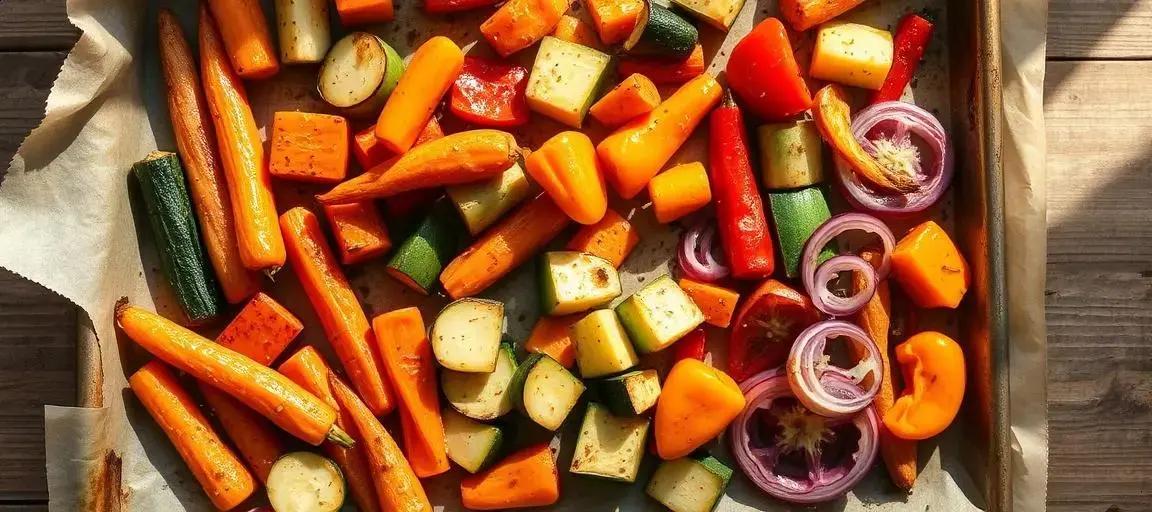
roasted vegetables
Ingredients
Method
- Heat your oven to 425°F (220°C). If you use convection, drop it to 400°F so the edges don't burn before they caramelize.
- Line a large baking sheet with parchment paper — less cleanup and the veggies don't stick.
- Spread the carrots, zucchini, bell peppers, and onion out on the tray in a single layer. If you crowd them, they'll steam instead of roast. If needed, use two trays — worth the few extra dishes.
- Drizzle the olive oil over the vegetables. Sprinkle with the oregano, thyme, salt, and black pepper. Toss with your hands until everything feels coated and glossy. It's faster and you catch dry spots easier than with a spoon.
- Roast in the oven for 35 minutes. About halfway through, stir with a spatula to let more sides touch the hot pan. Check for browning — edges should look golden with some crispy bits. If anything is burning, turn down the heat a little.
- Serve hot right from the pan. If you want extra flavor, splash with a squeeze of lemon just before serving. Leftovers? These are great tossed with cooked grains or in a wrap.
Notes
How I get the best roast every time
I always spread vegetables in a single layer — crowding is why veggies get soggy. If your tray looks packed, split it; trust me, the extra dish is worth it. I start checking at 25 minutes and sometimes take out the pieces that brown first so nothing tastes scorched at the end. My favorite trick: toss veggies with oil and herbs by hand right on the tray. You feel where it’s dry better than with any spoon. Just wash up after.Easy swaps that actually work
You can use sweet potatoes, cauliflower, broccoli, or even fennel if that’s what’s in your fridge. Just cut dense veggies (like carrots or sweet potatoes) a little smaller to match the cook time of softer ones. Mushrooms taste fine roasted here, but their juices make things wetter—if you try it, leave space around them and use two sheets if needed. I tried roasting tomato wedges and they turn to mush—skip them in this mix.Meal prep and leftovers
Roasted veggies store well in an airtight container for up to 4 days. I’ll often double the batch and toss leftovers cold into grain bowls, omelets, or fold them into a wrap with hummus for a fast lunch.I make roasted vegetables at least twice a week because there’s no quicker way to turn a random bag of carrots and a couple of sad zucchini into something everyone will actually eat. You get crisp edges, real flavor, and dinner mostly makes itself once things are in the oven.
How I get the best roast every time
I always spread vegetables in a single layer — crowding is why veggies get soggy. If your tray looks packed, split it; trust me, the extra dish is worth it. I start checking at 25 minutes and sometimes take out the pieces that brown first so nothing tastes scorched at the end.
My favorite trick: toss veggies with oil and herbs by hand right on the tray. You feel where it’s dry better than with any spoon. Just wash up after.
Easy swaps that actually work
You can use sweet potatoes, cauliflower, broccoli, or even fennel if that’s what’s in your fridge. Just cut dense veggies (like carrots or sweet potatoes) a little smaller to match the cook time of softer ones. Mushrooms taste fine roasted here, but their juices make things wetter—if you try it, leave space around them and use two sheets if needed. I tried roasting tomato wedges and they turn to mush—skip them in this mix.
Meal prep and leftovers
Roasted veggies store well in an airtight container for up to 4 days. I’ll often double the batch and toss leftovers cold into grain bowls, omelets, or fold them into a wrap with hummus for a fast lunch.