
📄 Some content on this site was written with AI assistance and reviewed by Mileni Sabatini before publishing.
There’s something incredibly satisfying about the crunch of freshly toasted nuts mixed with tender, roasted vegetables. I always add a splash of lemon juice right before serving; it brightens the flavors and balances the richness of the dish. The combination of textures and the warmth from the oven create a comforting meal that’s perfect any time of year. Plus, using seasonal veggies means you get the best taste and nutrition, making this dish a true highlight on my table.
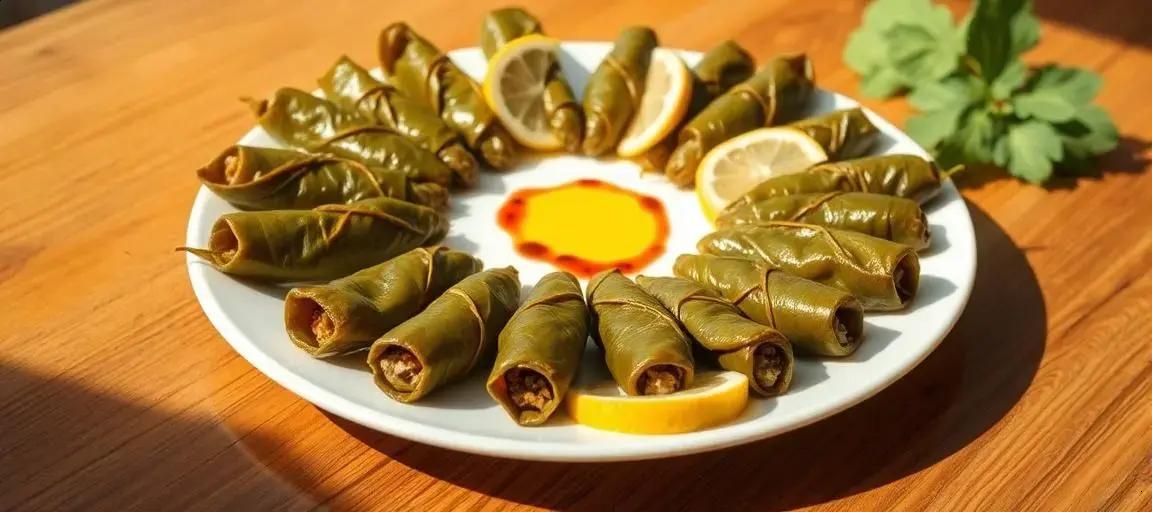
stuffed grape leaves
Ingredients
Method
- Rinse 1 1/4 cups of long grain rice under cold water until the water runs clear. This helps the grains stay separate, not sticky.
- In a bowl, mix the rice, 1/2 cup onion, 1/2 cup parsley, 1/4 cup dill or mint, 1/4 cup lemon juice, 1 tbsp olive oil, 3/4 tsp salt and 1/4 tsp black pepper.
- If using jarred leaves, gently rinse and drain them to remove brine. If using fresh, blanch in boiling water for 2 minutes until soft, then drain. Lay each leaf shiny side down, trimming any thick stems.
- Place a grape leaf vein side up. Put about 1 heaping teaspoon of filling near the base. Fold bottom up over the filling, tuck sides in, and roll tightly but not too tight (rice will expand a bit).
- Line a large pot with any torn or extra grape leaves. Arrange the rolls seam side down in a snug single layer.
- Drizzle with 2 tbsp olive oil, 1/2 cup lemon juice, and add 1 cup water and lemon slices over the top.
- Press with a plate to keep rolls from floating. Bring to a gentle simmer, cover, and cook on low for 45–50 minutes until rice is tender and most liquid is absorbed. Let cool at least 15 minutes before serving—this helps everything firm up.
Notes
Real-life prep tips
The filling goes fastest if I chop the herbs and onion as fine as possible; chunky bits make rolling a pain. Don’t overfill each leaf—a rounded teaspoon is enough. Too much and the roll will blow open as the rice expands. Place the grape leaf shiny side down so the veins are on the outside for the best texture when you bite in. Once they’re all rolled and tucked into the pot, I lay a heatproof plate right over the rolls. This keeps them from unraveling while they simmer. It’s a grandma move and it really works.Swaps and variations
You can swap fresh mint for dill—I always use what’s looking freshest (or whatever I have left over). If grape leaves are tricky to find, jarred work fine after a good rinse; collard greens work in a pinch, but they’ll be chewier and less classic. Brown rice doesn’t sub in well here unless you par-cook it first, or it stays crunchy even after an hour. Quinoa can work if you like a slightly nuttier, looser texture.Make ahead and storage
I almost always make these a day before. They keep in the fridge up to five days in a tight container. They travel well for picnics (Mediterranean grandmas everywhere would approve). I serve them cold or just let them come to room temp—no need to reheat.I usually make stuffed grape leaves when I want something that keeps well—these taste even better on day two, straight from the fridge or at room temperature.
Real-life prep tips
The filling goes fastest if I chop the herbs and onion as fine as possible; chunky bits make rolling a pain. Don’t overfill each leaf—a rounded teaspoon is enough. Too much and the roll will blow open as the rice expands. Place the grape leaf shiny side down so the veins are on the outside for the best texture when you bite in.
Once they’re all rolled and tucked into the pot, I lay a heatproof plate right over the rolls. This keeps them from unraveling while they simmer. It’s a grandma move and it really works.
Swaps and variations
You can swap fresh mint for dill—I always use what’s looking freshest (or whatever I have left over). If grape leaves are tricky to find, jarred work fine after a good rinse; collard greens work in a pinch, but they’ll be chewier and less classic.
Brown rice doesn’t sub in well here unless you par-cook it first, or it stays crunchy even after an hour. Quinoa can work if you like a slightly nuttier, looser texture.
Make ahead and storage
I almost always make these a day before. They keep in the fridge up to five days in a tight container. They travel well for picnics (Mediterranean grandmas everywhere would approve). I serve them cold or just let them come to room temp—no need to reheat.