
📄 Some content on this site was written with AI assistance and reviewed by Mileni Sabatini before publishing.
There’s something satisfying about the crunchy edges of a well-cooked frittata contrasting with its creamy center. I recommend letting the egg mix sit for about ten minutes after whisking before you pour it into the pan; this small pause allows the flavors to meld nicely, making each bite more vibrant. The slow cooking gives the frittata a chance to puff up beautifully, creating that lovely, airy texture that feels welcoming on any table.
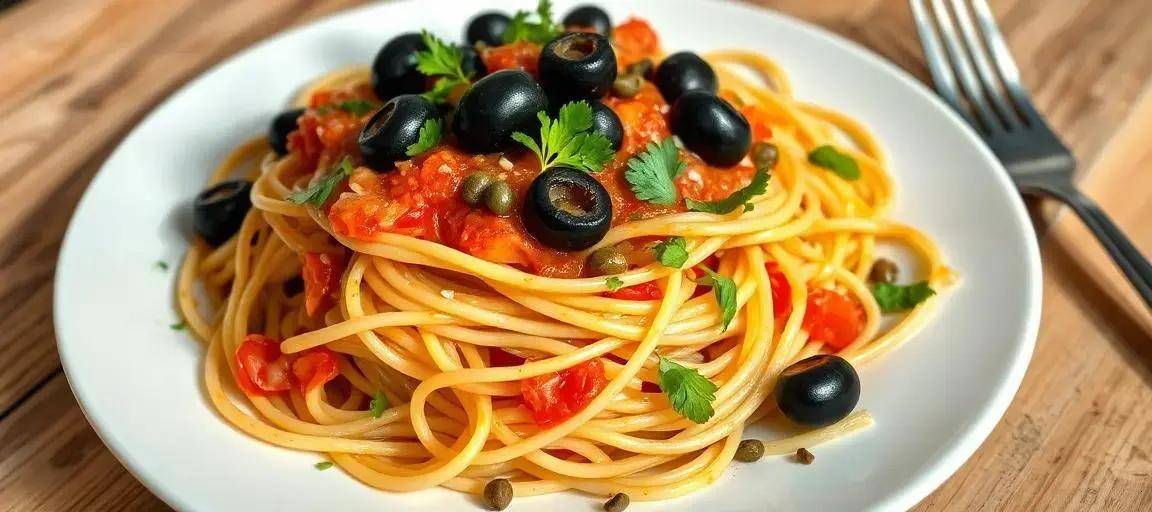
spaghetti puttanesca
Ingredients
Method
- Bring a large pot of salted water to a boil. Drop in the spaghetti and give it a quick stir so it doesn’t clump.
- While the pasta cooks, heat the olive oil in a wide skillet over medium heat. Add the sliced garlic and red pepper flakes. Stir until the garlic looks golden at the edges—takes just a minute, watch it closely so it doesn’t burn.
- Add anchovies directly to the hot oil. Press them with a spoon until they melt into the oil—this builds the sauce’s salty backbone, and you won’t taste fishiness, just pure umami.
- Pour in the canned tomatoes with their juice. Break them up with a wooden spoon (or crush by hand before adding if you don’t like big chunks). Let it bubble gently for 4–5 minutes until it thickens just a bit.
- Stir in the olives, capers, and a small pinch of sugar (this softens the tang from the tomatoes). Keep the sauce simmering on low while the pasta finishes. Taste and add a little salt only if needed—the anchovies, olives, and capers already bring plenty.
- Reserve a cup of pasta water before draining the spaghetti. Add the drained spaghetti directly to the skillet with the sauce. Toss everything together for 1–2 minutes so the noodles soak up those flavors. If it looks dry, splash in some pasta water until it’s glossy and coats every strand.
- Turn off the heat. Toss in chopped parsley and a few grinds of black pepper. I like to taste right here—sometimes I add a few extra olives if I want more bite.
- Serve immediately. No need to add cheese—just a thread of olive oil right before eating brings all the flavors forward.
Notes
How I keep puttanesca from tasting flat
The real secret? Let the anchovies melt in the oil completely. If you rush this, you'll end up with little salty bits instead of a deep, savory base. I toss the anchovies in first thing and stir them for a full minute before the tomatoes go in—they nearly disappear, and nobody spots them in the sauce. If the sauce turns out sharper than you like (canned tomatoes vary), don’t skip the pinch of sugar. It cuts the acidity without making anything sweet. Another thing: Never drain all your pasta water. Keep a cup right by the stove before you forget. This little step lets you make the sauce cling perfectly—makes the difference between restaurant-like gloss and sticky clumps. I sometimes use even more than a cup, a splash at a time, as I toss the pasta in the pan.Swaps and variations
No anchovies? You could leave them out, but the sauce won’t hit the same depth. If you eat fish, a dash of fish sauce delivers the same savory punch. Not a fan of very spicy food? Cut the red pepper by half or swap for mild flakes. On olives: I use Kalamata, but any brine-packed black olive that's not canned will work—canned olives make the sauce watery and bland.Leftovers & prep ahead
Puttanesca actually gets bolder if it sits overnight. Leftovers keep in the fridge for up to 3 days. I reheat gently with a splash of water on the stove, not the microwave—the noodles stay tender this way.I make spaghetti puttanesca on nights when my fridge looks empty, but I want a dinner with actual character. This is my “nothing to cook” standby—it’s bold, fast, and somehow feels a little fancy without trying.
How I keep puttanesca from tasting flat
The real secret? Let the anchovies melt in the oil completely. If you rush this, you’ll end up with little salty bits instead of a deep, savory base. I toss the anchovies in first thing and stir them for a full minute before the tomatoes go in—they nearly disappear, and nobody spots them in the sauce.
If the sauce turns out sharper than you like (canned tomatoes vary), don’t skip the pinch of sugar. It cuts the acidity without making anything sweet.
Another thing: Never drain all your pasta water. Keep a cup right by the stove before you forget. This little step lets you make the sauce cling perfectly—makes the difference between restaurant-like gloss and sticky clumps. I sometimes use even more than a cup, a splash at a time, as I toss the pasta in the pan.
Swaps and variations
No anchovies? You could leave them out, but the sauce won’t hit the same depth. If you eat fish, a dash of fish sauce delivers the same savory punch. Not a fan of very spicy food? Cut the red pepper by half or swap for mild flakes. On olives: I use Kalamata, but any brine-packed black olive that’s not canned will work—canned olives make the sauce watery and bland.
Leftovers & prep ahead
Puttanesca actually gets bolder if it sits overnight. Leftovers keep in the fridge for up to 3 days. I reheat gently with a splash of water on the stove, not the microwave—the noodles stay tender this way.