
📄 Some content on this site was written with AI assistance and reviewed by Mileni Sabatini before publishing.
The moment you mix the silky smoothness of fresh ricotta with the tangy brightness of lemon juice, you can feel a delightful balance forming. I always make sure to taste and adjust the seasoning at different stages, which helps the flavors build and develop in a more satisfying way. This dish thrives on contrast—both in texture and flavor—bringing a refreshing lift that’s perfect for warm days or as a light appetizer anytime. The key is to let everything sit for a few minutes before serving, allowing the flavors to mingle beautifully.
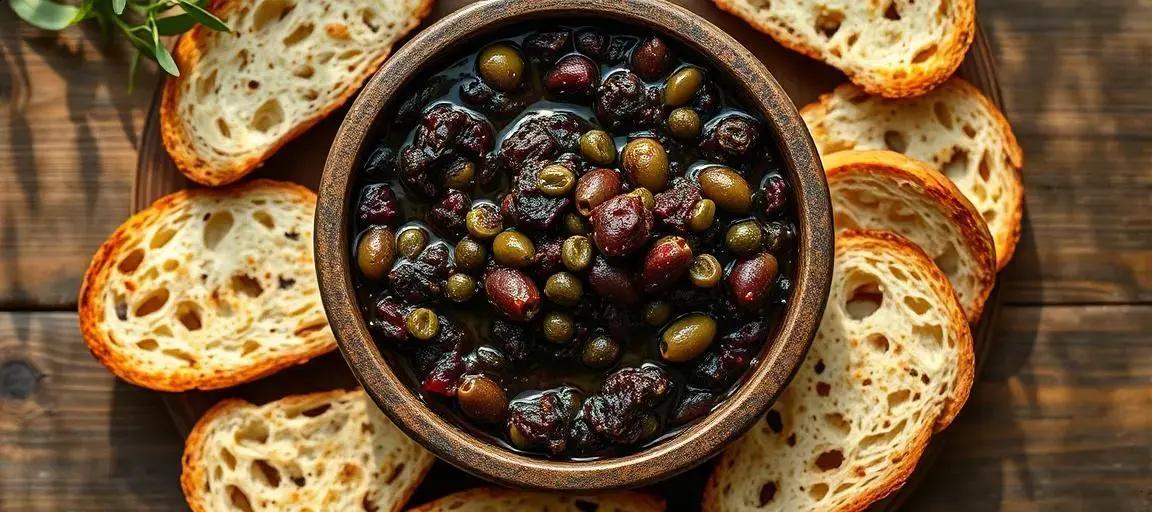
olive tapenade
Ingredients
Method
- Add black olives, capers, anchovies, and garlic to the bowl of a food processor. Pulse just until everything is finely chopped, not fully smooth—you want small bits, not a paste.
- Scrape down the sides. Add olive oil, lemon juice, and black pepper. Pulse again a few times until mixed. Check the texture: tapenade should be easily spreadable but still have some pieces.
- Taste before adding any extra salt—the olives and capers are already salty. Sometimes I'll drizzle in another teaspoon of oil for extra creaminess if I'm using it on toast.
- Transfer to a bowl or jar. Serve right away with bread, or refrigerate for up to 5 days. The flavor gets even better by the next day.
Notes
Tips that make a difference
If you use oil-cured or wrinkly, salt-packed olives, rinse them once before starting—otherwise, the dip can get too salty. Pitting olives yourself is a pain, but you get better flavor. (I do it if I'm not in a hurry.) I stop the food processor when there are still some visible olive bits. A paste tastes flat—those little chunks catch the oil and make each bite interesting. One trick I learned the hard way: don't skip the anchovy, even if you're nervous. You won't taste "fish"—it just deepens everything.Substitutions that don’t ruin the tapenade
You can swap in green olives, just stick to firm ones like Castelvetrano. If you skip the anchovy for a vegetarian version, add an extra teaspoon of capers and a splash of coconut aminos or a little miso for that umami hit. Don't use kalamata olives only—they get mushy and too sour.Keep it fresh (or use it up)
This keeps in the fridge for up to 5 days. I stir a little extra olive oil in if it looks dry. Leftovers are great as a topping for grilled chicken, mixed into warm pasta, or spread on whole-wheat wraps with crunchy veggies. It doesn't freeze well—the texture turns grainy, so just make a small batch if you’re not sure you’ll use it all.I make this tapenade all year because it works as a fast snack and a flavor bomb for sandwiches. Most people try it once for a party, but I actually keep a jar in my fridge for “I forgot to make lunch” emergencies.
Tips that make a difference
If you use oil-cured or wrinkly, salt-packed olives, rinse them once before starting—otherwise, the dip can get too salty. Pitting olives yourself is a pain, but you get better flavor. (I do it if I’m not in a hurry.)
I stop the food processor when there are still some visible olive bits. A paste tastes flat—those little chunks catch the oil and make each bite interesting.
One trick I learned the hard way: don’t skip the anchovy, even if you’re nervous. You won’t taste “fish”—it just deepens everything.
Substitutions that don’t ruin the tapenade
You can swap in green olives, just stick to firm ones like Castelvetrano. If you skip the anchovy for a vegetarian version, add an extra teaspoon of capers and a splash of coconut aminos or a little miso for that umami hit. Don’t use kalamata olives only—they get mushy and too sour.
Keep it fresh (or use it up)
This keeps in the fridge for up to 5 days. I stir a little extra olive oil in if it looks dry. Leftovers are great as a topping for grilled chicken, mixed into warm pasta, or spread on whole-wheat wraps with crunchy veggies. It doesn’t freeze well—the texture turns grainy, so just make a small batch if you’re not sure you’ll use it all.