
📄 Some content on this site was written with AI assistance and reviewed by Mileni Sabatini before publishing.
There’s something so satisfying about the crunch of freshly toasted nuts in a warm dish, giving it just the right amount of texture. I always make sure to toast them on low heat, stirring frequently to prevent burning—this small detail brings out their rich flavor without any bitterness. The warmth of the dish contrasts beautifully with the nutty crunch, creating a delightful experience with each bite. This combination is not just about flavor; it adds a layer of heartiness that can turn a simple meal into something special.
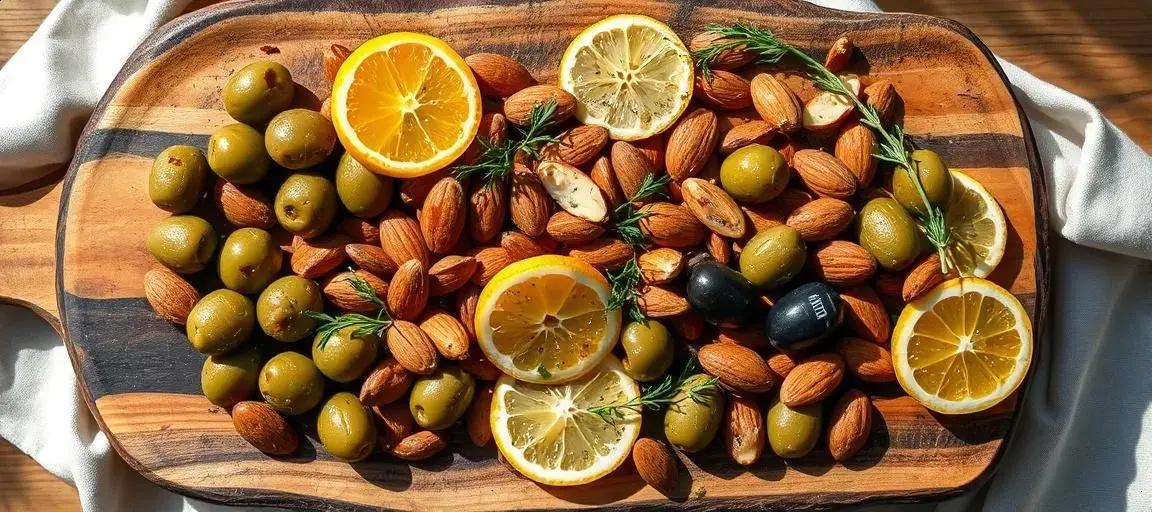
olives platter
Ingredients
Method
- Drain the olives if they came in brine or oil. Pat them dry lightly with a paper towel so they don’t water down the plate.
- Arrange the olives on a large serving plate or wooden board. I keep each variety in its own pile — it looks nice and makes it easy for guests to pick what they like.
- Add the marcona almonds (or regular toasted almonds) in empty spaces. These give crunch — don’t skip them unless you have a nut allergy.
- Slice the orange and lemon into thin rounds (about 1/8 inch thick). Tuck the slices between the olives so you get citrus aroma every time you grab one.
- Drizzle extra-virgin olive oil all over the olives and citrus. Use just enough to make things glossy, not soupy — usually about 2 tablespoons.
- Sprinkle fresh herbs (like thyme, rosemary, or oregano) over the platter. If you only have dried herbs, use half as much and rub them between your fingers before sprinkling to wake up the flavors.
- Serve at room temperature. If you prepped this ahead, let it sit out of the fridge for at least 20 minutes so the flavors open up. That makes a huge difference with olives.
Notes
My real-life tips
Not all olives are equal. Mixing different types — like briny green, buttery Castelvetrano, and intense kalamata — gives a better spread. If your olives taste a little flat out of the jar, give them a quick soak in cold water for five minutes and pat dry. It tones down excess salt and lets the other flavors shine. The orange and lemon aren’t just for looks. Adding both gives you little bursts of citrus oil every time you pick up an olive. I slice them as thin as a euro coin — too thick and people just shove them aside. If I have just a few minutes, I’ll toast the almonds in a dry pan instead of using them straight from the bag. Even two minutes makes a big difference for crunch and aroma.Substitutions & swaps
You can use any mix of olives, but make sure at least one is mild — all kalamata or all green can get boring. Skip marcona almonds if you can’t find them; regular toasted ones are fine. Pistachios work too, but don’t use walnuts — their bitterness clashes with the olives and citrus. Cilantro’s not great here. Flat-leaf parsley, though, works if you want something extra green and don’t have any other herbs.Make ahead & leftovers
This is one of the few boards I set up up to a day in advance. Cover and chill, but pull out at least 20 minutes before serving — fridge-cold olives are hard and lose flavor. Leftovers keep a couple days, but eat the citrus slices within 24 hours or they get too soft.On weeknights when I’m busy but want something a little special with a glass of wine, I throw together this olives platter. It’s fast, no cooking, and instantly feels like a treat.
My real-life tips
Not all olives are equal. Mixing different types — like briny green, buttery Castelvetrano, and intense kalamata — gives a better spread. If your olives taste a little flat out of the jar, give them a quick soak in cold water for five minutes and pat dry. It tones down excess salt and lets the other flavors shine.
The orange and lemon aren’t just for looks. Adding both gives you little bursts of citrus oil every time you pick up an olive. I slice them as thin as a euro coin — too thick and people just shove them aside.
If I have just a few minutes, I’ll toast the almonds in a dry pan instead of using them straight from the bag. Even two minutes makes a big difference for crunch and aroma.
Substitutions & swaps
You can use any mix of olives, but make sure at least one is mild — all kalamata or all green can get boring. Skip marcona almonds if you can’t find them; regular toasted ones are fine. Pistachios work too, but don’t use walnuts — their bitterness clashes with the olives and citrus.
Cilantro’s not great here. Flat-leaf parsley, though, works if you want something extra green and don’t have any other herbs.
Make ahead & leftovers
This is one of the few boards I set up up to a day in advance. Cover and chill, but pull out at least 20 minutes before serving — fridge-cold olives are hard and lose flavor. Leftovers keep a couple days, but eat the citrus slices within 24 hours or they get too soft.