
📄 Some content on this site was written with AI assistance and reviewed by Mileni Sabatini before publishing.
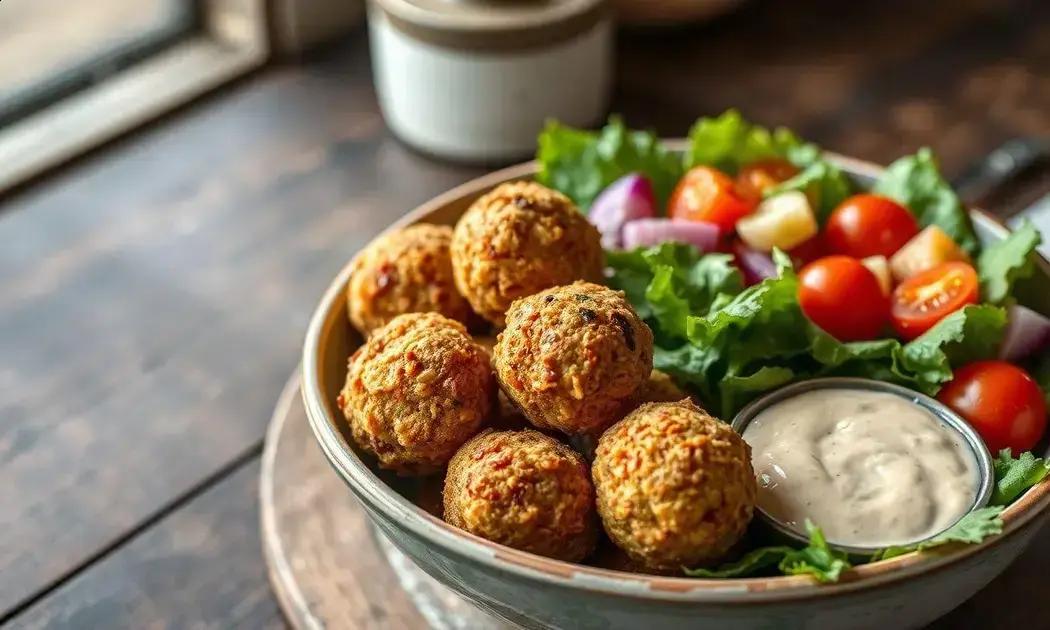
falafel
Falafel, a protein-rich snack, prepared in a lighter, homemade way. Simple, quick, and very flavorful for your healthy routine.
Ingredients
Method
- Preheat your oven to 200°C (392°F) if making baked falafel. Line a tray with parchment paper and brush with olive oil.
- In a food processor, add the cooked chickpeas, onion, garlic, parsley, cilantro, cumin, baking powder, paprika, black pepper, and salt. Pulse until you get a coarse, moist mixture. Do not over-process; the texture should be grainy, not a paste.
- Add the oat flour and pulse a few more times to combine. Let the mixture rest for 10 minutes. If the mixture is too wet, add a bit more oat flour as needed.
- With damp hands, shape the mixture into small balls or patties, about the size of a walnut.
- For baked falafel, arrange the balls on the prepared tray. Brush each with olive oil. Bake for 20-25 minutes, turning halfway, until golden and crisp.
- For traditional fried falafel, heat vegetable oil in a deep skillet. Fry the balls in batches until browned and crispy, about 3-4 minutes per side. Drain on paper towel.
- Serve hot with salad, tahini sauce, or inside pita bread.
Notes
Falafel has become a favorite for many thanks to its incredible versatility and comforting flavors. Whether you’re seeking a protein-packed snack, a savory addition to salads, or a centerpiece for a vegetarian meal, falafel always delivers on convenience and taste. It's a dish rooted in Middle Eastern tradition but easily adapted to different preferences and dietary choices.
Expert Tips and Substitutions
- Chickpea Consistency: Always use well-drained, soaked chickpeas—never canned or cooked chickpeas straight from a can, as they can make the mixture too wet and prone to falling apart. If you only have canned, pat them very dry and add extra flour if needed.
- Prevent Falling Apart: Take care not to over-process the mixture. Leaving it coarse ensures your falafel will hold together and offer the perfect bite after cooking.
- Fresh Herbs: Don’t skip the fresh parsley and cilantro! They are crucial for aromatic flavor and a vibrant green color inside each falafel. If you’re not a fan of cilantro, replace it with more parsley or even fresh mint for a unique twist.
- Spice it Up: Feel free to customize with spices like coriander, chili flakes, or sumac, adjusting to your preferred heat level.
Preparation and Cooking Advice
For a lighter version, baking falafel is a fantastic option. Brush the patties generously with olive oil before baking them, and turn them midway to guarantee even browning. If deep-frying, ensure your oil is hot enough—around 180°C (356°F)—so the falafel cooks quickly and doesn’t become greasy. Using oat flour or whole wheat flour is ideal for binding and adds a wholesome touch without overwhelming the flavor.Serving Suggestions and Variations
- Serving Ideas: Fresh falafel pairs beautifully with a crisp salad, tangy pickles, warm pita bread, or as part of a vibrant Buddha bowl. Don’t forget a drizzle of tahini sauce or a squeeze of lemon for brightness.
- Vegan & Gluten-Free: To keep it gluten-free, stick with oat flour or use chickpea flour as a binder.
- Storage: Uncooked falafel can be frozen for up to three months. Form the balls, freeze them on a tray, then transfer to a sealed bag for later. Bake or fry straight from frozen—just add a few extra minutes to the cooking time.