
📄 Some content on this site was written with AI assistance and reviewed by Mileni Sabatini before publishing.
The creamy, velvety texture of this dish is what makes it so comforting, especially when served warm. I’ve learned that letting the mixture rest for a few minutes off the heat helps meld the flavors beautifully, giving it a richer taste without all those extra steps. Using high-quality olive oil enhances the mouthfeel and infuses a lovely depth. This simple technique elevates the meal, making it feel both nourishing and indulgent.
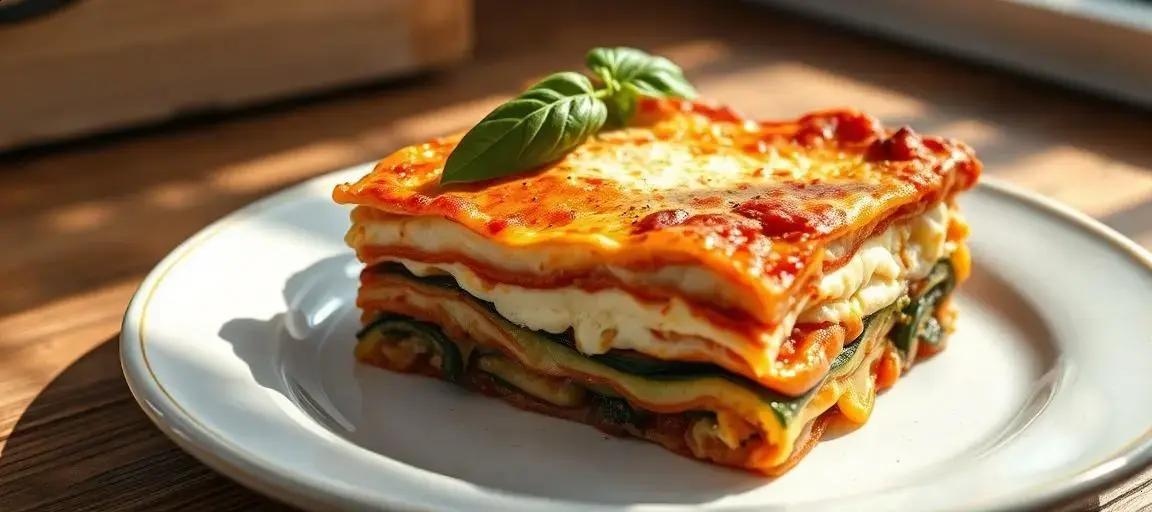
vegetarian lasagna
Ingredients
Method
- Preheat your oven to 425°F (220°C). Arrange zucchini, eggplant, and red bell pepper slices on a large baking sheet. Drizzle with olive oil and sprinkle with salt and black pepper.
- Roast the vegetables for 18-22 minutes, until softened and just starting to brown at the edges. Take them out and let them cool slightly.
- In a bowl, combine ricotta, grated parmesan, egg, chopped basil, oregano, and nutmeg. Stir until well mixed. The mixture should be creamy, not runny.
- While the veggies are roasting, heat olive oil in a saucepan over medium. Add garlic and cook just 30 seconds—don’t let it brown.
- Stir in tomato sauce, thyme, sugar, salt, and black pepper. Simmer uncovered for 10 minutes, stirring once or twice. This thickens the sauce a bit.
- Lower oven to 375°F (190°C). Spread a thin layer of tomato sauce at the bottom of a 9x13-inch ceramic or glass baking dish.
- Layer 3 uncooked lasagna noodles over the sauce, then half the roasted vegetables, half the ricotta mixture, and about 1/2 cup tomato sauce. Sprinkle some mozzarella on top.
- Repeat for the second layer: 3 noodles, remaining veggies, remaining ricotta, a bit more sauce, another sprinkle of mozzarella.
- Top with last 3 noodles, the rest of the tomato sauce, and all remaining mozzarella cheese. If you like those crispy corners, spread cheese right to the edges.
- Cover with foil—make sure it doesn’t touch the cheese. Bake for 40 minutes.
- Remove foil, bake 14-16 minutes more to get the top bubbling and a little brown.
- Let it rest at least 15 minutes before cutting, or you’ll end up with a soupy mess. (I know it smells amazing, but this step is crucial!)
Notes
Getting the layers right
Your veggies need to go in the oven, not straight into the lasagna. Raw vegetables leak water; that's how you end up with runny slices and a sad puddle. Slice them evenly and roast just until the edges take a little color. Even if you’re tired, don’t skip this step—it’s what sets this apart from a bland, mushy bake. With ricotta, I always stir in an egg—not for richness, but so the ricotta doesn’t seep and make the layers slip around. Nutmeg is subtle, but a pinch in the cheese mixture makes everything taste more like “real” lasagna. If you want those cheesy crispy corners, let the top layer of mozzarella reach right to the baking dish edge. It caramelizes where it touches ceramic or glass—just takes a few extra seconds to assemble.Swaps and variations
I sometimes swap half the ricotta for cottage cheese if that’s what’s in the fridge—it’s less creamy but works. You can skip the egg if allergic; just expect the filling to be a little looser. Gluten-free noodles work, but they can break down after baking. I wouldn’t use grilled portobello mushrooms as your only “vegetable” layer—the slices release a lot of water and that throws off the texture.Leftovers and meal prep
This holds up for three days in the fridge—honestly, it cuts neater after a night. Reheat uncovered in the oven to bring back some of the roasted edge and prevent a soggy top. Yes, you can freeze it—just be sure it cools completely first, then wrap tightly.I started making this vegetarian lasagna when I wanted something hearty that actually kept me full until dinner. Roasting the vegetables makes all the difference—they don’t get watery and the flavor gets sweeter and deeper.
Getting the layers right
Your veggies need to go in the oven, not straight into the lasagna. Raw vegetables leak water; that’s how you end up with runny slices and a sad puddle. Slice them evenly and roast just until the edges take a little color. Even if you’re tired, don’t skip this step—it’s what sets this apart from a bland, mushy bake.
With ricotta, I always stir in an egg—not for richness, but so the ricotta doesn’t seep and make the layers slip around. Nutmeg is subtle, but a pinch in the cheese mixture makes everything taste more like “real” lasagna.
If you want those cheesy crispy corners, let the top layer of mozzarella reach right to the baking dish edge. It caramelizes where it touches ceramic or glass—just takes a few extra seconds to assemble.
Swaps and variations
I sometimes swap half the ricotta for cottage cheese if that’s what’s in the fridge—it’s less creamy but works. You can skip the egg if allergic; just expect the filling to be a little looser.
Gluten-free noodles work, but they can break down after baking. I wouldn’t use grilled portobello mushrooms as your only “vegetable” layer—the slices release a lot of water and that throws off the texture.
Leftovers and meal prep
This holds up for three days in the fridge—honestly, it cuts neater after a night. Reheat uncovered in the oven to bring back some of the roasted edge and prevent a soggy top. Yes, you can freeze it—just be sure it cools completely first, then wrap tightly.