
📄 Some content on this site was written with AI assistance and reviewed by Mileni Sabatini before publishing.
The golden crust of a well-baked focaccia has an irresistible crunch that gives way to a soft, fluffy interior — a combination that makes it a favorite at our family table. I always mix the dough the night before and let it rise in the fridge; this slow fermentation enhances the flavor and makes the texture even better. When it comes time to bake, a drizzle of good olive oil and a sprinkle of flaky sea salt elevates the experience, creating that perfect balance of savory and satisfying. This bread is more than just an accompaniment; it can stand on its own as a snack or meal component.
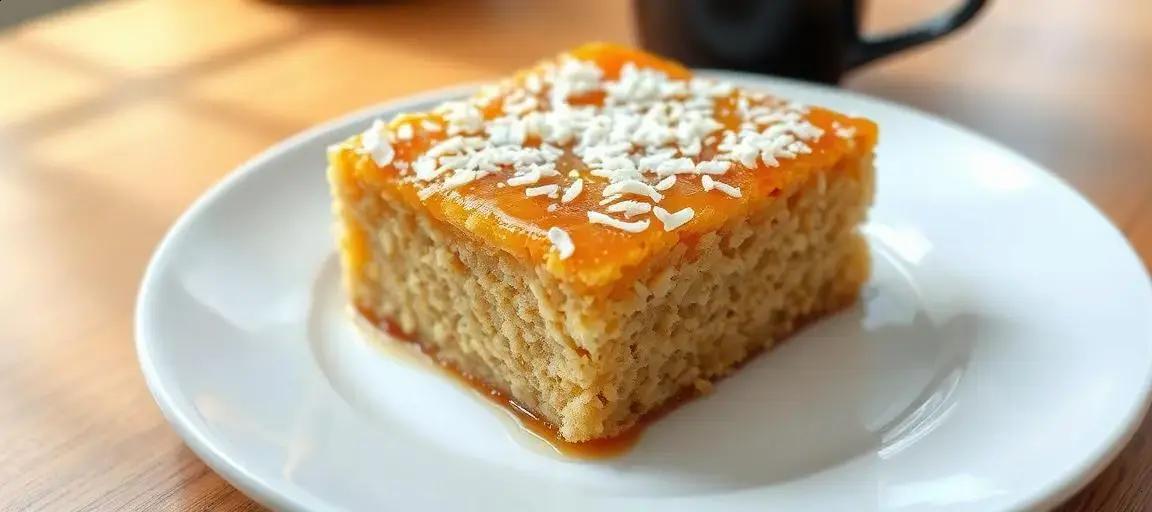
semolina cake
Ingredients
Method
- Preheat your oven to 350°F (180°C). Grease a 9-inch square or round baking pan with tahini, making sure to coat the sides too—this gives it a traditional flavor and keeps it from sticking.
- Melt the butter gently on the stove or in the microwave. Let it cool to just warm—not hot.
- In a large bowl, mix semolina, sugar, coconut, and baking powder.
- Add the melted butter and yogurt to the bowl. Stir until you don’t see any pockets of dry semolina—don’t overmix, but make sure it’s all moist with no lumps left.
- Spoon the batter into your pan. Press it down with the back of a spoon or damp hands to make an even, compact layer. Semolina needs to be pressed or the cake gets crumbly.
- Score the top into diamond or square shapes with a sharp knife, about halfway deep. If you like, sprinkle with extra coconut.
- Bake for 35–40 minutes, until the edges are deep golden and a tester comes out mostly dry—this cake stays a little moist.
- While the cake bakes, combine sugar, water, and lemon juice in a small pot. Bring to a boil, then lower the heat and simmer for 7–8 minutes. It should look slightly syrupy but still pourable—don’t let it go thick like honey.
- If using rose water, add it in after you turn off the heat. Let the syrup cool—you want it just warm, not hot.
- When the cake comes out of the oven, slowly pour the warm syrup all over while the cake is still hot. It looks like a lot, but semolina soaks it up. I use a ladle to distribute it as evenly as possible.
- Let the cake rest at least 20 minutes before serving, so it absorbs the syrup and cuts cleanly.
Notes
What actually makes this cake work
Semolina isn’t flour, and that’s the trick: it needs time to soak up moisture before and after baking. If you press the batter down firmly in the pan, the cake will hold together and slice clean, even after soaking in syrup. If you just spread it loosely, you’ll have a crumbly mess. I always use the back of a wet spoon for this job—it slides and packs the batter better than anything else. The syrup goes on while the cake is hot and the syrup is warm (not boiling). This way, it soaks in fast but doesn’t make the cake saggy. Start with half the syrup, pause a minute, then add the rest so it doesn’t pool on top. If you’re into scent, a teaspoon of orange blossom water works instead of rose, or you can skip floral flavor altogether—the cake still works. Don’t swap out the yogurt for milk; you’ll lose both flavor and structure.How I change it up
You can add untoasted nuts (like blanched almonds or pistachios) on top before baking. Don’t use chocolate; the flavor and texture fight the syrup. I sometimes swap half the coconut for almond flour if I’m short—that makes it denser, more like a snack bar.Storing and prepping ahead
This cake keeps at room temperature in a covered container for two days. After that, leftovers do fine in the fridge. If the cake feels dry after day two, I splash on another tablespoon of warm syrup before serving—works like a charm.I grew up with trays of semolina cake cooling on the counter, the smell of buttery crumbs and lemon syrup filling the kitchen. It’s my low-effort answer to a sweet craving because I can mix everything in one bowl—no mixer, no stress.
What actually makes this cake work
Semolina isn’t flour, and that’s the trick: it needs time to soak up moisture before and after baking. If you press the batter down firmly in the pan, the cake will hold together and slice clean, even after soaking in syrup. If you just spread it loosely, you’ll have a crumbly mess. I always use the back of a wet spoon for this job—it slides and packs the batter better than anything else.
The syrup goes on while the cake is hot and the syrup is warm (not boiling). This way, it soaks in fast but doesn’t make the cake saggy. Start with half the syrup, pause a minute, then add the rest so it doesn’t pool on top.
If you’re into scent, a teaspoon of orange blossom water works instead of rose, or you can skip floral flavor altogether—the cake still works. Don’t swap out the yogurt for milk; you’ll lose both flavor and structure.
How I change it up
You can add untoasted nuts (like blanched almonds or pistachios) on top before baking. Don’t use chocolate; the flavor and texture fight the syrup. I sometimes swap half the coconut for almond flour if I’m short—that makes it denser, more like a snack bar.
Storing and prepping ahead
This cake keeps at room temperature in a covered container for two days. After that, leftovers do fine in the fridge. If the cake feels dry after day two, I splash on another tablespoon of warm syrup before serving—works like a charm.