
📄 Some content on this site was written with AI assistance and reviewed by Mileni Sabatini before publishing.
The crispy crust of homemade focaccia creates a delightful crunch that gives way to a fluffy, airy interior. I always make sure to preheat my baking pan with olive oil; this simple step ensures that the bottom gets beautifully golden and crispy, giving that satisfying contrast in every bite. As it bakes, the aromatic blend of herbs fills the kitchen, making it impossible to resist sneaking a piece straight from the oven.
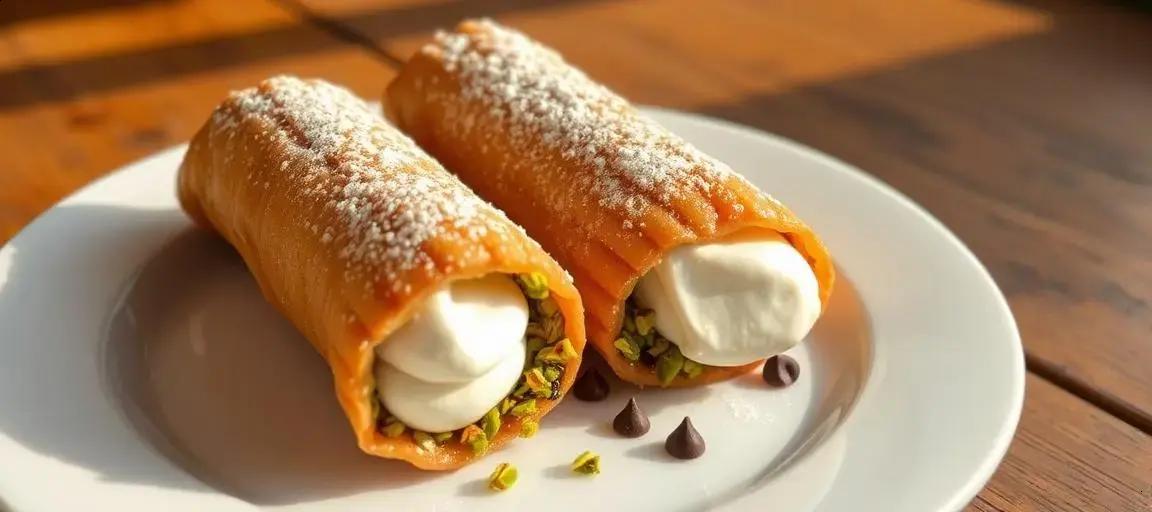
cannoli
Ingredients
Method
- In a large bowl, combine the flour, sugar, cocoa powder, and a pinch of salt. I do this with my hands—it helps spot any lumps.
- Add butter and rub it into the mix until it looks like coarse breadcrumbs.
- Pour in the egg, vinegar, and wine. Knead until you have a smooth, elastic dough. This takes 6–8 minutes by hand. If it feels too sticky, dust with a little extra flour.
- Wrap the dough in plastic and rest at room temperature for 30 minutes. Don’t skip this—it relaxes the gluten so you can roll it thin.
- Roll the dough very thin—about 2 mm—on a floured surface. I cut circles with a 10cm cutter (a mug will do if you don’t have one).
- Wrap circles around cannoli tubes, sealing with a dab of beaten egg on the edge.
- Heat vegetable oil (at least 5cm deep) to 180°C/350°F. If you don’t have a thermometer, dip the end of a wooden spoon in—the oil should bubble steadily around it.
- Fry shells in batches, rolling gently, until deeply golden—about 1–2 minutes each. Don’t crowd the pan.
- Drain on paper towels. Cool, then slide the shells off the tubes. If they stick, twist instead of pulling.
- Drain ricotta overnight in a fine sieve over a bowl, covered and refrigerated. This prevents a soggy filling. If you forgot, press it with paper towels for a few minutes—less ideal, but it works.
- Mix ricotta, powdered sugar, vanilla, and orange zest until smooth. Stir in chocolate chips by hand. Chill the filling for at least 20 minutes to firm up.
- Fill shells just before serving—otherwise, they absorb moisture and go soft. Pipe or spoon the ricotta filling into both ends of each shell.
- Dip the ends in chopped pistachios or extra chocolate chips.
- Dust with powdered sugar right before you eat. I always wait until the last minute—the shells keep their crunch that way.
Notes
Tips for authentic (but not fussy) cannoli
Drain your ricotta—seriously, do it overnight if you can. Even “firm” ricotta will leak moisture otherwise, and that’s why a lot of homemade cannoli taste flat after an hour. In an emergency, I sandwich the ricotta between paper towels and press down with a book for 10 min. Messy? Yes. Saves dessert? Also yes. Getting the shells thin enough is the trickiest part. If you can almost see your hand through the dough, it’s thin enough. I roll half, fry those, then finish the other half to keep the dough from drying out. If you don’t have cannoli tubes, you can wrap the dough around cleaned, empty metal espresso cups (the espresso cups will make slightly chubby cannoli, but it’s less work). Shells not crisping? Your oil is probably too cold. If you’re frying in a small pan, let the oil rebound fully between batches—you can see the difference in color and sound when it’s ready again.Substitutions and variations
I’ve tried swapping ricotta for mascarpone, but the result is much heavier and less clean-tasting—not my favorite, but some people like the extra richness. If you want to go classic-Sicilian, you can skip the chocolate chips and add chopped candied citrus peel to the filling. Gluten-free flour blends can work for the shells, but the texture is always more brittle. I’d avoid coconut flour or almond flour for shells—they don’t hold up in hot oil and can get greasy.Storage notes
Shells keep airtight at room temperature for 3–4 days—I stash them in a cookie tin. Fill them only right before eating, or they’ll go soft. If you have leftover filling, spoon it over berries the next day—it’s dreamy.I make these cannoli when I want something a bit extra but don’t feel like fussing with cake pans or fancy decorating. The big payoff: crisp shell meets creamy, barely-sweet filling—and you control both.
Tips for authentic (but not fussy) cannoli
Drain your ricotta—seriously, do it overnight if you can. Even “firm” ricotta will leak moisture otherwise, and that’s why a lot of homemade cannoli taste flat after an hour. In an emergency, I sandwich the ricotta between paper towels and press down with a book for 10 min. Messy? Yes. Saves dessert? Also yes.
Getting the shells thin enough is the trickiest part. If you can almost see your hand through the dough, it’s thin enough. I roll half, fry those, then finish the other half to keep the dough from drying out.
If you don’t have cannoli tubes, you can wrap the dough around cleaned, empty metal espresso cups (the espresso cups will make slightly chubby cannoli, but it’s less work).
Shells not crisping? Your oil is probably too cold. If you’re frying in a small pan, let the oil rebound fully between batches—you can see the difference in color and sound when it’s ready again.
Substitutions and variations
I’ve tried swapping ricotta for mascarpone, but the result is much heavier and less clean-tasting—not my favorite, but some people like the extra richness. If you want to go classic-Sicilian, you can skip the chocolate chips and add chopped candied citrus peel to the filling.
Gluten-free flour blends can work for the shells, but the texture is always more brittle. I’d avoid coconut flour or almond flour for shells—they don’t hold up in hot oil and can get greasy.
Storage notes
Shells keep airtight at room temperature for 3–4 days—I stash them in a cookie tin. Fill them only right before eating, or they’ll go soft. If you have leftover filling, spoon it over berries the next day—it’s dreamy.