
📄 Some content on this site was written with AI assistance and reviewed by Mileni Sabatini before publishing.
Right after roasting, the potatoes in this dish turn irresistibly crispy on the outside while remaining fluffy inside. I always toss them with a pinch of salt the moment they come out of the oven; this helps draw out the moisture and enhance their flavor. Blending in fresh herbs adds a vibrant touch that perfectly complements the earthy tones of the potatoes. It’s a simple but powerful way to elevate this side dish to something special.
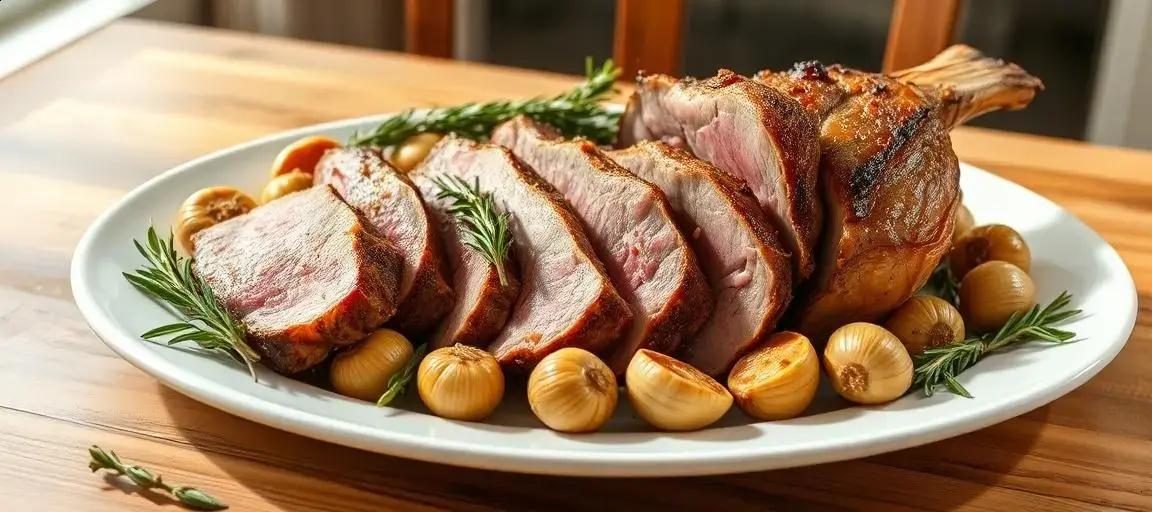
roast lamb
Ingredients
Method
- Preheat your oven to 180°C (356°F). Take the lamb out of the fridge and let it stand at room temperature while the oven heats.
- Use a small, sharp knife to make shallow slits all over the lamb. Push a small piece of garlic into each slit—this gets flavor deep in the meat.
- Mix the olive oil, chopped rosemary, thyme, salt, pepper, lemon juice, and lemon zest in a small bowl. Rub this all over the lamb, making sure to massage it into every nook.
- Set the lamb in a roasting pan. Pour the white wine around, not on, the meat—this keeps the bottom juicy without washing off your spice crust.
- Roast for 60 minutes uncovered (for medium-rare), or up to 90 minutes if you like it less pink. I take it out when a thermometer poked into the thickest part reads 60°C (140°F).
- Let the lamb rest 15–20 minutes before carving. Don't skip this—the juices settle and you won't end up with a dry roast.
Notes
Why this roast lamb stays juicy
Letting the meat come to room temperature first honestly makes a difference. If it's too cold when you throw it in the oven, the outside overcooks before the inside warms up. That quick marinade with olive oil, fresh herbs, lemon helps tenderize and gives a bright lift—don’t skip the lemon zest. For even more flavor, I save a tablespoon of the marinade and brush it on halfway through roasting. It smells incredible and gives extra color to the crust. If you want really crispy bits, don’t tent with foil while it rests—just tuck it (gently) in a clean dish towel instead. The exterior stays a touch crunchier this way.Lamb substitutions and pan tips
Boneless leg of lamb works too, but it cooks a bit faster—check it 15 minutes early. Shoulder is okay for a richer, fattier roast, but the texture will be more shreddable. Beef doesn’t swap well for this mix; it turns out less juicy and the herb flavors can get a little lost.Storage and leftovers
Leftover lamb slices stay good in the fridge for up to three days. I like them cold, tucked into pita with a squeeze of lemon, or gently reheated in a covered pan with a splash of extra wine to keep things moist.I started making roast lamb this way on busy Sundays because I wanted something fuss-free but impressive. The trick is the garlic—getting those flavors right inside the meat without relying on complicated steps.
Why this roast lamb stays juicy
Letting the meat come to room temperature first honestly makes a difference. If it’s too cold when you throw it in the oven, the outside overcooks before the inside warms up. That quick marinade with olive oil, fresh herbs, lemon helps tenderize and gives a bright lift—don’t skip the lemon zest.
For even more flavor, I save a tablespoon of the marinade and brush it on halfway through roasting. It smells incredible and gives extra color to the crust. If you want really crispy bits, don’t tent with foil while it rests—just tuck it (gently) in a clean dish towel instead. The exterior stays a touch crunchier this way.
Lamb substitutions and pan tips
Boneless leg of lamb works too, but it cooks a bit faster—check it 15 minutes early. Shoulder is okay for a richer, fattier roast, but the texture will be more shreddable. Beef doesn’t swap well for this mix; it turns out less juicy and the herb flavors can get a little lost.
Storage and leftovers
Leftover lamb slices stay good in the fridge for up to three days. I like them cold, tucked into pita with a squeeze of lemon, or gently reheated in a covered pan with a splash of extra wine to keep things moist.