
📄 Some content on this site was written with AI assistance and reviewed by Mileni Sabatini before publishing.
The crispy, golden edges of this dish contrast beautifully with its tender, flavorful interior, creating a satisfying bite every time. I always recommend letting the cooked dish rest for a few minutes before serving; this simple step allows the flavors to meld and makes it easier to slice. As I’ve learned from years in the kitchen, that little patience pays off in a better texture and more balanced taste.
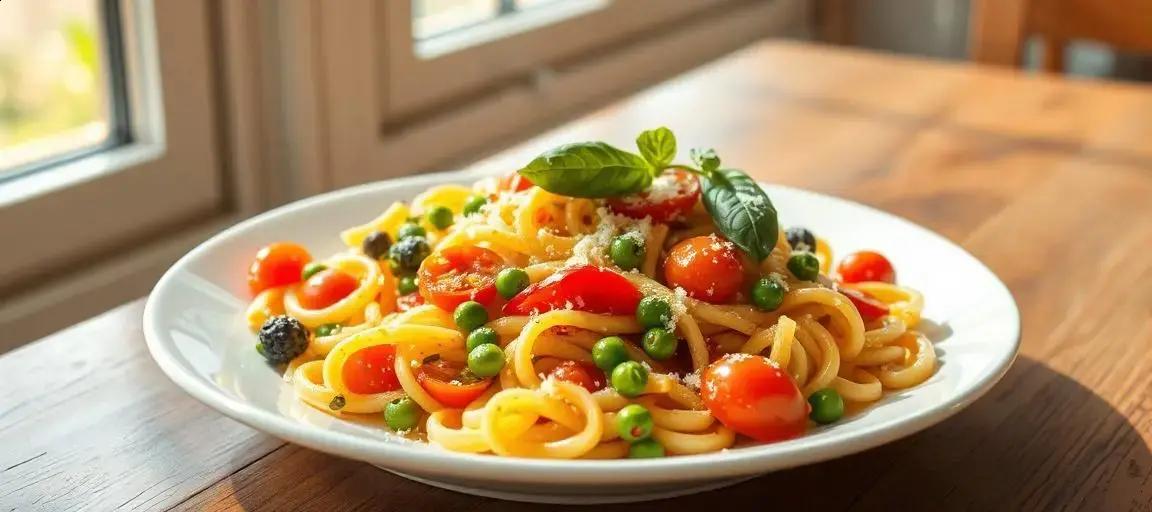
pasta primavera
Ingredients
Method
- Bring a large pot of salted water to a boil. I usually add about 1 tablespoon salt to really make the pasta taste good.
- Add the pasta and cook until just al dente—check the package for timing, usually 8–10 minutes. While that's cooking, start your veggies.
- Heat olive oil in a large skillet over medium heat. When it's shimmering, add the garlic. Sauté 30 seconds until it smells strong but not browned.
- Add zucchini, red and yellow bell peppers. Sprinkle in half the salt first. Stir and cook for 3–4 minutes, just until they're brighter but still a little crisp.
- Toss in cherry tomatoes and frozen peas. Cook 2 more minutes until the tomatoes start to soften and peas lose their chill.
- Reserve about 1/2 cup pasta water with a mug before draining. Don’t forget this step—it’s how you get a real sauce, not just veggies and noodles!
- Drain the pasta and add it straight into the skillet with vegetables. Pour in about 1/4 cup reserved pasta water and toss everything together.
- Add lemon zest, lemon juice, black pepper, and the rest of the salt. Stir again. If it looks dry, add a splash more of the pasta water.
- Turn off the heat. Sprinkle over the grated parmesan and fresh basil. Give it one last big toss so the cheese melts into everything.
- Serve warm, with extra parmesan and basil at the table. I always taste one last time here—sometimes just a tiny squeeze more lemon wakes up all the veggies.
Notes
Tips from my kitchen
Pasta water is liquid gold: Don’t skip it. That splash you add at the end helps the vegetables' cooking juices turn into an actual sauce, not just a pile of cooked veggies. If you forget to save it, a little hot tap water with a dash of salt is the next best thing, but it's not the same. Add salt in layers: I start with half the salt in the skillet and finish with the rest at the table. Fresh veggies change flavor as they cook, and this keeps you from overseasoning at the end. If your pan’s not big enough to toss the pasta and veggies together, mix them in the pasta pot. A little olive oil swirled in the warm pot before adding everything back makes a big difference for coating the noodles.Substitutions and variations
You can use almost any combination of quick-cooking vegetables you have. Asparagus and snap peas work well. Broccoli florets are good too, but steam them separately first or they'll be too firm when everything else is soft. I’ve swapped parmesan with crumbled feta in the summer. It’s brighter, but skip it if you want a creamy melted finish—it won’t work for that. For protein, I stir in a can of chickpeas or diced rotisserie chicken with the veggies. Just warm it through with the sauce.Leftovers and prep ahead
This isn’t a meal that loves sitting in the fridge, but it’s still solid for lunch the next day. I add a splash of boiling water when reheating—not the microwave, which dries out the veggies. The basil’s flavor fades, so add fresh just before serving leftovers if you can.Pasta primavera is my go-to move when I want dinner that tastes like I put in more effort than I did. Even my vegetable-shy family eats this because the pasta and lemon tie everything together.
Tips from my kitchen
Pasta water is liquid gold: Don’t skip it. That splash you add at the end helps the vegetables’ cooking juices turn into an actual sauce, not just a pile of cooked veggies. If you forget to save it, a little hot tap water with a dash of salt is the next best thing, but it’s not the same.
Add salt in layers: I start with half the salt in the skillet and finish with the rest at the table. Fresh veggies change flavor as they cook, and this keeps you from overseasoning at the end.
If your pan’s not big enough to toss the pasta and veggies together, mix them in the pasta pot. A little olive oil swirled in the warm pot before adding everything back makes a big difference for coating the noodles.
Substitutions and variations
You can use almost any combination of quick-cooking vegetables you have. Asparagus and snap peas work well. Broccoli florets are good too, but steam them separately first or they’ll be too firm when everything else is soft.
I’ve swapped parmesan with crumbled feta in the summer. It’s brighter, but skip it if you want a creamy melted finish—it won’t work for that.
For protein, I stir in a can of chickpeas or diced rotisserie chicken with the veggies. Just warm it through with the sauce.
Leftovers and prep ahead
This isn’t a meal that loves sitting in the fridge, but it’s still solid for lunch the next day. I add a splash of boiling water when reheating—not the microwave, which dries out the veggies. The basil’s flavor fades, so add fresh just before serving leftovers if you can.