
📄 Some content on this site was written with AI assistance and reviewed by Mileni Sabatini before publishing.
There’s something so satisfying about the way warm, toasted bread contrasts with a cool, vibrant topping — it creates that perfect bite you want to return to again and again. I always make a point to let my toppings sit for a few minutes at room temperature before spreading them over the bread; that way, you get all the flavors to meld beautifully without overwhelming the base. This balance is what keeps every bite inviting and enjoyable. Trust me, it’s a small step that makes a big difference in flavor and enjoyment.
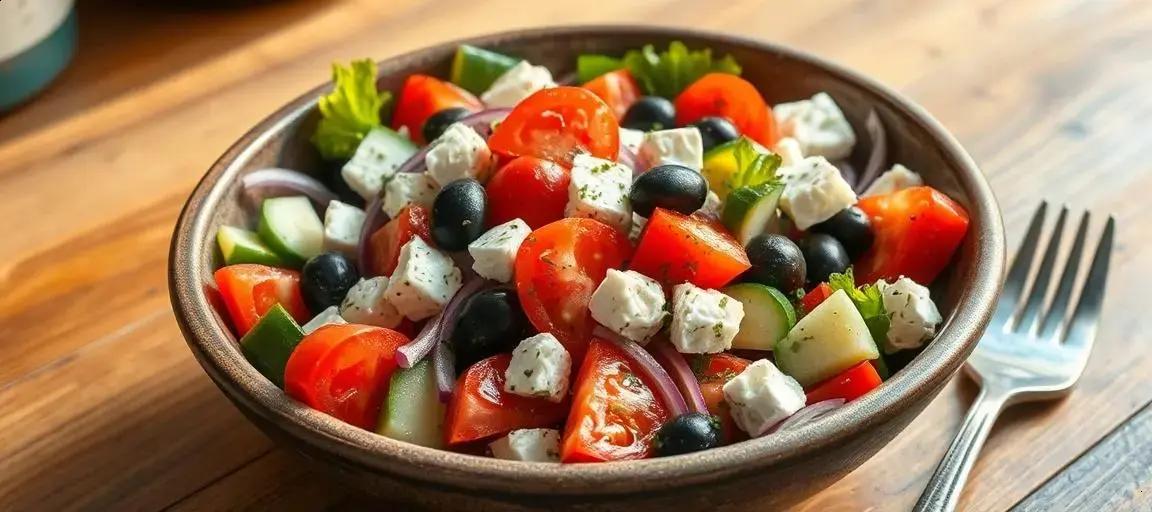
greek salad
Ingredients
Method
- Start with the veggies: Slice the tomatoes into wedges, cut the cucumber into half-moons (don’t peel if the skin is thin), thinly slice the red onion, and cut the green pepper into strips.
- Add to a big bowl: Put all the veggies and the Kalamata olives in a large mixing bowl. I like to layer the onions near the bottom—they mellow a bit under the dressing.
- Dress the salad: In a small jar or cup, whisk together the olive oil, red wine vinegar, dried oregano, half the salt and black pepper. Pour over the veggies.
- Gently toss: Use clean hands or a wide spoon to toss everything—for Greek salad, I don’t over-mix. Stir just until the veggies get shiny and coated, not limp.
- Add feta: Scatter the big feta cubes on top. Don’t stir them in—they’ll break up if you do. Let them sit right on top and crumble a little naturally once you serve.
- Taste and add the rest of the salt only if you need it. Feta and olives are salty already—it’s easy to overdo it.
- If you have 5 minutes, let the salad sit before serving. That gives time for the flavors to mingle and the onions to soften just a little.
Notes
Tips for a better Greek salad
Don’t skip the resting time. Even 5 minutes after dressing, the flavors settle and the onions mellow out. I usually mix the salad before I set the table so it’s ready by the time we eat. Red onion too sharp? Soak the slices in cold water for 10 minutes, then drain. This knocks down the harsh bite without losing the onion flavor. I do this every time if kids are eating. If your feta is very crumbly, keep the pieces large or add it just before serving to avoid a salad full of feta dust. Don’t toss after adding feta, just let each person scoop through when serving. It looks nicer, and nobody gets a mouthful of just cheese pieces.Substitutions and variations
You can swap green bell pepper for any sweet pepper—orange or yellow add nice color. If you can’t find Kalamata olives, regular black olives do the job, but skip the canned sliced kind (they’re too bland and mushy here). For protein, I sometimes add a can of drained chickpeas directly to the bowl. It’s not classic, but it keeps me full until dinner and works surprisingly well with the dressing.Storage and prep ahead
This salad keeps its crunch for about 24 hours in the fridge, even after dressing, thanks to the sturdy veggies. Don’t freeze—cucumbers and tomatoes go mushy fast. If you’re meal prepping for lunches, keep the feta in a separate container and add it right before eating. The rest holds up well for grab-and-go meals.I grew up having some version of this Greek salad at least twice a week. It’s my go-to when I want something fast, fresh, and crunchy—especially on weeknights when it feels like there’s no time for real cooking.
Tips for a better Greek salad
Don’t skip the resting time. Even 5 minutes after dressing, the flavors settle and the onions mellow out. I usually mix the salad before I set the table so it’s ready by the time we eat.
Red onion too sharp? Soak the slices in cold water for 10 minutes, then drain. This knocks down the harsh bite without losing the onion flavor. I do this every time if kids are eating.
If your feta is very crumbly, keep the pieces large or add it just before serving to avoid a salad full of feta dust. Don’t toss after adding feta, just let each person scoop through when serving. It looks nicer, and nobody gets a mouthful of just cheese pieces.
Substitutions and variations
You can swap green bell pepper for any sweet pepper—orange or yellow add nice color. If you can’t find Kalamata olives, regular black olives do the job, but skip the canned sliced kind (they’re too bland and mushy here).
For protein, I sometimes add a can of drained chickpeas directly to the bowl. It’s not classic, but it keeps me full until dinner and works surprisingly well with the dressing.
Storage and prep ahead
This salad keeps its crunch for about 24 hours in the fridge, even after dressing, thanks to the sturdy veggies. Don’t freeze—cucumbers and tomatoes go mushy fast.
If you’re meal prepping for lunches, keep the feta in a separate container and add it right before eating. The rest holds up well for grab-and-go meals.