
📄 Some content on this site was written with AI assistance and reviewed by Mileni Sabatini before publishing.
The rich aroma of garlic sizzling in olive oil fills the kitchen as I prep this dish, its warmth promising comfort with every bite. I love using a mix of fresh herbs for depth; I often swap in whatever’s on hand, like basil or parsley, which can elevate the flavor profile. When I’m chopping, I always keep my knife skills sharp by using a rocking motion to make quicker work of the herbs and get a more even slice, which helps release those essential oils. This simple practice makes a noticeable difference in the freshness of the final dish.
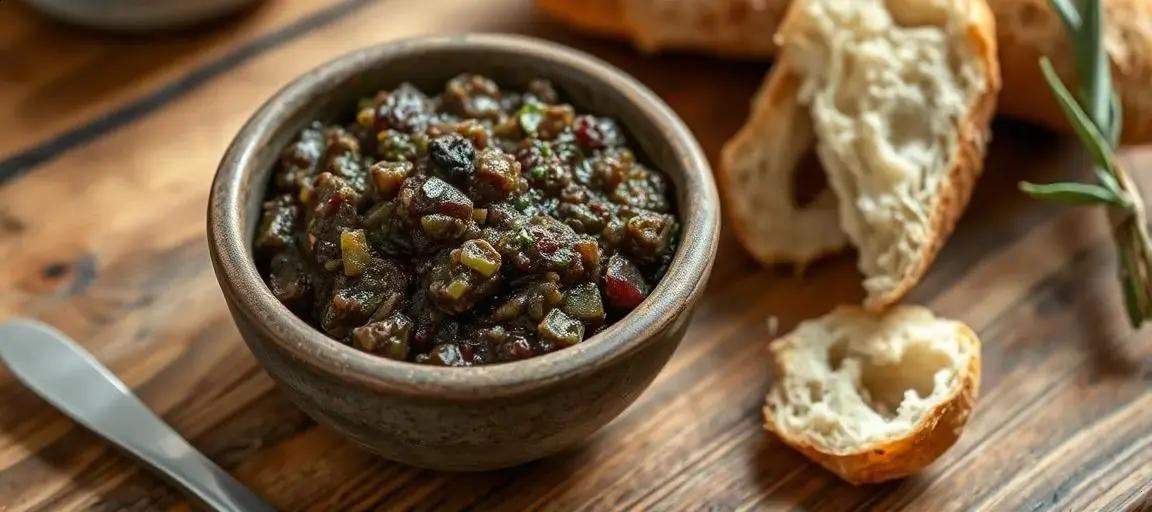
olive tapenade
Ingredients
Method
- Add black olives, green olives, capers, anchovy fillets, and garlic to a food processor. Quick tip: pat the olives dry first with a paper towel so your tapenade doesn’t get watery.
- Pulse a few times until everything is chopped, but not pureed. I stop as soon as the pieces are pea-sized—chunky is better than mushy here.
- Add olive oil, lemon juice, black pepper, and thyme. Pulse 2–3 more times just to combine. Taste now—if it’s too salty, add a bit more lemon. If it tastes flat, a tiny splash of olive oil helps.
- Scoop into a bowl. Serve right away, or cover and refrigerate for up to 4 days. It tastes even better after an hour in the fridge.
Notes
Tips for getting it just right
Don’t over-blend. Seriously, if you walk away from the food processor and it turns into a paste, you’ll miss all the texture. I always pulse just until the biggest pieces look like chopped nuts. Chunky is key—let the ingredients keep their character. If your capers or olives are extra salty, give them a quick rinse and taste before you add more salt or anchovy. (But honestly, the brininess is what makes tapenade so punchy.) If I know I’m having it with strong cheese or salty crackers, I add an extra squeeze of fresh lemon juice to balance things out. Here’s something I learned by accident: let it sit in the fridge for at least half an hour and the flavors mingle so much better. The garlic calms down, too.Substitutions and what to skip
You can skip the anchovy if you need it vegetarian, but the tapenade won’t have the same savory depth. Chopped sun-dried tomatoes actually work well as a swap—use about a tablespoon. I tried swapping in canned black olives once (the cheap ones), and honestly, it was disappointing. Save those for pizza, not here.Storage notes
This keeps in a jar in the fridge up to 4 days. If oil separates out, just stir before serving. I sometimes freeze leftovers in a small container for quick sandwich spreads—it defrosts fine, just stir again to bring back the texture.I make olive tapenade at least twice a month—mainly when I need a salty, briny snack that livens up a sad weekday lunch. The first time I brought this to work, my desk neighbors asked for the exact recipe. When you use good olives, it’s that noticeable.
Tips for getting it just right
Don’t over-blend. Seriously, if you walk away from the food processor and it turns into a paste, you’ll miss all the texture. I always pulse just until the biggest pieces look like chopped nuts. Chunky is key—let the ingredients keep their character.
If your capers or olives are extra salty, give them a quick rinse and taste before you add more salt or anchovy. (But honestly, the brininess is what makes tapenade so punchy.) If I know I’m having it with strong cheese or salty crackers, I add an extra squeeze of fresh lemon juice to balance things out.
Here’s something I learned by accident: let it sit in the fridge for at least half an hour and the flavors mingle so much better. The garlic calms down, too.
Substitutions and what to skip
You can skip the anchovy if you need it vegetarian, but the tapenade won’t have the same savory depth. Chopped sun-dried tomatoes actually work well as a swap—use about a tablespoon.
I tried swapping in canned black olives once (the cheap ones), and honestly, it was disappointing. Save those for pizza, not here.
Storage notes
This keeps in a jar in the fridge up to 4 days. If oil separates out, just stir before serving. I sometimes freeze leftovers in a small container for quick sandwich spreads—it defrosts fine, just stir again to bring back the texture.