
📄 Some content on this site was written with AI assistance and reviewed by Mileni Sabatini before publishing.
There’s something so lovely about the contrast of warm, crispy roasted veggies against a creamy, tangy dip. I like to let the vegetables cool just slightly before serving; this keeps their crunch intact while enhancing the flavors. From my experience, a sprinkle of fresh herbs right before serving makes a world of difference and brightens everything up. This is one of those preparations that feels effortless but always impresses at the table.
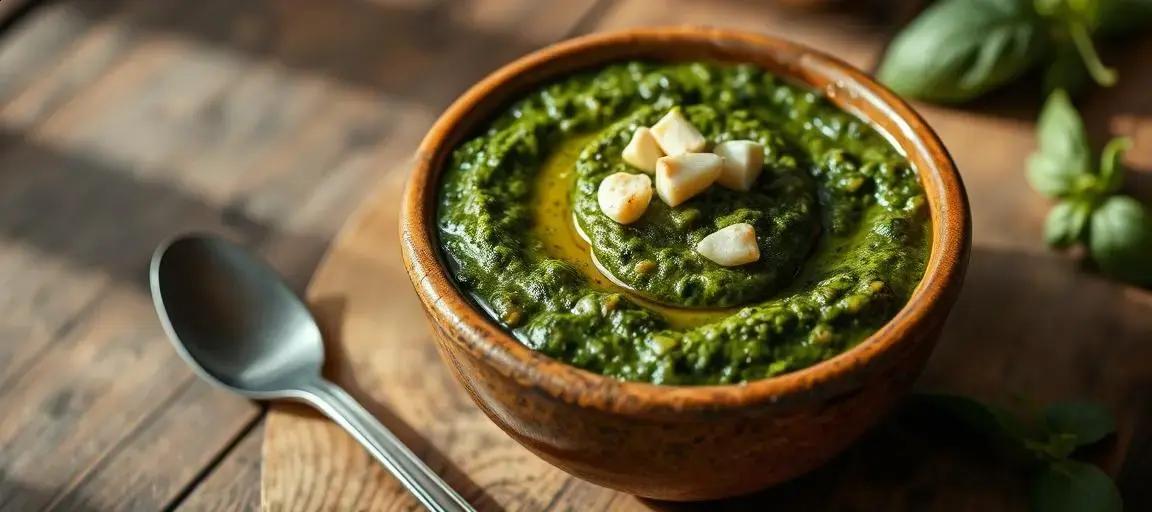
pesto sauce
Ingredients
Method
- Add basil leaves, toasted pine nuts, Parmesan, and garlic to a food processor. Pulse 5–6 times until everything looks chopped, but not mushy.
- While the processor is running, slowly drizzle in the olive oil. Pause and scrape the sides down once, then pulse again until you get a thick, spreadable sauce. I always check the texture by running a spoon through — it should stay in a little mound, not run off.
- Season with half the salt and pepper. Pulse briefly to mix, then taste. If it needs more, add the rest a pinch at a time — pesto can get salty fast.
- Use right away, or store in a small jar with a thin layer of olive oil on top to keep it green in the fridge (up to 5 days).
Notes
What helps your pesto taste fresher
Don’t over-blend: If you run your processor too long, the basil bruises and goes dull. I pulse in 2–3 second bursts, scraping the sides once partway through. You want flecks—think more "minced herbs" than "green smoothie." Toasting the pine nuts isn’t optional, even if the bag says “roasted.” A quick toast in a dry pan brings out a nutty sweetness you’ll miss if you skip this. Sometimes I toast extra, then snack on a few while prepping. Parmesan straight from the wedge shreds finer and tastes way sharper than the pre-grated tubs. One time I used pre-grated in a rush, and the result was bland—never again.Swaps and tweaks
If pine nuts are out of your price range (they get expensive), swap for walnuts or cashews. Sunflower seeds work in a pinch but taste less rich. You can make this dairy-free with nutritional yeast instead of Parmesan, but start with less salt since nutritional yeast is salty. Don’t use soft cheeses or the flavor will get muddy.Storage & prep ahead
I top leftover pesto with a slick of olive oil in a jar—the oil keeps the air out, so the basil stays green. It keeps up to 5 days refrigerated. I freeze pesto in an ice cube tray for single portions; they melt fast right into hot pasta or soup.Honestly, I started making pesto at home because the store-bought version always tasted sad and grey compared to what fresh basil (even from a windowsill pot) can do. The difference is night and day once you try it yourself.
What helps your pesto taste fresher
Don’t over-blend: If you run your processor too long, the basil bruises and goes dull. I pulse in 2–3 second bursts, scraping the sides once partway through. You want flecks—think more “minced herbs” than “green smoothie.”
Toasting the pine nuts isn’t optional, even if the bag says “roasted.” A quick toast in a dry pan brings out a nutty sweetness you’ll miss if you skip this. Sometimes I toast extra, then snack on a few while prepping.
Parmesan straight from the wedge shreds finer and tastes way sharper than the pre-grated tubs. One time I used pre-grated in a rush, and the result was bland—never again.
Swaps and tweaks
If pine nuts are out of your price range (they get expensive), swap for walnuts or cashews. Sunflower seeds work in a pinch but taste less rich.
You can make this dairy-free with nutritional yeast instead of Parmesan, but start with less salt since nutritional yeast is salty. Don’t use soft cheeses or the flavor will get muddy.
Storage & prep ahead
I top leftover pesto with a slick of olive oil in a jar—the oil keeps the air out, so the basil stays green. It keeps up to 5 days refrigerated. I freeze pesto in an ice cube tray for single portions; they melt fast right into hot pasta or soup.