
📄 Some content on this site was written with AI assistance and reviewed by Mileni Sabatini before publishing.
The moment you remove this dish from the oven, the golden crust invites you in with a satisfying crunch, contrasting beautifully with the tender filling hidden beneath. I always let it sit for a few minutes before slicing, which allows the flavors to settle and makes serving easier. You’ll appreciate how the textures meld together, creating a comforting hug of warmth that lingers on the plate. It’s a simple step, but it makes a notable difference in the overall experience.
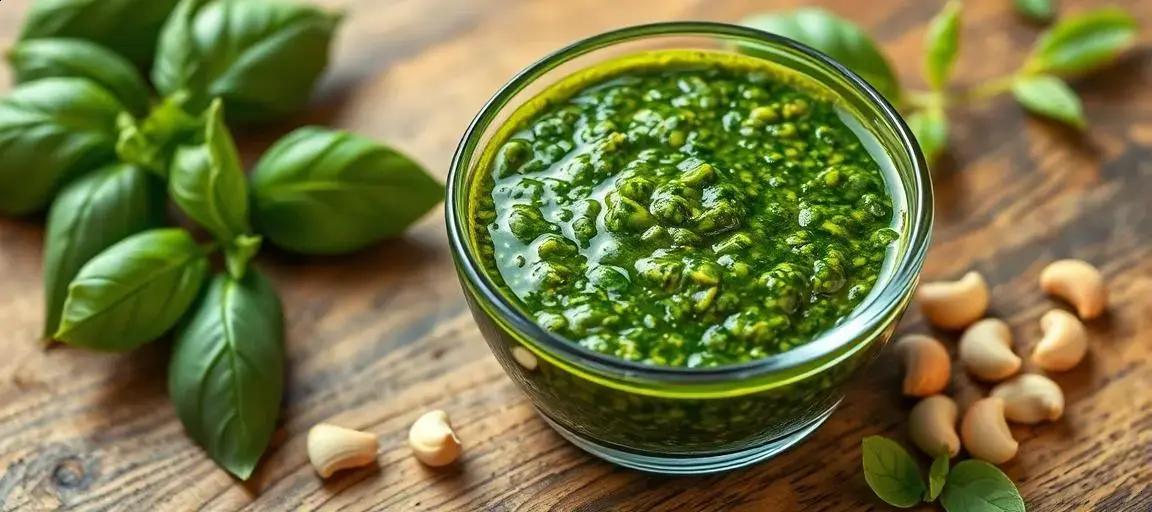
pesto sauce
Ingredients
Method
- Toast the pine nuts in a dry skillet over medium heat, stirring occasionally, for 2–3 minutes. Pull them off the heat as soon as you see golden spots. Don’t let them burn—they turn bitter fast.
- Add the toasted pine nuts, garlic, and salt to a food processor. Pulse a few times until they’re roughly chopped.
- Add the basil leaves and give it several more pulses. Don’t run the machine too long, or the basil can go dark.
- Add the parmesan cheese and black pepper. Pulse again—just to combine.
- With the machine running, slowly stream in the olive oil. Stop and scrape down the sides once to make sure you don’t end up with dry corners. Run until you see a rough but spreadable sauce. If you want it thinner, I sometimes add 1–2 tablespoons water.
- Taste and adjust the salt. I always add half the salt first, blend, then taste again to decide if it needs another pinch—it depends how salty your cheese is.
- Transfer the pesto to a jar or bowl. Press a piece of plastic wrap right onto the surface if you’re storing it—this keeps it bright green.
Notes
What actually makes good pesto
Grate your own parmesan. I know, it’s tempting to grab the pre-shredded kind, but it never blends as smoothly and it’s less flavorful. You don’t need a fancy microplane—a box grater works fine. Don’t skip toasting the nuts. Nuts straight from the bag taste flat, but letting them take on a little color in the pan brings out way more flavor. I take them off the heat as soon as a few start to brown—no lingering, or they go from golden to scorched in a blink. Let the food processor do just enough work. If you run it too long, everything turns gummy. I pulse the basil in by hand; it stays bright and gives a more rustic texture that clings to pasta better.Swaps and tricks from my kitchen
No pine nuts? Use walnuts or cashews—sliced almonds even work. Sunflower seeds get mushy and grassy; I don’t love them here. If you need a nut-free version (I have a cousin with allergies), pumpkin seeds actually work in a pinch. Just toast extra well to bring out the flavor.Storage notes
Pesto oxidizes fast. Press plastic wrap right on the surface before refrigerating, or drizzle a thin layer of olive oil on top. It’ll hold its green for a couple days like this. If I have leftover, I spoon it into an ice cube tray and freeze. Those cubes go straight into hot pasta—or thinned as a salad dressing—whenever basil season feels far away.I always end up making pesto when basil starts taking over my balcony. It’s about as close as you can get to summer in a jar, and nobody at my house complains when pasta night means pesto night.
What actually makes good pesto
Grate your own parmesan. I know, it’s tempting to grab the pre-shredded kind, but it never blends as smoothly and it’s less flavorful. You don’t need a fancy microplane—a box grater works fine.
Don’t skip toasting the nuts. Nuts straight from the bag taste flat, but letting them take on a little color in the pan brings out way more flavor. I take them off the heat as soon as a few start to brown—no lingering, or they go from golden to scorched in a blink.
Let the food processor do just enough work. If you run it too long, everything turns gummy. I pulse the basil in by hand; it stays bright and gives a more rustic texture that clings to pasta better.
Swaps and tricks from my kitchen
No pine nuts? Use walnuts or cashews—sliced almonds even work. Sunflower seeds get mushy and grassy; I don’t love them here.
If you need a nut-free version (I have a cousin with allergies), pumpkin seeds actually work in a pinch. Just toast extra well to bring out the flavor.
Storage notes
Pesto oxidizes fast. Press plastic wrap right on the surface before refrigerating, or drizzle a thin layer of olive oil on top. It’ll hold its green for a couple days like this.
If I have leftover, I spoon it into an ice cube tray and freeze. Those cubes go straight into hot pasta—or thinned as a salad dressing—whenever basil season feels far away.