
📄 Some content on this site was written with AI assistance and reviewed by Mileni Sabatini before publishing.
The key to a truly satisfying sauce is the silky smoothness that comes from properly blending ingredients at the right temperature. I always let my cooked vegetables cool slightly before I blend them; this keeps the texture creamy instead of watery. A gentle simmer helps the flavors meld beautifully, and you can control the richness by adjusting the oil as you go. Don’t rush this step—good things take their time!
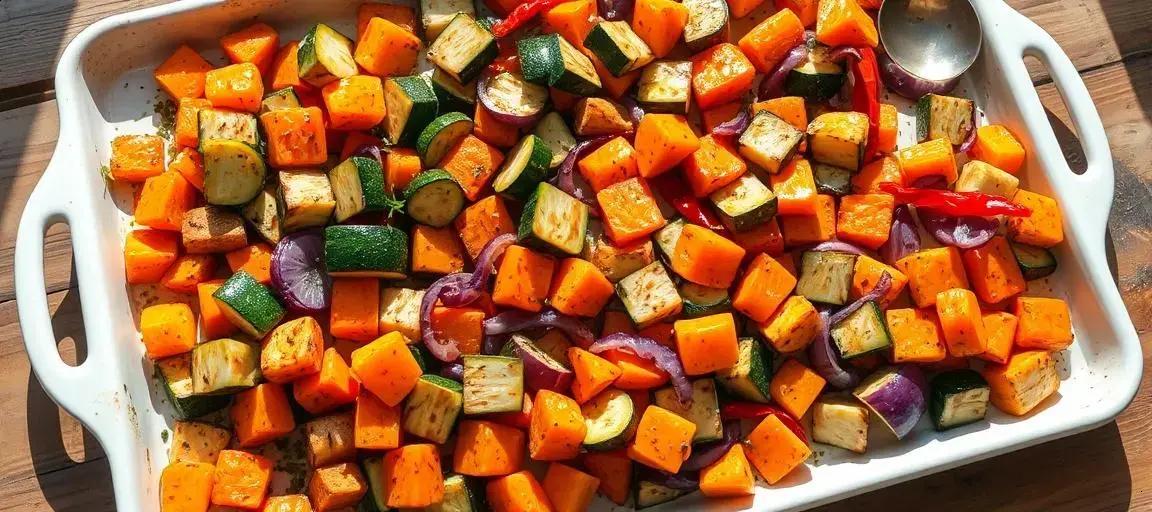
roasted vegetables
Ingredients
Method
- Preheat your oven to 220°C (425°F). I use the upper-middle rack so the vegetables brown rather than steam.
- Cut your carrots, zucchini, bell pepper, and onion into similar-sized chunks (about 2 cm). If the pieces are too small, they burn fast. Too big, and the edges won't get crispy.
- Spread all the veggies on a large sheet pan in a single layer. Don’t crowd the pan: if you pile them up, they just steam. Use two trays if you need to.
- Drizzle with olive oil, then sprinkle on salt, pepper, oregano, thyme, and sliced garlic. I toss right on the tray, using my hands to coat every piece lightly.
- Roast 25–30 minutes, checking and tossing at the 15-minute mark. I flip only once—this is how I get those caramelized sides.
- Test a carrot for doneness with a fork. The edges should look browned and the inside fork-tender. If some pieces brown faster, just pull them off early and let the rest finish. Eat while hot or let them cool for salads later.
Notes
Tips for better roasted veggies
Spacing is everything: I learned the hard way—if the veggies touch, they steam and never get that browned, almost sweet edge. Use two pans if you have to, and don’t be shy about leaving gaps. Use high heat, but keep an eye: Ovens run hot and vegetables like zucchini or bell peppers can burn faster than carrots. If you notice dark bits appearing before the 25-minute mark, pull thinner or more delicate pieces early and let the others finish. Taste for salt halfway through, especially if your veggies vary in size. I start with half the salt up front and add the rest just as they come out of the oven—it keeps flavors bright.Substitutions and variations
Sweet potato or butternut squash work instead of carrot, but cut them small (1.5 cm) so they match the other veggies for timing. Cauliflower works too. I skip eggplant here—it usually needs extra oil, or it shrivels up and disappears on a standard pan. For seasoning, za’atar or smoked paprika swaps in for thyme if you run out. Don’t skip the garlic—it’s what brings it all together.Storage and meal prep
Once cool, stash the roasted vegetables in a covered container. They keep 3–4 days in the fridge and make a great addition to salads, grain bowls, or a quick omelet. I reheat them in a hot nonstick pan instead of the microwave to keep some crisp on the edges.I started roasting vegetables like this when I needed dinner that basically made itself and packed well for lunches. After testing a bunch of combos, I stick to these veggies—they cook at the same rate, and nothing comes out mushy.
Tips for better roasted veggies
Spacing is everything: I learned the hard way—if the veggies touch, they steam and never get that browned, almost sweet edge. Use two pans if you have to, and don’t be shy about leaving gaps.
Use high heat, but keep an eye: Ovens run hot and vegetables like zucchini or bell peppers can burn faster than carrots. If you notice dark bits appearing before the 25-minute mark, pull thinner or more delicate pieces early and let the others finish.
Taste for salt halfway through, especially if your veggies vary in size. I start with half the salt up front and add the rest just as they come out of the oven—it keeps flavors bright.
Substitutions and variations
Sweet potato or butternut squash work instead of carrot, but cut them small (1.5 cm) so they match the other veggies for timing. Cauliflower works too. I skip eggplant here—it usually needs extra oil, or it shrivels up and disappears on a standard pan.
For seasoning, za’atar or smoked paprika swaps in for thyme if you run out. Don’t skip the garlic—it’s what brings it all together.
Storage and meal prep
Once cool, stash the roasted vegetables in a covered container. They keep 3–4 days in the fridge and make a great addition to salads, grain bowls, or a quick omelet. I reheat them in a hot nonstick pan instead of the microwave to keep some crisp on the edges.