
📄 Some content on this site was written with AI assistance and reviewed by Mileni Sabatini before publishing.
There’s something wonderfully satisfying about the way crispy roasted chickpeas contrast with the creamy, tangy yogurt sauce I serve alongside them. When I make these, I always rinse and dry the chickpeas thoroughly to ensure they get that perfect crunch when roasted. It’s a simple step that makes a big difference and prevents them from steaming in the oven. Plus, the warm spices I toss them in add a depth of flavor that keeps everyone coming back for more.
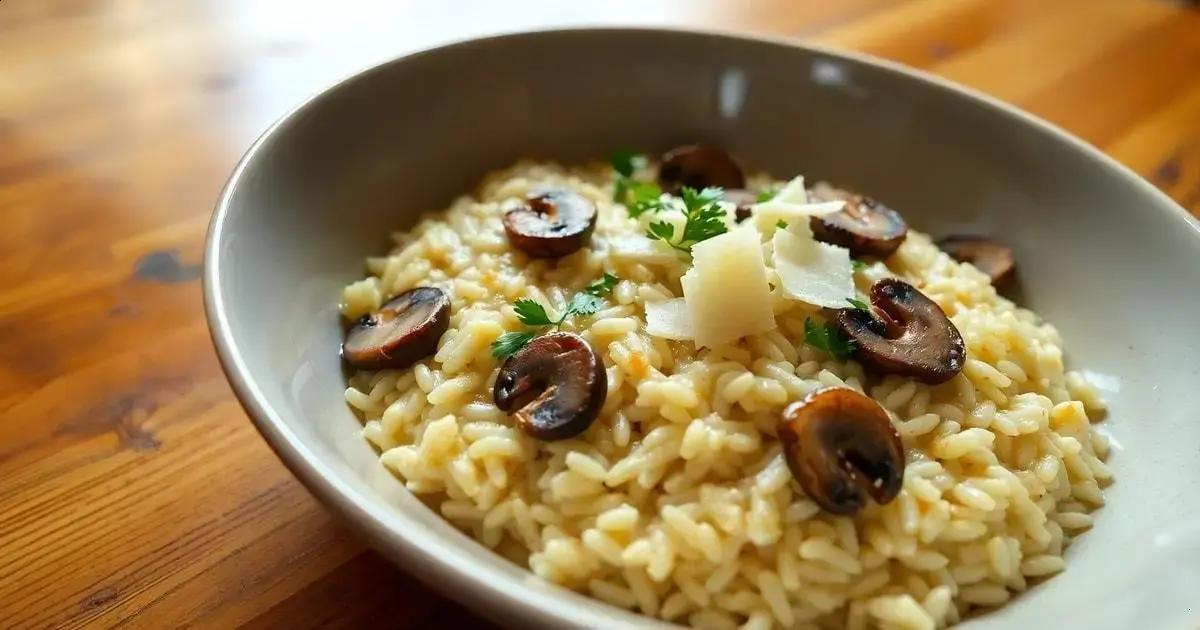
risotto ai funghi
Ingredients
Method
- Heat the olive oil in a wide pan over medium heat. Stir in the chopped onion and a pinch of salt. Cook for about 5 minutes until the onion softens but does not brown.
- Add the mushrooms and garlic. Keep the heat at medium. Cook, stirring often, until the mushrooms shrink and release their juices, about 7–8 minutes. They don’t need to be browned—just soft and fragrant.
- Pour in the rice and stir to coat each grain in the oil and mushroom mixture. This helps the rice toast slightly for more flavor—about 2 minutes.
- Raise the heat a notch. Add the white wine. Let it bubble up and scrape the bottom of the pan with your spoon to catch any tasty bits.
- Once the wine is mostly absorbed, lower the heat to medium-low. Add about 1 cup of hot broth and stir regularly, but you don’t need to babysit it. As soon as most liquid absorbs, ladle in more broth, repeating until the rice is creamy and cooked through but still has a slight bite—about 18–20 minutes.
- Turn off the heat. Stir in the butter and parmesan. Let it sit, loosely covered, for 2 minutes so the texture gets extra creamy. Taste and adjust salt and pepper.
- Scatter chopped parsley over the top and serve immediately. Risotto won’t wait—scoop it into shallow bowls while still loose and creamy.
Notes
Tips for risotto that’s actually creamy, not gummy
Here’s what always makes a difference for me: Keep your broth hot—if you add cold broth to the pan, the rice seizes up and goes gluey. Use a ladle and add it gradually. I don’t stir nonstop, but I do make sure to scrape the bottom well every couple of minutes so nothing sticks. I always hold back half the salt until right at the end—parmigiano adds salt too, so just wait and taste before you finish. If you want a richer finish, add an extra knob of cold butter at the very end and let it melt off-heat. It’s a classic trick; the French even have a word for it (“monter au beurre”). Makes the texture silkier.Swaps that work (and what doesn’t)
Brown mushrooms have the most flavor, but if you only have white, you can still make this—just try adding a few dried porcini (soaked and chopped) to boost the earthy taste. Lentils or farro instead of rice don’t really work here; they don’t give you that signature creamy finish. You can use chicken broth if you eat meat, but skip beef or bone broths—they’re too strong and drown out the mushrooms. For dairy-free, use a splash of good olive oil at the end in place of butter and cheese. It won’t be classic, but it’s good in its own way.Leftovers and storage
Risotto does not love the fridge, but if you have leftovers: pack it up while still warm to keep it from getting dense and dry. I like to reheat it gently with a splash of broth or water—it won’t go back to the first-day creamy, but it’s still satisfying. Cold risotto makes great arancini (risotto balls) if you feel like frying another day.I make risotto ai funghi when I want something comforting but don’t want to fuss with tons of pans. Mushrooms and rice in one pot mean less cleanup, and I like that almost meditative stirring ritual at the stove.
Tips for risotto that’s actually creamy, not gummy
Here’s what always makes a difference for me: Keep your broth hot—if you add cold broth to the pan, the rice seizes up and goes gluey. Use a ladle and add it gradually.
I don’t stir nonstop, but I do make sure to scrape the bottom well every couple of minutes so nothing sticks. I always hold back half the salt until right at the end—parmigiano adds salt too, so just wait and taste before you finish.
If you want a richer finish, add an extra knob of cold butter at the very end and let it melt off-heat. It’s a classic trick; the French even have a word for it (“monter au beurre”). Makes the texture silkier.
Swaps that work (and what doesn’t)
Brown mushrooms have the most flavor, but if you only have white, you can still make this—just try adding a few dried porcini (soaked and chopped) to boost the earthy taste. Lentils or farro instead of rice don’t really work here; they don’t give you that signature creamy finish.
You can use chicken broth if you eat meat, but skip beef or bone broths—they’re too strong and drown out the mushrooms. For dairy-free, use a splash of good olive oil at the end in place of butter and cheese. It won’t be classic, but it’s good in its own way.
Leftovers and storage
Risotto does not love the fridge, but if you have leftovers: pack it up while still warm to keep it from getting dense and dry. I like to reheat it gently with a splash of broth or water—it won’t go back to the first-day creamy, but it’s still satisfying. Cold risotto makes great arancini (risotto balls) if you feel like frying another day.